Plantiary Alternative: Identify Plants With No Sign-Up Required
Looking for a Plantiary alternative? We took a close look at what plant lovers actually need and found a simpler way to identify and care for plants.
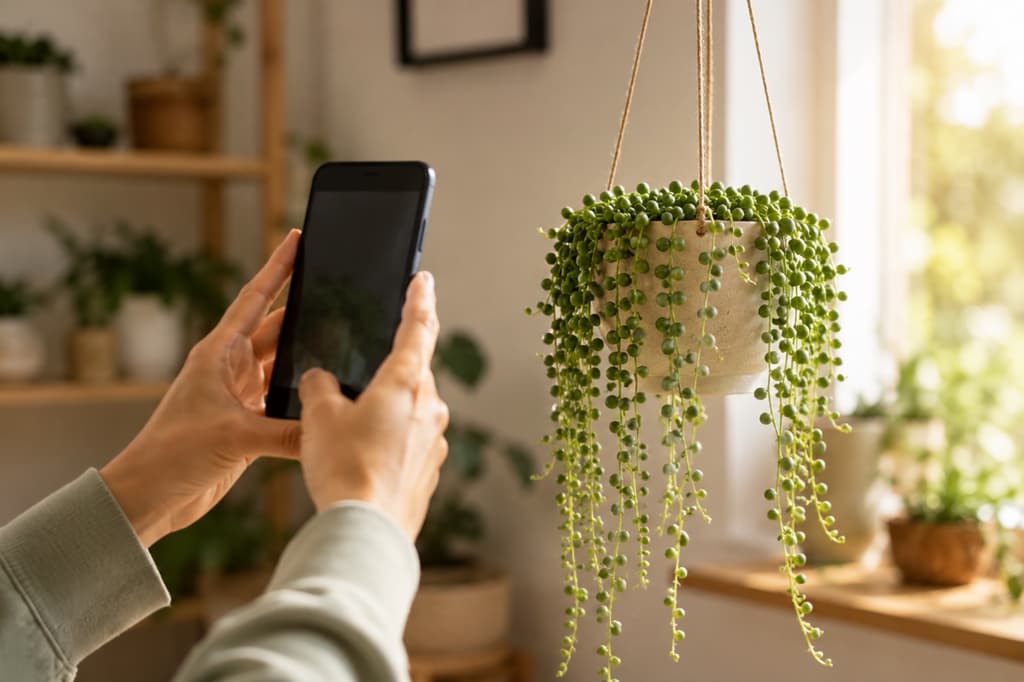
You downloaded a plant app for one reason. There's a plant in front of you, and you want to know what it is and how to keep it alive. Simple enough, right?
Plantiary promises exactly that, and it packs a lot into one app. But many people notice something about their first few minutes with it. Before you get to point your camera at a single leaf, the app has questions for you. Where are you located? How much time can you commit? How skilled are you? Would you mind leaving a rating? And then, right when you're ready to start, a signup screen stands between you and that first photo.
Bloom takes the opposite path. Open it, snap a photo, get your answer. So let's compare the two, fairly and honestly.
What Plantiary brings to the table
Plantiary covers a lot of ground. It identifies plants and diseases, offers care guides with tidy icons for water, light, temperature, and difficulty, and sends reminders so you don't forget a watering day. It even stretches beyond plants and can identify insects, from butterflies to spiders, which makes it a fun companion for a walk outdoors. There's also a built-in chat helper you can ask plant questions.
The care guides deserve a genuine compliment. Those little icons communicate a lot at a glance, and the app's survey does try to tailor things to your experience level and your home.
The friction shows up in the order of things. The rating request arrives before you've identified anything. The permissions stack up early. And the welcome tour ends at a gate rather than a garden. If you've ever closed an app before reaching the part you downloaded it for, you know the feeling.
Bloom starts where you want to start: with the plant
Bloom was built around one belief. The first thing a plant app should ask you for is a photo of a plant. Everything else can wait.
When you open Bloom, the camera is right there. You'll also meet Pip, a cheerful little sprout who acts as your guide. Pip doesn't quiz you or ask for favors. Pip just helps.
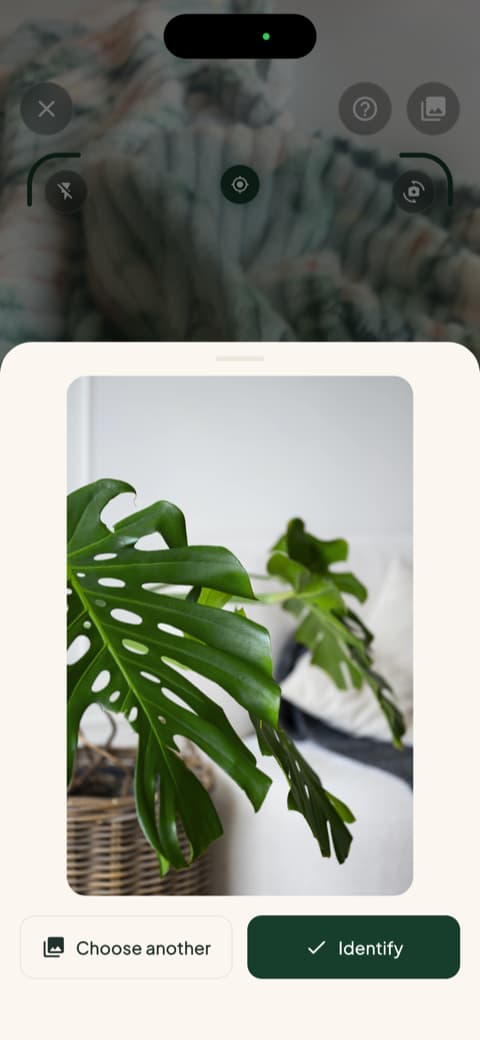
Under that friendly surface, the technology carries real weight. Bloom recognizes more than 35,000 species and gets the identification right about 9 times out of 10, a level of accuracy confirmed by independent research rather than our own scorekeeping.
An answer you can actually use
A name alone doesn't keep a plant alive. So when Bloom identifies your plant, it hands you the whole care picture in the same breath: how often to water, what kind of light it loves, the temperature range it prefers, and how tricky it is to keep happy.
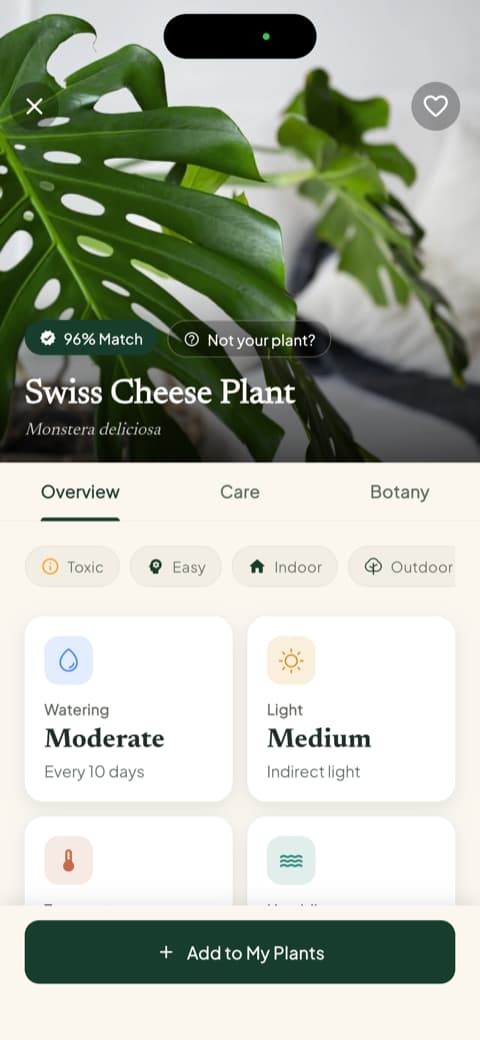
All of it reads like advice from a friend, not a textbook. You'll never need to decode botanical jargon to figure out what your fern wants from you.
Is it safe for your cat, your dog, your kids?
Here's a question most plant apps treat as fine print. Bloom treats it as headline news. Every plant profile tells you, clearly and immediately, whether that plant is safe around cats, dogs, and children.
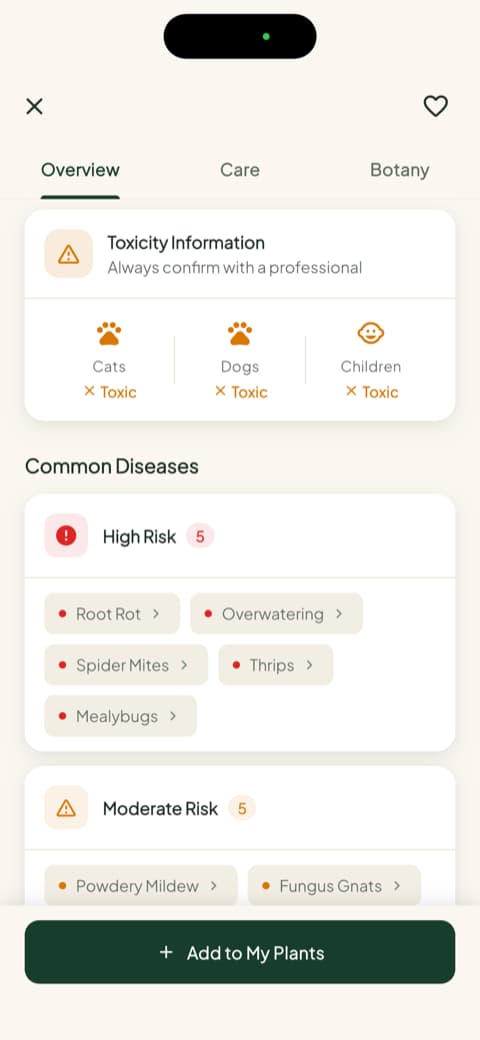
Anyone who has watched a cat investigate a new houseplant knows why this matters. One glance at this screen before you buy, and you can bring a plant home with full peace of mind.
Watering measured in milliliters, not in hope
Reminders are helpful, and Plantiary has them too. But a reminder only tells you when. The question that actually trips people up is how much.
Bloom answers it precisely. Each plant you add gets a health score and a recommended amount of water, calculated for that specific plant, its pot, and its spot in your home. Not "water moderately." An actual number.
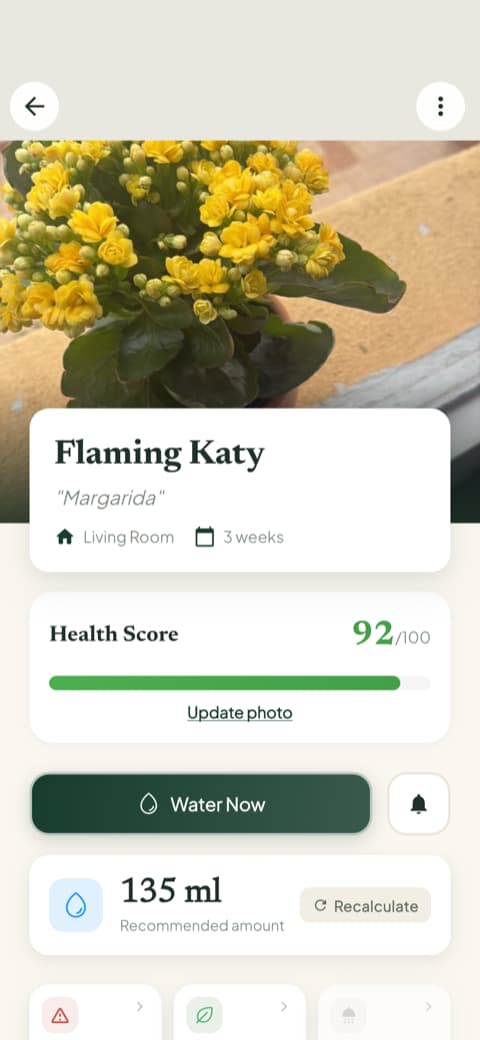
That's the difference between hoping you're doing it right and knowing you are.
Watch your plant's story unfold
Bloom also remembers things for you. Every watering, every feeding, every repotting gets logged in a care history, and you can add progress photos along the way. Months later, you can scroll back and see how far that scraggly rescue plant has come.
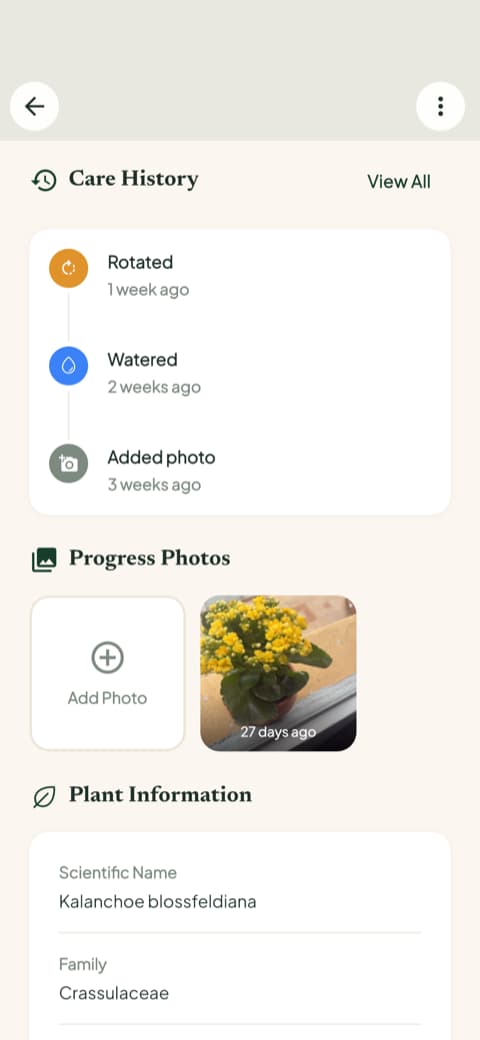
It's a small feature with a big emotional payoff. Plant care stops feeling like a chore list and starts feeling like a story you're telling together.
The whole toolkit, one tap from home
When something looks off, help is close. From the home screen, one tap opens Bloom's full set of tools: diagnose a disease from a photo, measure the light in any corner of your house, check water needs, look up toxicity, and even identify weeds in the yard.
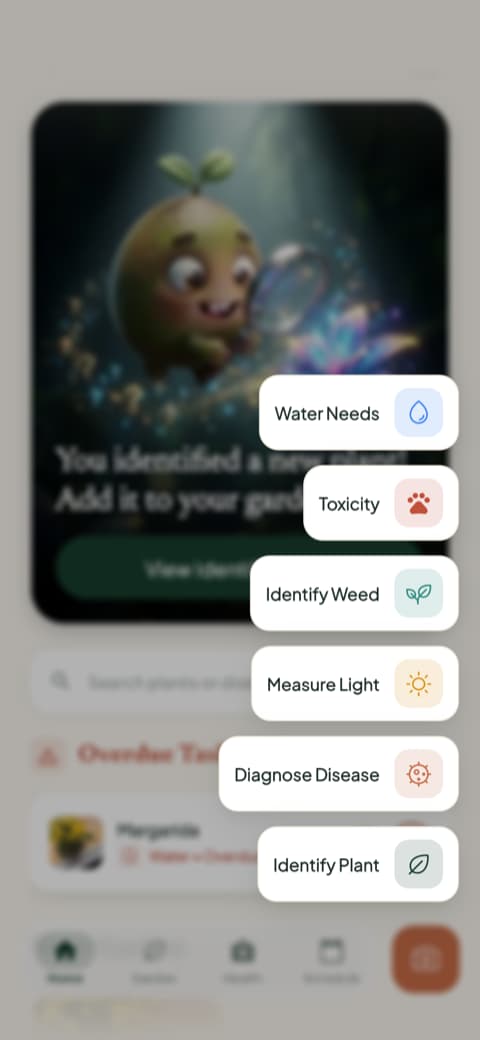
No digging through menus while your plant droops. See a problem, snap a photo, get a diagnosis.
So which app should you choose?
Here's our honest take.
Plantiary may suit you if you like the idea of one app that reaches beyond plants into insects and nature exploration, and you don't mind a longer setup before you get going.
Bloom is for people who want the plant part done beautifully. Identify in seconds, know if it's safe for your pets and kids, water the exact right amount, and watch your plants thrive over time, all with Pip cheering you on.
Bloom's community has already spoken, holding the app at a 4.8-star rating. And since your first identification is only ever a photo away, finding out if Bloom fits your life takes less time than reading this article did.
Download Bloom, point your camera at the nearest plant, and let Pip take it from there.
Related articles
The 6 Best Plant Apps for Beginners
New to plants and worried you'll kill them? Here are the six best plant apps for beginners, tested for how easy they make identifying and caring for your first plants.
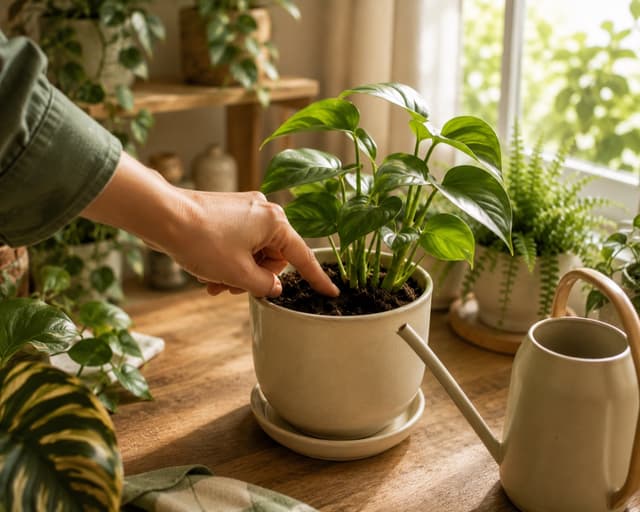
The 5 Best Apps to Remember to Water Your Plants
Always forgetting to water your plants? Here are the 5 best apps that remember for you, tested for smart reminders that actually fit your routine.
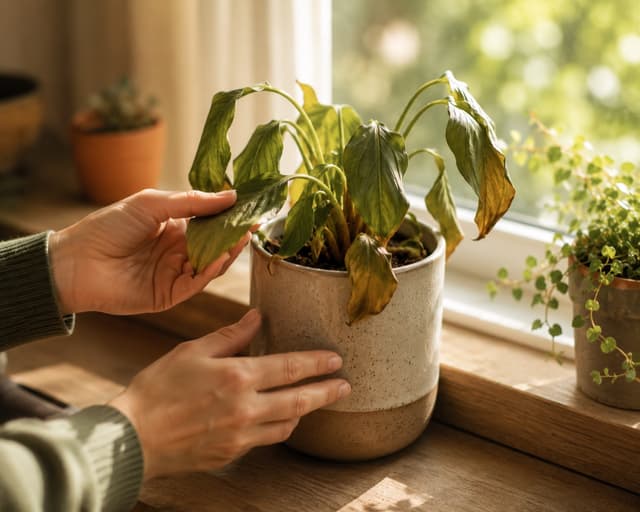
The 7 Best Apps for People Who Always Kill Their Plants
If your plants keep dying no matter how hard you try, these 7 apps were made for you. Here are the ones that actually help keep a plant alive.