Euphorbiaceae
Acalypha (Genus): Complete Plant Care Guide
Acalypha
Provide bright indirect light to partial sun. Water every 5-7 days, letting the top inch of soil dry between waterings. Maintain humidity above 50% and temperatures between 61-95°F (16-35°C). Fertilize every 3 weeks during the growing season.
Every 6 days
Partial shade
16° - 35°C
50% - 80%
Categories
What is Copperleaf / Chenille Plant (genus)?
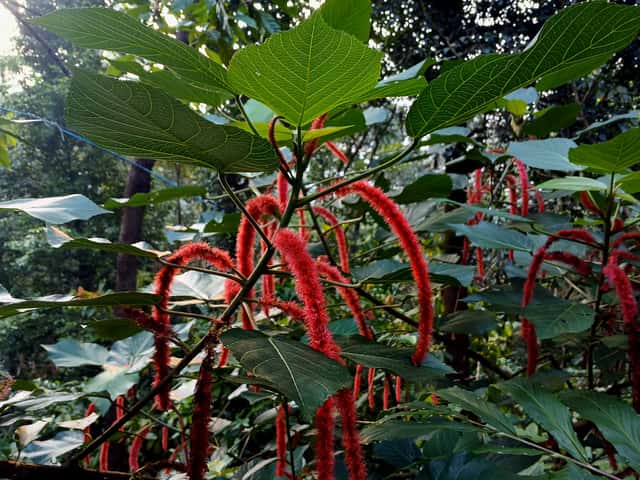
Copperleaf / Chenille Plant (genus) (Acalypha) is a easy-care plant from the Euphorbiaceae family. The Acalypha genus (family Euphorbiaceae) encompasses fast-growing tropical and subtropical ornamental shrubs popular worldwide. Key species include A. hispida (chenille plant / red-hot cattail), prized for its dramatic drooping red catkins; A. wilkesiana (copperleaf / Jacob's coat), beloved for str...
Copperleaf / Chenille Plant (genus) grows up to 1.8m, spread of 90cm, watering every 6 days, 16°C – 35°C, 50–80% humidity. It is suitable for indoor environments and not safe for pets.
Unlike many tropical plants, Copperleaf / Chenille Plant (genus) tolerates watering mistakes. Best for beginners. Without precautions, ingestion can cause irritation in pets. Keep out of reach of cats and dogs. Without adequate drainage, root rot can develop within 12 days.
How to Care for Copperleaf / Chenille Plant (genus)?
TLDR: Copperleaf / Chenille Plant (genus) needs Partial shade, watering every 6 days, and temperatures between 16-35°C with 50-80% humidity.
How Often Should You Water Copperleaf / Chenille Plant (genus)?
Water every 5-7 days when the top inch of soil feels dry. Avoid waterlogging — overwatering is the primary cause of root rot. Reduce frequency in winter.
How Much Light Does Copperleaf / Chenille Plant (genus) Need?
Prefers bright indirect light or partial sun (4-6 hours of filtered sunlight). Avoid intense direct sun, which may scorch leaves, especially on A. wilkesiana.
What Is the Best Soil for Copperleaf / Chenille Plant (genus)?
Use well-draining, organically rich soil with a pH of 5.5-6.5. A mix of potting soil, perlite, and peat moss works well.
What Pot Should You Use for Copperleaf / Chenille Plant (genus)?
Terracotta or ceramic pot with drainage holes; avoid oversized pots that retain excess moisture.
Care Schedule
Fertilize
Every 21 days
Misting
Every 2 days
Rotate
Every 30 days
Repot
Every 365 days
What Is Copperleaf / Chenille Plant (genus) and Where Does It Come From?
The Acalypha genus (family Euphorbiaceae) encompasses fast-growing tropical and subtropical ornamental shrubs popular worldwide. Key species include A. hispida (chenille plant / red-hot cattail), prized for its dramatic drooping red catkins; A. wilkesiana (copperleaf / Jacob's coat), beloved for striking multicolored foliage in shades of bronze, red, and green; and A. reptans (trailing copperleaf), ideal for hanging baskets. All are vigorous, rewarding plants for warm climates and bright indoor spaces.
How to Propagate Copperleaf / Chenille Plant (genus)?
Stem Cutting
Use sterilized scissors. Maintain high humidity by covering with a plastic bag for the first few days. Replace medium if mold appears.
- 1 Cut a healthy stem 4-6 inches long with 2-3 leaves
- 2 Remove lower leaves and dip the cut end in rooting hormone
- 3 Plant in moist, well-draining potting mix
- 4 Keep in a warm, humid location with bright indirect light
- 5 Transplant once roots are well established (3-4 weeks)
Materials needed:
How Big Does Copperleaf / Chenille Plant (genus) Grow?
TLDR: Copperleaf / Chenille Plant (genus) can reach up to 1.8m tall with Fast growth rate.
Max height
1.8m
Spread
90cm
Growth rate
Fast
Foliage
Evergreen
Warning: Toxic Plant
This plant can be toxic if ingested. Keep out of reach of:
Plant Uses
Ornamental
Great for decoration
Is your plant showing symptoms?
Click on the symptom to discover possible causes:
What Diseases Commonly Affect Copperleaf / Chenille Plant (genus)?
TLDR: Copperleaf / Chenille Plant (genus) is susceptible to 5 known diseases. Monitor regularly for early detection.
Spider Mites
Spider mites are tiny arachnids (less than 1/20 inch long) related to spiders and ticks that feed on plant sap. They thrive in hot, dry conditions and can cause significant damage to ornamental and vegetable plants. During severe infestations, crop losses can reach 14% or higher as these pests disrupt vital plant processes including photosynthesis, carbon dioxide absorption, and transpiration.
Mealybugs
Mealybugs are small, soft-bodied insects covered with a white, waxy, cottony material. They are common pests of houseplants and outdoor plants in mild climates. These sap-sucking insects feed on plant tissue, causing damage, stunted growth, and can lead to plant death if left untreated. They produce sticky honeydew which attracts sooty mold.
Scale Insects
Scale insects are small sap-sucking pests that appear as brown, shell-like bumps on plant stems and leaves. There are over 25 species, divided into armored (hard) and unarmored (soft) scales. They feed by piercing plant tissue and extracting sap, which weakens the plant and can lead to yellowing, stunted growth, and even death if left untreated. They also excrete honeydew, which attracts ants and promotes sooty mold growth.
Root Rot
Root rot is a serious fungal disease that affects the root system of plants, causing them to decay and die. It is primarily caused by overwatering, poor drainage, or soil-borne fungi such as Pythium, Phytophthora, Rhizoctonia, and Fusarium. The disease thrives in waterlogged conditions where roots are deprived of oxygen, making them susceptible to fungal infection.
Meaning & Symbolism
A symbol of tropical vibrancy and lush ornamental beauty in gardens and interiors.
Fun Facts
The Acalypha genus contains over 450 species distributed across tropical and subtropical regions worldwide.
A. hispida produces drooping catkin flower spikes up to 20 inches (50 cm) long, resembling a fluffy cat's tail.
A. wilkesiana is a staple of tropical landscaping, offering foliage in striking shades of bronze, red, copper, and green.
Despite its exotic appearance, Acalypha is easy to propagate from stem cuttings — roots develop in just 2-4 weeks.
Frequently asked questions
How often should I water Acalypha?
Is Acalypha toxic to cats and dogs?
What light does Acalypha need?
Can I grow Acalypha indoors?
What are the most common Acalypha pests?
Compare with similar plants
| Attribute | Difficulty | Light | Watering | Pet Safe |
|---|---|---|---|---|
| Field Maple | Easy | Bright indirect | 14d | ✓ |
| Silver Birch | Easy | Direct sun | 14d | ✓ |
| Cushion Bush | Easy | Direct sun | 14d | ✓ |
| Peruvian peppertree | Easy | Direct sun | 14d | ⚠️ |