Cannaceae
Indian Shot (Canna indica): How to Grow and Care
Canna indica
Easy-to-grow tropical plant. Thrives in full sun with rich, well-drained organic soil. Water regularly to keep soil moist but not waterlogged. Fertilize every 45 days during the growing season. Frost-sensitive — lift rhizomes in cold climates for winter storage.
Every 7 days
Direct sun
15° - 32°C
50% - 80%
Categories
What is Indian Shot?
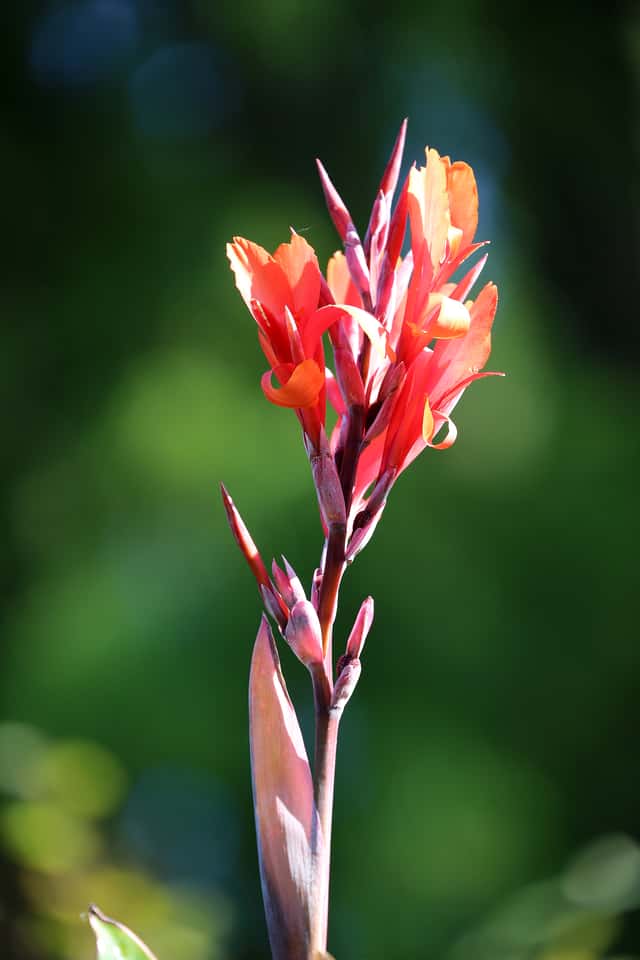
Indian Shot (Canna indica) is a easy-care plant from the Cannaceae family. Canna indica, commonly known as Indian Shot, is a tropical rhizomatous plant native to the Americas. It produces spectacular blooms in shades of red, orange, yellow and pink atop upright stems reaching up to 2.4 meters tall. Its large paddle-shaped leaves range from deep green to green-purple, creat...
Indian Shot grows up to 2.4m, spread of 90cm, watering every 7 days, 15°C – 32°C, 50–80% humidity. It is not suitable for indoor environments and safe for pets.
Unlike many tropical plants, Indian Shot tolerates watering mistakes. Best for beginners. Unlike many popular species, Indian Shot is safe to keep around pets.
How to Care for Indian Shot?
TLDR: Indian Shot needs Direct sun, watering every 7 days, and temperatures between 15-32°C with 50-80% humidity.
How Often Should You Water Indian Shot?
Water every 7 days on average, keeping soil consistently moist. In containers during summer, water every 2-3 days. Avoid waterlogging to prevent rhizome rot.
How Much Light Does Indian Shot Need?
Plant in full sun (minimum 6 hours of direct sunlight daily). Tolerates partial shade but flowering will be reduced. More sun means more blooms and vibrant colors.
What Is the Best Soil for Indian Shot?
Use fertile, organic-rich, well-draining soil. Mix garden soil with compost and coarse sand. Ideal pH between 6.0 and 6.5.
What Pot Should You Use for Indian Shot?
Large terracotta or ceramic pot (minimum 12-16 inches diameter) for container growing. In-ground planting is ideal for best performance.
Care Schedule
Fertilize
Every 45 days
Repot
Every 730 days
What Is Indian Shot and Where Does It Come From?
Canna indica, commonly known as Indian Shot, is a tropical rhizomatous plant native to the Americas. It produces spectacular blooms in shades of red, orange, yellow and pink atop upright stems reaching up to 2.4 meters tall. Its large paddle-shaped leaves range from deep green to green-purple, creating a bold tropical statement in gardens.
How to Propagate Indian Shot?
Rhizome Division
Divide when plant is dormant or just beginning spring growth. Use clean, sharp tools to prevent disease transmission.
- 1 Dig up the clump in early spring
- 2 Divide rhizomes with a clean knife, ensuring each section has at least one eye (bud)
- 3 Allow cut surfaces to dry for a few hours
- 4 Plant each rhizome 4-6 inches deep in prepared soil
- 5 Keep soil moist until first shoots emerge
Materials needed:
Seed Sowing
Scarification is essential as seeds have a very hard coat. Germination can be irregular.
- 1 Scarify seeds with sandpaper or soak in warm water for 24 hours
- 2 Sow in moist substrate at 1 cm depth
- 3 Keep in warm (25-30°C) humid location
- 4 Transplant when seedlings reach 4-6 inches
Materials needed:
How Big Does Indian Shot Grow?
TLDR: Indian Shot can reach up to 2.4m tall with Fast growth rate.
Max height
2.4m
Spread
90cm
Growth rate
Fast
Foliage
Deciduous
Plant Uses
Ornamental
Great for decoration
Edible
Can be consumed
Medicinal
Medicinal properties
Medicinal Uses
- Leaves and rhizomes used in folk medicine to treat fever, inflammation, and skin conditions in various Latin American and Asian traditions.
Culinary Uses
- Rhizomes are edible and starch-rich, consumed in parts of Latin America and Asia. Young leaves can be used as food wrappers similar to banana leaves.
Is your plant showing symptoms?
Click on the symptom to discover possible causes:
What Diseases Commonly Affect Indian Shot?
TLDR: Indian Shot is susceptible to 6 known diseases. Monitor regularly for early detection.
Rust
Rust is a common fungal disease caused by fungi in the order Pucciniales that affects a wide variety of plants. The disease gets its name from the characteristic orange, yellow, or reddish-brown pustules that appear on leaves, resembling metal rust. This obligate fungal parasite requires living plants to survive and can cause significant economic losses in agricultural crops.
Gray Mold (Botrytis Blight)
Gray mold, caused by the fungus Botrytis cinerea, is one of the most common fungal diseases in plants. It affects over 200 plant species, including ornamentals, vegetables, fruits, and houseplants. The disease thrives in cool, humid conditions with poor air circulation, causing grayish spots and soft rot on infected tissues.
Mosaic Virus
Mosaic virus is a group of plant viruses that cause mottled, patchy patterns on leaves and can affect a wide variety of plants. The virus creates characteristic yellow, white, and green mosaic patterns, often accompanied by stunted growth and deformed plant parts. This highly contagious disease spreads rapidly through insect vectors and contaminated tools.
Aphids
Aphids are small, soft-bodied, pear-shaped insects (1/16 to 1/8 inch long) that feed by sucking nutrient-rich sap from plants. They reproduce rapidly and can quickly weaken plants, causing distorted growth and transmitting plant viruses. Aphids come in various colors including green, black, red, yellow, brown, and gray. They secrete honeydew, a sticky substance that attracts ants and encourages sooty mold growth.
Meaning & Symbolism
In many cultures, Canna indica symbolizes tropical beauty, vitality, and abundance. It is associated with prosperity and exuberance in tropical gardens worldwide.
Fun Facts
The seeds of Canna indica are so hard and uniform that they were historically used as shotgun pellets — hence the name Indian Shot.
Can grow up to 8 feet tall, making it one of the most imposing ornamental plants for tropical gardens.
The rhizomes have been used as a food source by indigenous peoples of the Americas for thousands of years.
Canna indica was one of the first tropical plants introduced to Europe after the Age of Exploration in the 16th century.
Frequently asked questions
How often should I water Indian Shot?
How much sun does Canna indica need?
Is Indian Shot toxic to pets?
When does Indian Shot bloom?
How do I divide Canna rhizomes?
Compare with similar plants
| Attribute | Difficulty | Light | Watering | Pet Safe |
|---|---|---|---|---|
| Field Maple | Easy | Bright indirect | 14d | ✓ |
| Silver Birch | Easy | Direct sun | 14d | ✓ |
| Cushion Bush | Easy | Direct sun | 14d | ✓ |
| Peruvian peppertree | Easy | Direct sun | 14d | ⚠️ |