Bromeliaceae
Urn Plant (Aechmea): Complete Care Guide for This Tropical Bromeliad
Aechmea
An easy-care bromeliad perfect for beginners. Keep the central cup filled with fresh water, provide bright indirect light, and use a fast-draining bromeliad mix.
Every 10 days
Partial shade
10° - 29°C
50% - 80%
Categories
What is Urn Plant?
Urn Plant (Aechmea) is a easy-care plant from the Bromeliaceae family. Aechmea is a genus of approximately 250 epiphytic bromeliads native to the tropical and subtropical Americas. Their distinctive tank-shaped rosettes form a central cup that holds water — a remarkable adaptation to life in the forest canopy. The most popular houseplant species, Aechmea fasciata (Silv...
Urn Plant grows up to 90cm, spread of 60cm, watering every 10 days, 10°C – 29°C, 50–80% humidity. It is suitable for indoor environments and safe for pets.
Unlike many tropical plants, Urn Plant tolerates watering mistakes. Best for beginners. Unlike many popular species, Urn Plant is safe to keep around pets. Without adequate drainage, root rot can develop within 20 days.
How to Care for Urn Plant?
TLDR: Urn Plant needs Partial shade, watering every 10 days, and temperatures between 10-29°C with 50-80% humidity.
How Often Should You Water Urn Plant?
Keep the central cup (tank) filled with fresh water at all times — about 1 inch deep. Flush and refill monthly to prevent stagnation and mosquito breeding. Water the potting mix only when it is completely dry (every 10-14 days). Use distilled or rainwater to avoid mineral salt buildup.
How Much Light Does Urn Plant Need?
Thrives in bright indirect light near an east- or west-facing window. Avoid harsh direct sun which can scorch leaves. Tolerates fluorescent office lighting well.
What Is the Best Soil for Urn Plant?
Use a bromeliad or orchid mix: pine bark, perlite, and coconut coir for excellent drainage and aeration. Ideal pH 5.0-6.5. Never let the roots sit in waterlogged medium.
What Pot Should You Use for Urn Plant?
Terracotta or ceramic pots with drainage holes work best. Choose a small pot (4-6 inches) since Aechmea has a minimal root system and prefers snug containers.
Care Schedule
Fertilize
Every 42 days
Misting
Every 3 days
Repot
Every 730 days
What Is Urn Plant and Where Does It Come From?
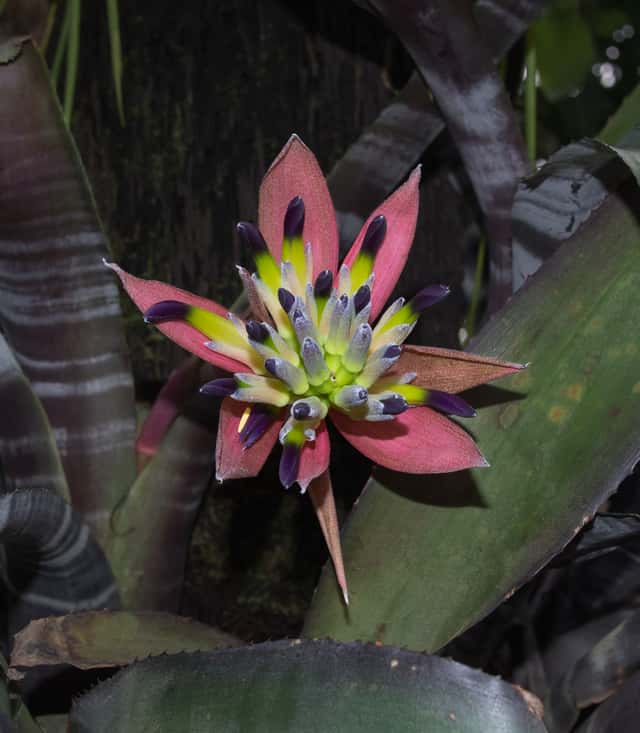
Aechmea is a genus of approximately 250 epiphytic bromeliads native to the tropical and subtropical Americas. Their distinctive tank-shaped rosettes form a central cup that holds water — a remarkable adaptation to life in the forest canopy. The most popular houseplant species, Aechmea fasciata (Silver Vase or Urn Plant), is celebrated for its long-lasting pink bracts and small violet flowers.
How to Propagate Urn Plant?
Offset Division (Pup Separation)
The mother plant blooms once then slowly dies — the pups carry on the cycle. Wear gloves as the serrated leaf edges can cause cuts.
- 1 Wait until the pup reaches at least 6 inches (15 cm) tall
- 2 Use a clean, sharp knife to separate the pup from the mother plant at the base
- 3 Allow the cut end to dry for 24 hours
- 4 Pot in slightly moist bromeliad mix
- 5 Keep in indirect light at stable temperature until established
Materials needed:
How Big Does Urn Plant Grow?
TLDR: Urn Plant can reach up to 90cm tall with Slow growth rate.
Max height
90cm
Spread
60cm
Growth rate
Slow
Foliage
Evergreen
Plant Uses
Ornamental
Great for decoration
Is your plant showing symptoms?
Click on the symptom to discover possible causes:
What Diseases Commonly Affect Urn Plant?
TLDR: Urn Plant is susceptible to 12 known diseases. Monitor regularly for early detection.
Root Rot
Root rot is a serious fungal disease that affects the root system of plants, causing them to decay and die. It is primarily caused by overwatering, poor drainage, or soil-borne fungi such as Pythium, Phytophthora, Rhizoctonia, and Fusarium. The disease thrives in waterlogged conditions where roots are deprived of oxygen, making them susceptible to fungal infection.
Crown Rot
Crown rot is a serious fungal disease that attacks the crown (base) of the plant where the stem meets the soil. It is caused by various fungal pathogens including Phytophthora, Fusarium, and Rhizoctonia. The disease thrives in waterlogged conditions and can quickly spread to kill the entire plant if not addressed promptly.
Leaf Spot
Leaf spot is a common fungal disease caused by various pathogens including Alternaria, Ascochyta, Colletotrichum, Septoria, and Venturia. It primarily affects leaves, causing discolored spots that can lead to premature leaf drop if left untreated.
Rust
Rust is a common fungal disease caused by fungi in the order Pucciniales that affects a wide variety of plants. The disease gets its name from the characteristic orange, yellow, or reddish-brown pustules that appear on leaves, resembling metal rust. This obligate fungal parasite requires living plants to survive and can cause significant economic losses in agricultural crops.
Meaning & Symbolism
Symbol of tropical resilience and exotic beauty; represents warmth and hospitality in its native Americas.
Fun Facts
The Aechmea genus contains around 250 species, all native to the tropical Americas
Aechmea fasciata can take 3-4 years to bloom for the first time when grown from a pup
The central water tank of bromeliads creates a micro-ecosystem that shelters frogs, insects and small lizards in the wild
The colorful bracts of Aechmea last for several months — far outlasting the tiny purple flowers that emerge from them
Frequently asked questions
How do I water an Aechmea correctly?
Is Aechmea toxic to pets?
Why does my Aechmea only bloom once?
What potting mix should I use for Aechmea?
How often should I fertilize Aechmea?
Compare with similar plants
| Attribute | Difficulty | Light | Watering | Pet Safe |
|---|---|---|---|---|
| Field Maple | Easy | Bright indirect | 14d | ✓ |
| Silver Birch | Easy | Direct sun | 14d | ✓ |
| Common Blanketflower | Easy | Direct sun | 10d | ✓ |
| Cushion Bush | Easy | Direct sun | 14d | ✓ |





