Iridaceae
African Iris: How to Grow and Care for Dietes iridioides
Dietes iridioides
A low-maintenance, highly resilient plant. Thrives in full sun but tolerates partial shade. Requires moderate watering until established, then becomes very drought-tolerant. Ideal for outdoor gardens, borders, and ground cover.
Every 10 days
Bright indirect
-5° - 38°C
40% - 70%
Categories
What is African Iris?
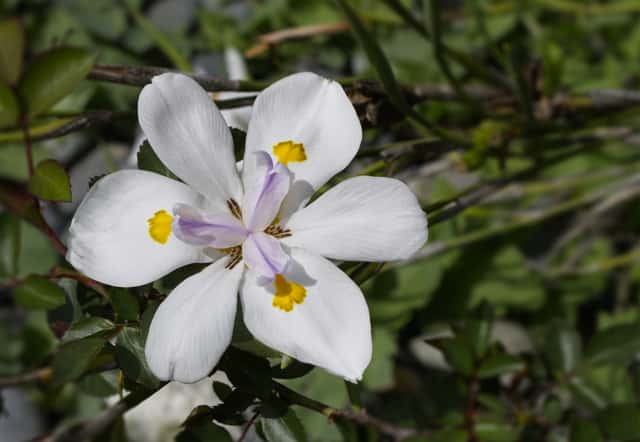
African Iris (Dietes iridioides) is a easy-care plant from the Iridaceae family. Dietes iridioides, commonly known as African Iris or Fortnight Lily, is a tough, evergreen perennial native to South Africa. It produces elegant white flowers adorned with violet and yellow markings that bloom in two-week intervals during spring and summer. Its sword-shaped leaves form attractive, l...
African Iris grows up to 1.2m, spread of 90cm, watering every 10 days, -5°C – 38°C, 40–70% humidity. It is not suitable for indoor environments and not safe for pets.
Unlike many tropical plants, African Iris tolerates watering mistakes. Best for beginners. Without precautions, ingestion can cause irritation in pets. Keep out of reach of cats and dogs.
How to Care for African Iris?
TLDR: African Iris needs Bright indirect, watering every 10 days, and temperatures between -5-38°C with 40-70% humidity.
How Often Should You Water African Iris?
Water every 7-10 days during active growth. Once established, the plant is highly drought-tolerant and can handle extended dry periods. Avoid waterlogging — excess moisture causes root rot.
How Much Light Does African Iris Need?
Prefers full sun to partial shade with at least 6 hours of direct sunlight per day. More sun equals more flowers. Tolerates exposed, windy locations.
What Is the Best Soil for African Iris?
Plant in well-draining soil. Tolerates poor and sandy soils but performs best with some organic matter incorporated. pH 6.0-8.0. Avoid waterlogged or compacted soils.
What Pot Should You Use for African Iris?
Terracotta or ceramic pot with drainage holes. For container growing, choose a wide, deep pot to accommodate rhizomes. The plant performs best when planted directly in the ground.
Care Schedule
Fertilize
Every 365 days
Repot
Every 730 days
What Is African Iris and Where Does It Come From?
Dietes iridioides, commonly known as African Iris or Fortnight Lily, is a tough, evergreen perennial native to South Africa. It produces elegant white flowers adorned with violet and yellow markings that bloom in two-week intervals during spring and summer. Its sword-shaped leaves form attractive, low-maintenance clumps.
How to Propagate African Iris?
Rhizome Division
Divide every 3-4 years to keep the plant vigorous and flowering. Use sterilized tools to prevent disease spread.
- 1 Carefully dig up the clump in spring
- 2 Divide the rhizomes with a clean knife, ensuring each division has roots
- 3 Replant divisions 30-45 cm apart in well-prepared soil
- 4 Water thoroughly after planting and keep soil moist until established
Materials needed:
Seed Propagation
Germination can be irregular. Rhizome division is faster and more reliable.
- 1 Collect ripe seeds after flowering
- 2 Sow in moist, well-draining seed mix
- 3 Keep in a warm, bright location
- 4 Transplant seedlings when 10-15 cm tall
Materials needed:
How Big Does African Iris Grow?
TLDR: African Iris can reach up to 1.2m tall with Medium growth rate.
Max height
1.2m
Spread
90cm
Growth rate
Medium
Foliage
Evergreen
Warning: Toxic Plant
This plant can be toxic if ingested. Keep out of reach of:
Plant Uses
Ornamental
Great for decoration
Medicinal
Medicinal properties
Ground Cover
Soil coverage
Medicinal Uses
- Rhizomes are used in traditional African medicine to treat dysentery, hypertension, and menstrual disorders. Infusions are prepared under supervision.
Is your plant showing symptoms?
Click on the symptom to discover possible causes:
What Diseases Commonly Affect African Iris?
TLDR: African Iris is susceptible to 9 known diseases. Monitor regularly for early detection.
Root Rot
Root rot is a serious fungal disease that affects the root system of plants, causing them to decay and die. It is primarily caused by overwatering, poor drainage, or soil-borne fungi such as Pythium, Phytophthora, Rhizoctonia, and Fusarium. The disease thrives in waterlogged conditions where roots are deprived of oxygen, making them susceptible to fungal infection.
Crown Rot
Crown rot is a serious fungal disease that attacks the crown (base) of the plant where the stem meets the soil. It is caused by various fungal pathogens including Phytophthora, Fusarium, and Rhizoctonia. The disease thrives in waterlogged conditions and can quickly spread to kill the entire plant if not addressed promptly.
Rust
Rust is a common fungal disease caused by fungi in the order Pucciniales that affects a wide variety of plants. The disease gets its name from the characteristic orange, yellow, or reddish-brown pustules that appear on leaves, resembling metal rust. This obligate fungal parasite requires living plants to survive and can cause significant economic losses in agricultural crops.
Scale Insects
Scale insects are small sap-sucking pests that appear as brown, shell-like bumps on plant stems and leaves. There are over 25 species, divided into armored (hard) and unarmored (soft) scales. They feed by piercing plant tissue and extracting sap, which weakens the plant and can lead to yellowing, stunted growth, and even death if left untreated. They also excrete honeydew, which attracts ants and promotes sooty mold growth.
Meaning & Symbolism
In South African culture, African Iris is associated with rainfall prediction and spiritual protection. Its blooms were traditionally seen as a herald of approaching rains.
Fun Facts
Dietes iridioides blooms in two-week intervals — which is why it is nicknamed Fortnight Lily.
Each individual flower lasts only one morning, yet the plant produces blooms continuously for months.
It is one of the toughest garden plants, tolerating wind, drought, light frost, and poor soils.
In South Africa, the flowering of this iris was traditionally interpreted as a sign of approaching rain.
Frequently asked questions
How often should I water African Iris?
Is African Iris toxic to pets?
Why is my African Iris not blooming?
Can African Iris grow in a pot?
How often should I divide African Iris?
Compare with similar plants
| Attribute | Difficulty | Light | Watering | Pet Safe |
|---|---|---|---|---|
| Field Maple | Easy | Bright indirect | 14d | ✓ |
| Silver Birch | Easy | Direct sun | 14d | ✓ |
| Cushion Bush | Easy | Direct sun | 14d | ✓ |
| Peruvian peppertree | Easy | Direct sun | 14d | ⚠️ |





