Apocynaceae
Ahouai: Full Sun Plant
Thevetia ahouai
Requires full sun and well-drained soil with regular watering. It should be handled with gloves and kept away from children and pets due to its high toxicity.
Every 10 days
Direct sun
10° - 35°C
50% - 80%
Categories
What is Ahouai?
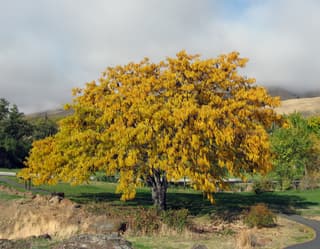
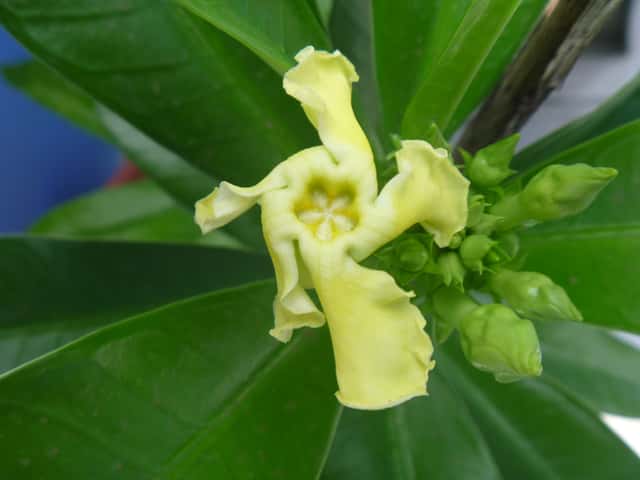
Ahouai (Thevetia ahouai) is a medium-care plant from the Apocynaceae family. Thevetia ahouai, also known as Cascabela ahouai, is a perennial tropical shrub in the Apocynaceae family. It features leathery, dark green, glossy leaves with a lanceolate shape. Its flowers are yellow, tubular, and lightly scented, followed by fleshy fruits that turn from green to red and finally b...
Ahouai grows up to 3.0m, spread of 200cm, watering every 10 days, 10°C – 35°C, 50–80% humidity. It is not suitable for indoor environments and not safe for pets.
Without precautions, ingestion can cause irritation in pets. Keep out of reach of cats and dogs.
How to Care for Ahouai?
TLDR: Ahouai needs Direct sun, watering every 10 days, and temperatures between 10-35°C with 50-80% humidity.
How Often Should You Water Ahouai?
Water whenever the top of the soil is dry. Avoid letting water accumulate in the saucer.
How Much Light Does Ahouai Need?
For abundant flowering, place the plant where it receives at least 6 hours of direct sunlight per day.
What Is the Best Soil for Ahouai?
Prefers fertile soils rich in organic matter, but with fast drainage to prevent root rot.
What Pot Should You Use for Ahouai?
Large ceramic or cement pots with excellent drainage to support its shrubby growth.
Care Schedule
Fertilize
Every 60 days
What Is Ahouai and Where Does It Come From?
Thevetia ahouai, also known as Cascabela ahouai, is a perennial tropical shrub in the Apocynaceae family. It features leathery, dark green, glossy leaves with a lanceolate shape. Its flowers are yellow, tubular, and lightly scented, followed by fleshy fruits that turn from green to red and finally black when ripe. The entire plant contains a milky white latex and cardiac glycosides, making it extremely toxic if ingested.
How to Propagate Ahouai?
Seed Propagation
- Use gloves throughout the process to avoid contact with the toxic latex.
- Keep the substrate warm to speed up germination.
- 1 Collection
Harvest seeds from ripe (black) fruits and remove all pulp.
- 2 Cleaning
Wash the seeds well and let them dry in the shade for 24 hours.
- 3 Planting
Sow in a light, sandy substrate, covering lightly with soil.
Materials needed:
Stem Cuttings
- Using rooting hormone can significantly increase the success rate.
- Maintain high humidity by covering the cutting with clear plastic.
- 1 Cutting
Cut a semi-woody branch approximately 15-20 cm long.
- 2 Preparation
Remove leaves from the bottom half and let the latex dry for a few hours.
- 3 Rooting
Insert the cutting into a mixture of sand and peat, keeping it in a bright spot but out of direct sunlight.
Materials needed:
How Big Does Ahouai Grow?
TLDR: Ahouai can reach up to 3.0m tall with Medium growth rate.
Max height
3.0m
Spread
2.0m
Growth rate
Medium
Foliage
Evergreen
Warning: Toxic Plant
This plant can be toxic if ingested. Keep out of reach of:
Plant Uses
Ornamental
Great for decoration
Medicinal
Medicinal properties
Is your plant showing symptoms?
Click on the symptom to discover possible causes:
What Diseases Commonly Affect Ahouai?
TLDR: Ahouai is susceptible to 8 known diseases. Monitor regularly for early detection.
Aphids
Aphids are small, soft-bodied, pear-shaped insects (1/16 to 1/8 inch long) that feed by sucking nutrient-rich sap from plants. They reproduce rapidly and can quickly weaken plants, causing distorted growth and transmitting plant viruses. Aphids come in various colors including green, black, red, yellow, brown, and gray. They secrete honeydew, a sticky substance that attracts ants and encourages sooty mold growth.
Mealybugs
Mealybugs are small, soft-bodied insects covered with a white, waxy, cottony material. They are common pests of houseplants and outdoor plants in mild climates. These sap-sucking insects feed on plant tissue, causing damage, stunted growth, and can lead to plant death if left untreated. They produce sticky honeydew which attracts sooty mold.
Scale Insects
Scale insects are small sap-sucking pests that appear as brown, shell-like bumps on plant stems and leaves. There are over 25 species, divided into armored (hard) and unarmored (soft) scales. They feed by piercing plant tissue and extracting sap, which weakens the plant and can lead to yellowing, stunted growth, and even death if left untreated. They also excrete honeydew, which attracts ants and promotes sooty mold growth.
Spider Mites
Spider mites are tiny arachnids (less than 1/20 inch long) related to spiders and ticks that feed on plant sap. They thrive in hot, dry conditions and can cause significant damage to ornamental and vegetable plants. During severe infestations, crop losses can reach 14% or higher as these pests disrupt vital plant processes including photosynthesis, carbon dioxide absorption, and transpiration.
Meaning & Symbolism
In popular culture, it is seen as a protective plant, although its toxicity serves as a reminder of nature's power.
Compare with similar plants
| Attribute | Difficulty | Light | Watering | Pet Safe |
|---|---|---|---|---|
| Azalea | Medium | Partial shade | 3d | ⚠️ |
| Wild Lettuce | Medium | Direct sun | 7d | ⚠️ |
| Cape Primrose | Medium | Partial shade | 7d | ✓ |
| Honey Locust | Medium | Direct sun | 14d | ✓ |