Fabaceae
Silk Tree (Albizia julibrissin): Complete Care Guide
Albizia julibrissin
The Silk Tree is low-maintenance and adaptable once established. It thrives in full sun and tolerates poor, dry, and even alkaline soils. Water regularly during the first two growing seasons to establish roots; thereafter it is quite drought tolerant. Fertilize once in spring with a balanced slow-release fertilizer. Prune in late winter to shape and remove dead wood. Caution: seeds contain a neurotoxin toxic to dogs and children.
Every 10 days
Direct sun
-15° - 38°C
40% - 70%
Categories
What is Silk Tree?
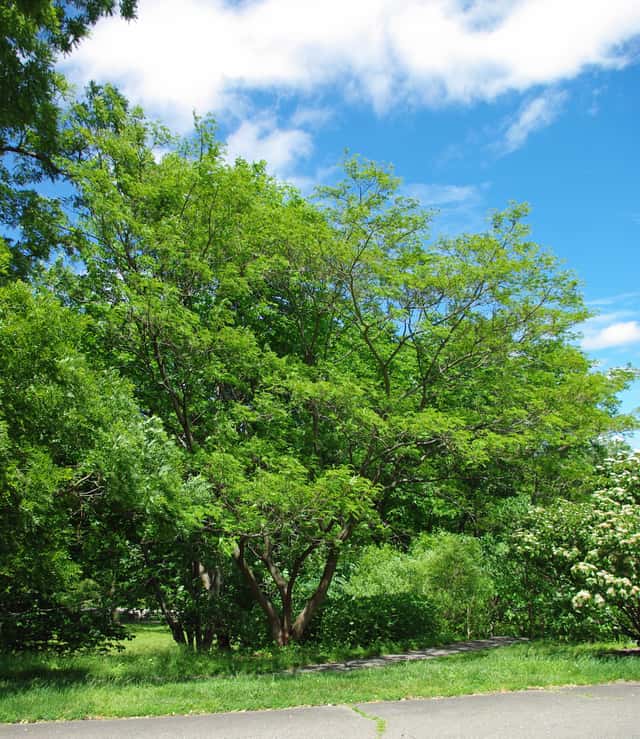
Silk Tree (Albizia julibrissin) is a easy-care plant from the Fabaceae family. Albizia julibrissin, commonly known as the Silk Tree or Mimosa, is a fast-growing deciduous tree native to Iran, India, China, and Japan. It is celebrated for its stunning pink and white powder-puff flowers that bloom in spring and summer, attracting bees, butterflies, and hummingbirds. Its light, a...
Silk Tree grows up to 12.0m, with spread of 1500cm, watering every 10 days, -15°C – 38°C, 40–70% humidity. It is not suitable for indoor environments and not safe for pets.
Unlike many tropical plants, Silk Tree tolerates watering mistakes. Best for beginners. Without precautions, ingestion can cause irritation in pets. Keep out of reach of cats and dogs.
How to Care for Silk Tree?
TLDR: Silk Tree needs Direct sun, watering every 10 days, and temperatures between -15-38°C with 40-70% humidity.
How Often Should You Water Silk Tree?
Water every 7-14 days during the first two growing seasons to establish roots. Once established, water every 10-15 days in summer, allowing the soil to dry slightly between waterings. Avoid waterlogged soil — overwatering causes yellowing leaves and root rot. Reduce watering in fall and winter.
How Much Light Does Silk Tree Need?
Plant in full sun with at least 6 hours of direct sunlight daily. Full sun produces the most abundant flowering. The tree tolerates light shade but flowering will be reduced. Protect from strong winds, as its wood can be brittle.
What Is the Best Soil for Silk Tree?
Prefers well-draining, loamy or sandy soil with pH 6.0-8.0. Highly adaptable — tolerates clay, chalk, poor, and alkaline soils as long as drainage is adequate. Avoid waterlogged conditions. No need for rich soil; overly fertile soil promotes excessive leaf growth at the expense of flowers.
What Pot Should You Use for Silk Tree?
The Silk Tree is too large for permanent container growing. For temporary seedling cultivation, use plastic or clay pots with ample drainage holes, size 40+ liters. Transplant to the ground as soon as possible — it does not thrive long-term in containers.
Care Schedule
Fertilize
Every 90 days
What Is Silk Tree and Where Does It Come From?
Albizia julibrissin, commonly known as the Silk Tree or Mimosa, is a fast-growing deciduous tree native to Iran, India, China, and Japan. It is celebrated for its stunning pink and white powder-puff flowers that bloom in spring and summer, attracting bees, butterflies, and hummingbirds. Its light, airy canopy — like an open parasol — can reach up to 12 meters tall and 15 meters wide, casting dappled shade below. The finely cut, fern-like bipinnate leaves fold at night and during rain, giving the tree a dreamy, animated quality. Introduced to the United States in 1745, it has become a beloved ornamental tree across temperate climates worldwide.
How to Propagate Silk Tree?
Seed Propagation
Scarification is essential for good germination rates. Seeds typically germinate in 2-4 weeks at warm temperatures. Sow in spring for best results.
- 1 Collect dry seed pods in autumn/winter and extract the seeds.
- 2 Scarify seeds by soaking in hot water for 24 hours to soften the hard coat.
- 3 Sow in moist, well-draining potting mix at 1 cm depth.
- 4 Keep in a warm location (20-25°C) with indirect light until germination.
- 5 Transplant to a larger pot or final location after the first true leaves appear.
Materials needed:
Root Cuttings
Root cuttings are best suited for experienced gardeners. Success rates vary. The tree will also resprout naturally when cut back or damaged.
- 1 Take 10-15 cm root cuttings in early spring.
- 2 Plant horizontally in moist potting mix at 5 cm depth.
- 3 Keep the substrate slightly moist in a location with indirect light.
- 4 Wait for sprouting before exposing to direct sun.
Materials needed:
How Big Does Silk Tree Grow?
TLDR: Silk Tree can reach up to 12.0m tall with Fast growth rate.
Max height
12.0m
Spread
15.0m
Growth rate
Fast
Foliage
Deciduous
Warning: Toxic Plant
This plant can be toxic if ingested. Keep out of reach of:
Plant Uses
Ornamental
Great for decoration
Medicinal
Medicinal properties
Aromatic
Pleasant fragrance
Medicinal Uses
- Bark and flowers used in Traditional Chinese Medicine for centuries to treat anxiety, depression, and insomnia
- Scientific studies have confirmed anxiolytic and anti-inflammatory properties of Albizia bark extracts
Is your plant showing symptoms?
Click on the symptom to discover possible causes:
What Diseases Commonly Affect Silk Tree?
TLDR: Silk Tree is susceptible to 10 known diseases. Monitor regularly for early detection.
Fusarium Wilt
Fusarium wilt is a serious fungal disease caused by the soil-borne fungus Fusarium oxysporum. The fungus invades roots and blocks the water-conducting vessels (xylem) of the plant, causing progressive wilting and eventual death. Host-specific forms of the pathogen exist that attack different plant species.
Verticillium Wilt
Verticillium wilt is a soil-borne fungal disease caused primarily by the fungi Verticillium dahliae and V. albo-atrum. These pathogens infect plant roots and grow within the vascular tissues, blocking water and nutrient transport, resulting in wilting and eventual plant death. The disease affects over 350 plant species including vegetables, fruits, ornamental flowers, and trees. The fungi can survive in soil for more than 10 years as resistant structures called microsclerotia.
Root Rot
Root rot is a serious fungal disease that affects the root system of plants, causing them to decay and die. It is primarily caused by overwatering, poor drainage, or soil-borne fungi such as Pythium, Phytophthora, Rhizoctonia, and Fusarium. The disease thrives in waterlogged conditions where roots are deprived of oxygen, making them susceptible to fungal infection.
Scale Insects
Scale insects are small sap-sucking pests that appear as brown, shell-like bumps on plant stems and leaves. There are over 25 species, divided into armored (hard) and unarmored (soft) scales. They feed by piercing plant tissue and extracting sap, which weakens the plant and can lead to yellowing, stunted growth, and even death if left untreated. They also excrete honeydew, which attracts ants and promotes sooty mold growth.
Meaning & Symbolism
In Chinese culture, Albizia julibrissin is known as the "Happiness Tree" (合欢树, Héhuān shù). Its flowers and bark symbolize love, hope, and the healing of a sorrowful heart. For centuries, traditional Chinese medicine has used the bark and flowers to ease anxiety, depression, and insomnia.
Fun Facts
In China, Albizia is called the "Happiness Tree" (合欢树), and its bark and flowers have been used for centuries in traditional medicine to treat anxiety and depression.
The fern-like leaves of the Silk Tree fold closed at nightfall and during rain — a movement called nyctinasty — as if the tree is going to sleep.
A mature Silk Tree can grow up to 90 cm per year, making it one of the fastest-growing ornamental trees in temperate climates.
Despite its delicate appearance, the Silk Tree is surprisingly cold-hardy, surviving temperatures down to -15°C once well established.
Frequently asked questions
How often should I water my Silk Tree?
Is the Silk Tree toxic to dogs?
Can the Silk Tree be grown in a pot?
What is the most serious disease affecting the Silk Tree?
When does the Silk Tree bloom?
Compare with similar plants
| Attribute | Difficulty | Light | Watering | Pet Safe |
|---|---|---|---|---|
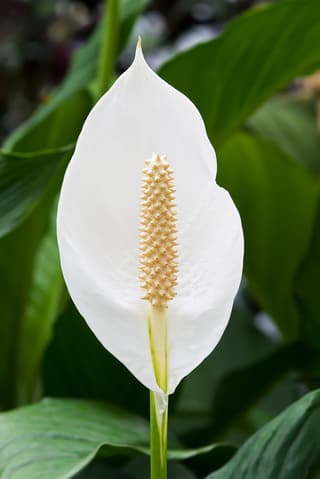
| Peace Lily | Easy | Low light | 4d | ⚠️ |
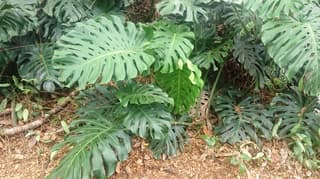
| Swiss Cheese Plant | Easy | Partial shade | 10d | ⚠️ |
| Golden Pothos | Easy | Low light | 8d | ⚠️ |
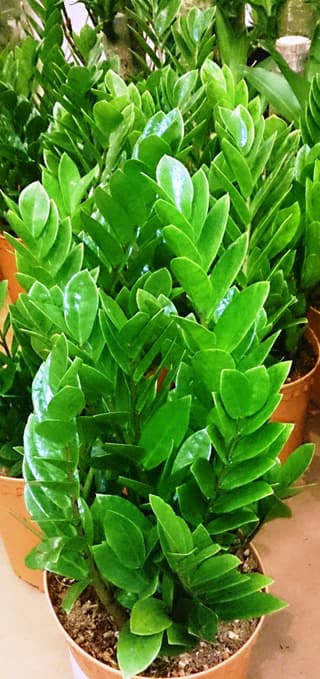
| ZZ Plant | Easy | Low light | 18d | ⚠️ |