Bromeliaceae
Alcantarea: Complete Care Guide for the Imperial Bromeliad Genus
Alcantarea
Plant in sharply draining rocky or sandy soil. Keep the central cup filled with fresh water. Thrives in full sun to partial sun and tolerates extended drought. Fertilize every 90 days with diluted liquid fertilizer. Hardy to around 5°C (40°F); protect from frost.
Every 8 days
Direct sun
5° - 35°C
50% - 80%
Categories
What is Alcantarea / Imperial Bromeliad (genus)?
Alcantarea / Imperial Bromeliad (genus) (Alcantarea) is a easy-care plant from the Bromeliaceae family. Alcantarea is a genus of giant bromeliads native to rocky outcrops and cliff faces in Brazil, particularly in Rio de Janeiro state. These monumental plants form a central water-holding tank with their massive leaf rosettes and are adapted to full sun and periodic drought, making them outstanding spe...
Alcantarea / Imperial Bromeliad (genus) grows up to 1.5m, spread of 180cm, watering every 8 days, 5°C – 35°C, 50–80% humidity. It is not suitable for indoor environments and safe for pets.
Unlike many tropical plants, Alcantarea / Imperial Bromeliad (genus) tolerates watering mistakes. Best for beginners. Unlike many popular species, Alcantarea / Imperial Bromeliad (genus) is safe to keep around pets.
How to Care for Alcantarea / Imperial Bromeliad (genus)?
TLDR: Alcantarea / Imperial Bromeliad (genus) needs Direct sun, watering every 8 days, and temperatures between 5-35°C with 50-80% humidity.
How Often Should You Water Alcantarea / Imperial Bromeliad (genus)?
Fill the central tank formed by the leaf rosette with clean water every 7-10 days. Flush and refresh the cup monthly to prevent mosquito breeding. Water the soil only during extended dry spells — Alcantarea is highly drought-tolerant once established.
How Much Light Does Alcantarea / Imperial Bromeliad (genus) Need?
Prefers full sun to partial sun. Unlike most bromeliads, Alcantarea thrives with several hours of direct sunlight daily, which also enhances the reddish leaf coloration found in some cultivars like A. imperialis Rubra.
What Is the Best Soil for Alcantarea / Imperial Bromeliad (genus)?
Use a very fast-draining mix: combine coarse sand, perlite, or gravel with a small amount of organic matter. Avoid clay-heavy or waterlogged soils. Target pH 5.5–7.0. Rocky, shallow substrate mimics its natural cliff habitat.
What Pot Should You Use for Alcantarea / Imperial Bromeliad (genus)?
Large terracotta, stone, or concrete planters for outdoor use. Excellent as a landscape specimen or mounted on rocks. Not suited for indoor pots due to its impressive size.
Care Schedule
Fertilize
Every 90 days
Repot
Every 730 days
What Is Alcantarea / Imperial Bromeliad (genus) and Where Does It Come From?
Alcantarea is a genus of giant bromeliads native to rocky outcrops and cliff faces in Brazil, particularly in Rio de Janeiro state. These monumental plants form a central water-holding tank with their massive leaf rosettes and are adapted to full sun and periodic drought, making them outstanding specimens for tropical and subtropical gardens.
How to Propagate Alcantarea / Imperial Bromeliad (genus)?
Pup Division
Only remove pups after the mother plant has flowered. The mother plant dies naturally after flowering, and the pups carry on as the next generation.
- 1 Wait until pups are at least 1/3 the size of the mother plant
- 2 Cut the pup with a clean sharp knife, retaining some roots
- 3 Allow the cut to dry for 1-2 days in a shaded area
- 4 Plant the pup in well-draining substrate and water lightly
- 5 Avoid overwatering until the pup is established
Materials needed:
How Big Does Alcantarea / Imperial Bromeliad (genus) Grow?
TLDR: Alcantarea / Imperial Bromeliad (genus) can reach up to 1.5m tall with Slow growth rate.
Max height
1.5m
Spread
1.8m
Growth rate
Slow
Foliage
Evergreen
Plant Uses
Ornamental
Great for decoration
Is your plant showing symptoms?
Click on the symptom to discover possible causes:
What Diseases Commonly Affect Alcantarea / Imperial Bromeliad (genus)?
TLDR: Alcantarea / Imperial Bromeliad (genus) is susceptible to 4 known diseases. Monitor regularly for early detection.
Root Rot
Root rot is a serious fungal disease that affects the root system of plants, causing them to decay and die. It is primarily caused by overwatering, poor drainage, or soil-borne fungi such as Pythium, Phytophthora, Rhizoctonia, and Fusarium. The disease thrives in waterlogged conditions where roots are deprived of oxygen, making them susceptible to fungal infection.
Scale Insects
Scale insects are small sap-sucking pests that appear as brown, shell-like bumps on plant stems and leaves. There are over 25 species, divided into armored (hard) and unarmored (soft) scales. They feed by piercing plant tissue and extracting sap, which weakens the plant and can lead to yellowing, stunted growth, and even death if left untreated. They also excrete honeydew, which attracts ants and promotes sooty mold growth.
Mealybugs
Mealybugs are small, soft-bodied insects covered with a white, waxy, cottony material. They are common pests of houseplants and outdoor plants in mild climates. These sap-sucking insects feed on plant tissue, causing damage, stunted growth, and can lead to plant death if left untreated. They produce sticky honeydew which attracts sooty mold.
Leaf Spot
Leaf spot is a common fungal disease caused by various pathogens including Alternaria, Ascochyta, Colletotrichum, Septoria, and Venturia. It primarily affects leaves, causing discolored spots that can lead to premature leaf drop if left untreated.
Meaning & Symbolism
Symbol of strength and resilience from the Brazilian rock faces
Fun Facts
Alcantarea imperialis can take up to 20 years to flower for the first time
It grows naturally on bare rock faces with minimal soil
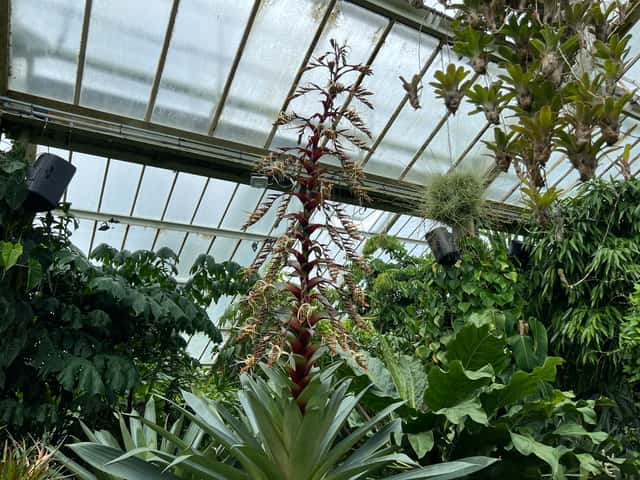
The flower spike can exceed 2 meters in height
The central water tank provides habitat for insects, frogs, and birds in the wild
Frequently asked questions
How often should I water Alcantarea?
Can Alcantarea be grown indoors?
Is Alcantarea toxic to pets?
How long does it take Alcantarea to flower?
Why are my Alcantarea leaves turning yellow?
Compare with similar plants
| Attribute | Difficulty | Light | Watering | Pet Safe |
|---|---|---|---|---|
| Field Maple | Easy | Bright indirect | 14d | ✓ |
| Silver Birch | Easy | Direct sun | 14d | ✓ |
| Cushion Bush | Easy | Direct sun | 14d | ✓ |
| Peruvian peppertree | Easy | Direct sun | 14d | ⚠️ |