Oleaceae
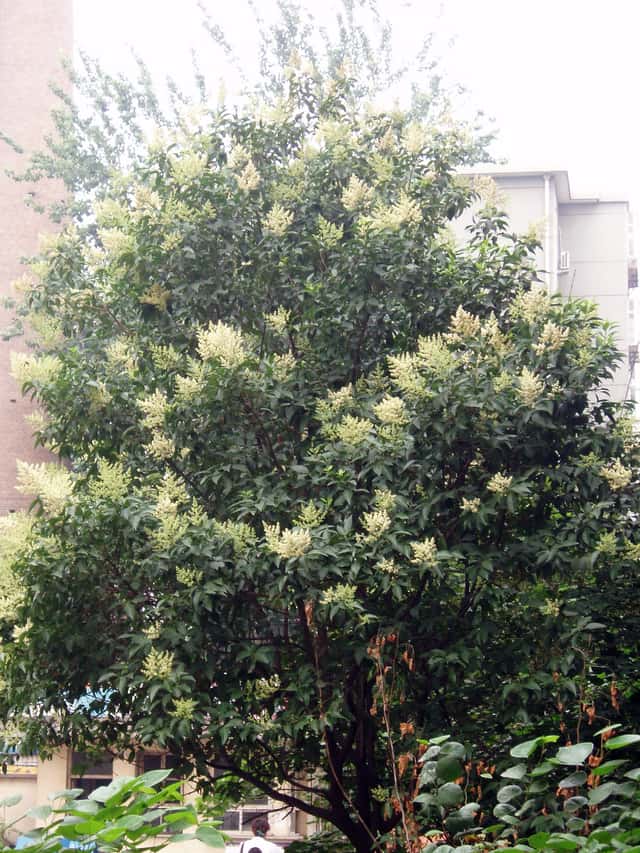
Glossy Privet — Ligustrum lucidum
Ligustrum lucidum
Low-maintenance and robust tree. Drought-tolerant once established. Prefers full sun to partial shade. Adapts to various well-drained soil types. Requires regular pruning to control size and weekly watering during the growing season.
Every 7 days
Bright indirect
-10° - 35°C
40% - 70%
Categories
What is Glossy Privet?
Glossy Privet (Ligustrum lucidum) is a easy-care plant from the Oleaceae family. Glossy Privet (Ligustrum lucidum) is a fast-growing evergreen tree native to China, Korea, and Japan. Widely planted as an urban street tree and ornamental, it is recognized for its glossy dark green leaves and clusters of small, fragrant white flowers in summer. It is considered invasive in many re...
Glossy Privet grows up to 10.0m, spread of 600cm, watering every 7 days, -10°C – 35°C, 40–70% humidity. It is not suitable for indoor environments and not safe for pets.
Unlike many tropical plants, Glossy Privet tolerates watering mistakes. Best for beginners. Without precautions, ingestion can cause irritation in pets. Keep out of reach of cats and dogs.
How to Care for Glossy Privet?
TLDR: Glossy Privet needs Bright indirect, watering every 7 days, and temperatures between -10-35°C with 40-70% humidity.
How Often Should You Water Glossy Privet?
Water weekly during summer (every 7 days). Once established, glossy privet is drought-tolerant — avoid waterlogging. Reduce frequency in winter.
How Much Light Does Glossy Privet Need?
Prefers full sun (minimum 6 hours per day). Tolerates partial shade but performs best with abundant direct light.
What Is the Best Soil for Glossy Privet?
Prefers well-drained, slightly acidic to neutral soil (pH 6.0–7.0). Adapts to clay, sandy, and loamy soils. Avoid poor drainage to prevent root rot.
What Pot Should You Use for Glossy Privet?
Large ceramic or plastic container for young specimens. Best suited for direct ground planting in urban landscapes.
Care Schedule
Fertilize
Every 90 days
What Is Glossy Privet and Where Does It Come From?
Glossy Privet (Ligustrum lucidum) is a fast-growing evergreen tree native to China, Korea, and Japan. Widely planted as an urban street tree and ornamental, it is recognized for its glossy dark green leaves and clusters of small, fragrant white flowers in summer. It is considered invasive in many regions worldwide. Its dark blue-black berries are TOXIC to pets (dogs and cats) due to oleuropein and syringin compounds, and potentially harmful to humans, especially children.
How to Propagate Glossy Privet?
Stem Cutting
Use clean, sterilized tools. Keep substrate slightly moist, never waterlogged. Semi-hardwood cuttings in summer yield best results.
- 1 Cut a healthy stem 10-15 cm long with 2-3 pairs of leaves
- 2 Remove lower leaves and apply rooting hormone to the base
- 3 Plant in moist, well-drained substrate (perlite + potting mix)
- 4 Keep in indirect light with consistent moisture
Materials needed:
Seed Propagation
Cold stratification significantly improves germination rates. Handle berries with caution as they are toxic.
- 1 Collect ripe berries and remove the pulp
- 2 Cold-stratify seeds in the refrigerator for 30 days before planting
- 3 Sow in light, moist substrate 1 cm deep
- 4 Maintain temperature 18-22°C for good germination
Materials needed:
How Big Does Glossy Privet Grow?
TLDR: Glossy Privet can reach up to 10.0m tall with Fast growth rate.
Max height
10.0m
Spread
6.0m
Growth rate
Fast
Foliage
Evergreen
Warning: Toxic Plant
This plant can be toxic if ingested. Keep out of reach of:
Plant Uses
Ornamental
Great for decoration
Is your plant showing symptoms?
Click on the symptom to discover possible causes:
What Diseases Commonly Affect Glossy Privet?
TLDR: Glossy Privet is susceptible to 9 known diseases. Monitor regularly for early detection.
Anthracnose
Anthracnose is a fungal disease caused by fungi in the genus Colletotrichum that affects many plants, including vegetables, fruits, and trees. The disease thrives in cool, wet conditions, causing dark, sunken lesions on leaves, stems, flowers, and fruits.
Powdery Mildew
Powdery mildew is a common fungal disease caused by various fungi species including Erysiphe, Podosphaera, Oïdium, and Leveillula. It affects over 10,000 plant species worldwide. The disease thrives in warm, dry climates with high humidity and appears as a distinctive white powdery coating on plant surfaces.
Root Rot
Root rot is a serious fungal disease that affects the root system of plants, causing them to decay and die. It is primarily caused by overwatering, poor drainage, or soil-borne fungi such as Pythium, Phytophthora, Rhizoctonia, and Fusarium. The disease thrives in waterlogged conditions where roots are deprived of oxygen, making them susceptible to fungal infection.
Cercospora Leaf Spot
Cercospora leaf spot is a common fungal disease caused by Cercospora species that affects many plant types, particularly beets, roses, and leafy vegetables. The disease thrives in warm, humid conditions and can cause significant defoliation, reducing plant vigor and yield. It spreads rapidly through water splash, wind, and contaminated tools.
Fun Facts
Glossy privet can reach up to 10 meters tall, making it a true large-canopy tree under ideal conditions
It is one of the most problematic invasive tree species in southern Brazil, particularly in Rio Grande do Sul state
The fragrant white flowers attract many pollinators including bees and butterflies
In traditional Chinese medicine, the dried fruits (Nu Zhen Zi) have been used for centuries as a tonic
Frequently asked questions
Are glossy privet berries toxic to pets?
How often should I water glossy privet?
Can glossy privet be grown in a pot?
Why is glossy privet considered invasive?
What diseases commonly affect glossy privet?
Compare with similar plants
| Attribute | Difficulty | Light | Watering | Pet Safe |
|---|---|---|---|---|
| Small Scabious | Easy | Direct sun | 7d | ✓ |
| Field Maple | Easy | Bright indirect | 14d | ✓ |
| Silver Birch | Easy | Direct sun | 14d | ✓ |
| Red valerian | Easy | Direct sun | 10d | ✓ |


