Crassulaceae
Tree of Love (Aichryson laxum): Care Guide
Aichryson laxum
Easy-care plant that tolerates drought. Water every 2 weeks, allowing soil to dry between waterings. Prefers bright light. Avoid waterlogging to prevent root rot.
Every 14 days
Bright indirect
10° - 27°C
40% - 70%
Categories
What is Tree of Love?
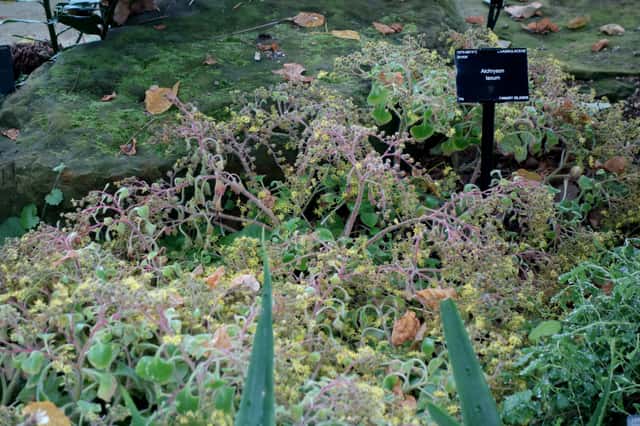
Tree of Love (Aichryson laxum) is a easy-care plant from the Crassulaceae family. The Tree of Love (Aichryson laxum) is a compact succulent native to the Canary Islands, belonging to the Crassulaceae family. It features fleshy heart-shaped leaves arranged in rosettes at the tips of its branches, and produces small star-shaped yellow flowers in spring and summer. It is an annual o...
Tree of Love grows up to 50cm, spread of 30cm, watering every 14 days, 10°C – 27°C, 40–70% humidity. It is suitable for indoor environments and safe for pets.
Unlike many tropical plants, Tree of Love tolerates watering mistakes. Best for beginners. Unlike many popular species, Tree of Love is safe to keep around pets. Without adequate drainage, root rot can develop within 28 days.
How to Care for Tree of Love?
TLDR: Tree of Love needs Bright indirect, watering every 14 days, and temperatures between 10-27°C with 40-70% humidity.
How Often Should You Water Tree of Love?
Water every 14 days, allowing the soil to dry out completely between waterings. Reduce watering further in winter. Always use a pot with good drainage.
How Much Light Does Tree of Love Need?
Place in a bright light location or partial direct sun. In low light, the plant becomes leggy and weak. A south- or west-facing window is ideal.
What Is the Best Soil for Tree of Love?
Use succulent and cactus potting mix or well-draining soil. Add perlite or coarse sand to improve drainage. Ideal pH between 5.5 and 6.5.
What Pot Should You Use for Tree of Love?
Terracotta or clay pot with a drainage hole. The porous material helps evaporate excess moisture, preventing root rot.
Care Schedule
Fertilize
Every 14 days
Rotate
Every 30 days
Repot
Every 730 days
What Is Tree of Love and Where Does It Come From?
The Tree of Love (Aichryson laxum) is a compact succulent native to the Canary Islands, belonging to the Crassulaceae family. It features fleshy heart-shaped leaves arranged in rosettes at the tips of its branches, and produces small star-shaped yellow flowers in spring and summer. It is an annual or biennial plant that naturally dies after flowering.
How to Propagate Tree of Love?
Stem Cutting
Use clean, sharp tools. Do not overwater during rooting as excess moisture can cause rot.
- 1 Cut an apical stem 7-10 cm long in spring or summer
- 2 Remove lower leaves and allow to callous for 1-2 days
- 3 Plant in dry succulent substrate
- 4 Water lightly after 1 week and keep in indirect light until rooted
Materials needed:
How Big Does Tree of Love Grow?
TLDR: Tree of Love can reach up to 50cm tall with Medium growth rate.
Max height
50cm
Spread
30cm
Growth rate
Medium
Foliage
Semi-evergreen
Plant Uses
Ornamental
Great for decoration
Is your plant showing symptoms?
Click on the symptom to discover possible causes:
What Diseases Commonly Affect Tree of Love?
TLDR: Tree of Love is susceptible to 4 known diseases. Monitor regularly for early detection.
Spider Mites
Spider mites are tiny arachnids (less than 1/20 inch long) related to spiders and ticks that feed on plant sap. They thrive in hot, dry conditions and can cause significant damage to ornamental and vegetable plants. During severe infestations, crop losses can reach 14% or higher as these pests disrupt vital plant processes including photosynthesis, carbon dioxide absorption, and transpiration.
Mealybugs
Mealybugs are small, soft-bodied insects covered with a white, waxy, cottony material. They are common pests of houseplants and outdoor plants in mild climates. These sap-sucking insects feed on plant tissue, causing damage, stunted growth, and can lead to plant death if left untreated. They produce sticky honeydew which attracts sooty mold.
Root Rot
Root rot is a serious fungal disease that affects the root system of plants, causing them to decay and die. It is primarily caused by overwatering, poor drainage, or soil-borne fungi such as Pythium, Phytophthora, Rhizoctonia, and Fusarium. The disease thrives in waterlogged conditions where roots are deprived of oxygen, making them susceptible to fungal infection.
Root-Knot Nematodes
Root-knot nematodes (Meloidogyne species) are microscopic roundworms that parasitize plant roots, causing characteristic galls or knots. These soil-borne pests are among the most economically damaging plant pathogens worldwide, affecting a wide range of ornamental and edible plants. The nematodes inject enzymes into root cells, causing abnormal swelling and disrupting water and nutrient uptake.
Meaning & Symbolism
Symbolizes love and happiness. The heart-shaped leaves are considered a good luck charm, believed to attract love and romance to the home.
Fun Facts
Native to the Canary Islands, it grows naturally on humid cliffs and laurel forests
Its star-shaped yellow flowers appear in clusters in spring and summer, after which the plant may die naturally
The heart-shaped leaves inspired the popular name Tree of Love
It belongs to the Crassulaceae family, the same as jade plant and echeveria
Frequently asked questions
How often should I water my Tree of Love?
Is the Tree of Love toxic to pets?
Why is my Tree of Love dropping leaves?
Can the Tree of Love be grown indoors?
Compare with similar plants
| Attribute | Difficulty | Light | Watering | Pet Safe |
|---|---|---|---|---|
| Field Maple | Easy | Bright indirect | 14d | ✓ |
| Silver Birch | Easy | Direct sun | 14d | ✓ |
| Cushion Bush | Easy | Direct sun | 14d | ✓ |
| Peruvian peppertree | Easy | Direct sun | 14d | ⚠️ |