Brassicaceae
Arugula: Aromatic Plant
Eruca vesicaria
Arugula is a fast-growing plant suitable for beginners that prefers cool weather and grows best in spring and fall. It requires full sun, fertile and well-drained soil, and regular watering. In hot and dry summer weather, the plant bolts quickly and becomes more bitter, so it is worth choosing a shadier spot for summer sowing.
Every 2 days
Bright indirect
-1° - 27°C
40% - 70%
Categories
What is Arugula?
Arugula (Eruca vesicaria) is a easy-care plant from the Brassicaceae family. Arugula (Eruca vesicaria) is an annual herbaceous plant in the mustard family (Brassicaceae), native to the Mediterranean region and Western Asia, known for its characteristic peppery and nutty flavor. The plant's pinnate, deeply lobed leaves quickly form a dense rosette and are valued in the kitche...
Arugula grows up to 1.0m, spread of 30cm, watering every 2 days, -1°C – 27°C, 40–70% humidity. It is suitable for indoor environments and safe for pets.
Unlike many tropical plants, Arugula tolerates watering mistakes. Best for beginners. Unlike many popular species, Arugula is safe to keep around pets. Without adequate drainage, root rot can develop within 7 days.
How to Care for Arugula?
TLDR: Arugula needs Bright indirect, watering every 2 days, and temperatures between -1-27°C with 40-70% humidity.
How Often Should You Water Arugula?
Water arugula every 2–3 days, keeping the soil consistently moist but avoiding standing water around the roots. Excessive moisture promotes root rot, so always ensure the growing container has adequate drainage.
How Much Light Does Arugula Need?
Arugula prefers full sun for at least 6 hours a day, which ensures dense and flavorful foliage. During the hot summer, it is beneficial to place the plant in partial shade to slow down bolting and maintain the flavor quality of the leaves for longer.
What Is the Best Soil for Arugula?
Use well-draining, humus-rich loamy soil with a pH between 6.0 and 7.0. Mix mature compost into the soil before planting to ensure rapid growth and lush foliage.
What Pot Should You Use for Arugula?
A shallow but wide container with a minimum depth of 15 cm and a mandatory drainage hole is suitable for growing arugula to prevent excess moisture buildup.
Care Schedule
Fertilize
Every 45 days
What Is Arugula and Where Does It Come From?
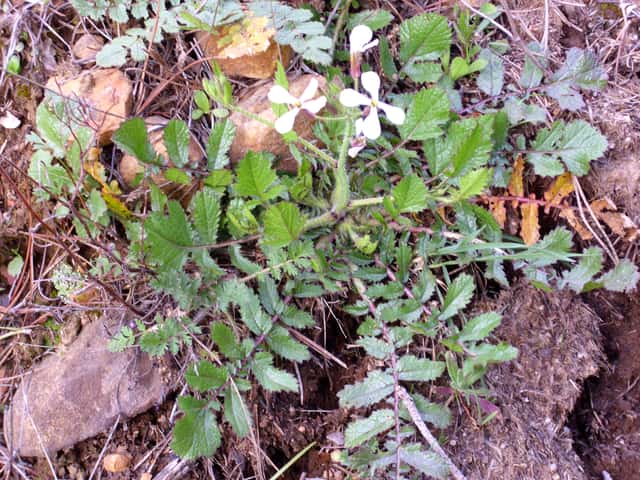
Arugula (Eruca vesicaria) is an annual herbaceous plant in the mustard family (Brassicaceae), native to the Mediterranean region and Western Asia, known for its characteristic peppery and nutty flavor. The plant's pinnate, deeply lobed leaves quickly form a dense rosette and are valued in the kitchen both fresh and cooked. During flowering, the stem grows tall and bears white to creamy flowers with characteristic violet veins on the petals. Arugula is a fast-growing crop suitable for successive sowing throughout the growing season.
How Big Does Arugula Grow?
TLDR: Arugula can reach up to 1.0m tall with Fast growth rate.
Max height
1.0m
Spread
30cm
Growth rate
Fast
Foliage
Deciduous
Plant Uses
Edible
Can be consumed
Medicinal
Medicinal properties
Aromatic
Pleasant fragrance
Medicinal Uses
- Rich in antioxidants
- Promotes digestion
- Rich in vitamins C and K
- Traditionally used as an aphrodisiac
Culinary Uses
- In fresh salads
- On pizza and in pasta
- In pestos and sauces
- In sandwiches and snacks
- Paired with parmesan and lemon
Is your plant showing symptoms?
Click on the symptom to discover possible causes:
What Diseases Commonly Affect Arugula?
TLDR: Arugula is susceptible to 12 known diseases. Monitor regularly for early detection.
Downy Mildew
Downy mildew is a fungal-like disease caused by oomycetes (water molds) that thrives in cool, wet conditions. It affects a wide range of plants, causing yellowing leaves with fuzzy white-gray growth underneath, leading to defoliation and reduced yields if left untreated.
Aphids
Aphids are small, soft-bodied, pear-shaped insects (1/16 to 1/8 inch long) that feed by sucking nutrient-rich sap from plants. They reproduce rapidly and can quickly weaken plants, causing distorted growth and transmitting plant viruses. Aphids come in various colors including green, black, red, yellow, brown, and gray. They secrete honeydew, a sticky substance that attracts ants and encourages sooty mold growth.
Damping Off
Damping off is a soil-borne fungal disease that affects seeds and young seedlings, causing rotting of stem and root tissues at and below the soil line. It is caused by several fungi including Pythium, Rhizoctonia, Fusarium, and Phytophthora. The disease thrives in cold, wet conditions with poor air circulation.
Alternaria Leaf Spot
Alternaria leaf spot is a common fungal disease caused by Alternaria solani and Alternaria alternata that affects a wide range of plants including tomatoes, potatoes, brassicas, and ornamentals. The disease thrives in warm, humid conditions and can cause significant crop damage if left untreated. Spores overwinter on plant debris and can attach to seeds, making complete elimination difficult.
Meaning & Symbolism
In Mediterranean traditions, arugula has historically symbolized vitality and a passionate love for life, having been valued as both a food and an aphrodisiac since ancient times.
Compare with similar plants
| Attribute | Difficulty | Light | Watering | Pet Safe |
|---|---|---|---|---|
| Field Maple | Easy | Bright indirect | 14d | ✓ |
| Cushion Bush | Easy | Direct sun | 14d | ✓ |
| Chilean Cacti | Easy | Direct sun | 14d | ✓ |
| Flame Violet | Easy | Partial shade | 7d | ✓ |