Oxalidaceae
Bermuda Buttercup — Oxalis pes-caprae
Oxalis pes-caprae
Low-maintenance plant: full sun, well-draining sandy soil, water every 10 days. Goes fully dormant in summer; stop watering. Avoid waterlogging to prevent root rot.
Every 10 days
Direct sun
5° - 28°C
40% - 60%
Categories
What is Bermuda Buttercup?
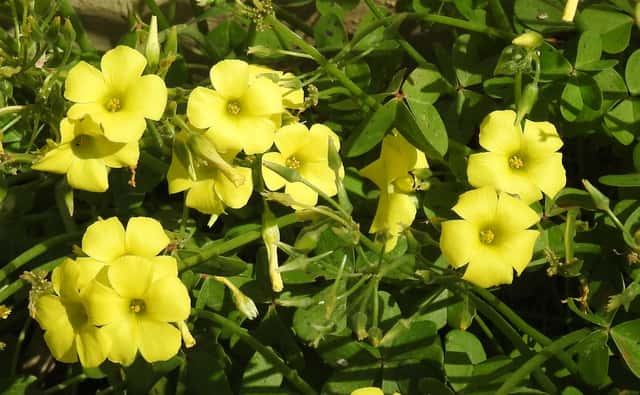
Bermuda Buttercup (Oxalis pes-caprae) is a easy-care plant from the Oxalidaceae family. Oxalis pes-caprae, commonly known as Bermuda Buttercup or Soursob, is a bulbous perennial native to South Africa that produces bright yellow flowers from fall through spring. It forms dense carpets and is considered one of the most invasive weeds in Mediterranean climates, California, and Australia....
Bermuda Buttercup grows up to 30cm, spread of 60cm, watering every 10 days, 5°C – 28°C, 40–60% humidity. It is suitable for indoor environments and not safe for pets.
Unlike many tropical plants, Bermuda Buttercup tolerates watering mistakes. Best for beginners. Without precautions, ingestion can cause irritation in pets. Keep out of reach of cats and dogs. Without adequate drainage, root rot can develop within 20 days.
How to Care for Bermuda Buttercup?
TLDR: Bermuda Buttercup needs Direct sun, watering every 10 days, and temperatures between 5-28°C with 40-60% humidity.
How Often Should You Water Bermuda Buttercup?
Water every 10 days, only when soil is partially dry. During summer dormancy, withhold almost all water. Never let water pool in the saucer.
How Much Light Does Bermuda Buttercup Need?
Requires full sun to flower abundantly. Place near a south-facing window or in a sunny outdoor spot. Tolerates partial shade but with reduced blooming.
What Is the Best Soil for Bermuda Buttercup?
Use sandy soil or cactus mix with excellent drainage. Add perlite for aeration. pH between 6.0 and 7.5.
What Pot Should You Use for Bermuda Buttercup?
Terracotta or ceramic pot with drainage hole. Avoid plastic pots that retain moisture.
Care Schedule
Fertilize
Every 365 days
Misting
Every 3 days
Rotate
Every 7 days
Repot
Every 365 days
What Is Bermuda Buttercup and Where Does It Come From?
Oxalis pes-caprae, commonly known as Bermuda Buttercup or Soursob, is a bulbous perennial native to South Africa that produces bright yellow flowers from fall through spring. It forms dense carpets and is considered one of the most invasive weeds in Mediterranean climates, California, and Australia. The trifoliate leaves contain oxalic acid — toxic to pets in significant quantities and potentially harmful to livestock.
How to Propagate Bermuda Buttercup?
Bulb Division
Divide during summer dormancy to minimize stress. Bulbils establish very reliably.
- 1 Lift bulbs during summer dormancy
- 2 Separate the small bulbils from the main bulbs
- 3 Replant 5 cm deep in well-draining sandy soil
- 4 Water lightly and wait for regrowth in fall
Materials needed:
Seed Sowing
Bulb division is far more reliable than seeds — use seeds only if bulbs are unavailable.
- 1 Sow in moist substrate in fall
- 2 Keep temperature below 15°C to stimulate germination
- 3 Cover lightly with fine substrate
- 4 Keep moist but not waterlogged
Materials needed:
How Big Does Bermuda Buttercup Grow?
TLDR: Bermuda Buttercup can reach up to 30cm tall with Fast growth rate.
Max height
30cm
Spread
60cm
Growth rate
Fast
Foliage
Deciduous
Warning: Toxic Plant
This plant can be toxic if ingested. Keep out of reach of:
Plant Uses
Ornamental
Great for decoration
Edible
Can be consumed
Ground Cover
Soil coverage
Medicinal Uses
- Leaves used in folk medicine as a diuretic
Culinary Uses
- Leaves, flowers and bulbs edible raw or cooked — lemon-sour flavor from oxalic acid
- Consume in moderation; avoid large quantities due to oxalate content
Is your plant showing symptoms?
Click on the symptom to discover possible causes:
What Diseases Commonly Affect Bermuda Buttercup?
TLDR: Bermuda Buttercup is susceptible to 4 known diseases. Monitor regularly for early detection.
Root Rot
Root rot is a serious fungal disease that affects the root system of plants, causing them to decay and die. It is primarily caused by overwatering, poor drainage, or soil-borne fungi such as Pythium, Phytophthora, Rhizoctonia, and Fusarium. The disease thrives in waterlogged conditions where roots are deprived of oxygen, making them susceptible to fungal infection.
Overwatering
Overwatering occurs when plants receive too much water, depriving roots of oxygen and causing root rot. This environmental stress is one of the most common causes of houseplant death, as waterlogged soil prevents roots from breathing and functioning properly.
Aphids
Aphids are small, soft-bodied, pear-shaped insects (1/16 to 1/8 inch long) that feed by sucking nutrient-rich sap from plants. They reproduce rapidly and can quickly weaken plants, causing distorted growth and transmitting plant viruses. Aphids come in various colors including green, black, red, yellow, brown, and gray. They secrete honeydew, a sticky substance that attracts ants and encourages sooty mold growth.
Rust
Rust is a common fungal disease caused by fungi in the order Pucciniales that affects a wide variety of plants. The disease gets its name from the characteristic orange, yellow, or reddish-brown pustules that appear on leaves, resembling metal rust. This obligate fungal parasite requires living plants to survive and can cause significant economic losses in agricultural crops.
Meaning & Symbolism
Symbol of resilience and wild adaptation — thrives and spreads vigorously even in poor conditions.
Fun Facts
Goes fully dormant in summer and regrows on its own every fall without any help
One of the most persistent invasive weeds in Mediterranean climates worldwide
The sour taste of the leaves comes from oxalic acid — the same compound that makes it toxic in excess
Flowers only from fall to spring — never in summer
Frequently asked questions
Is Bermuda Buttercup toxic to cats and dogs?
How often should I water Oxalis pes-caprae?
Why did my plant disappear in summer?
Can I grow it indoors?
Is it invasive?
Compare with similar plants
| Attribute | Difficulty | Light | Watering | Pet Safe |
|---|---|---|---|---|
| Field Maple | Easy | Bright indirect | 14d | ✓ |
| Silver Birch | Easy | Direct sun | 14d | ✓ |
| Cushion Bush | Easy | Direct sun | 14d | ✓ |
| Peruvian peppertree | Easy | Direct sun | 14d | ⚠️ |