Araliaceae
Balfour Aralia (Polyscias balfouriana)
Polyscias balfouriana
A demanding but rewarding houseplant. Provide bright indirect light, keep humidity above 60%, water when the top half of soil dries, and avoid cold drafts. Sensitive to overwatering and environmental changes.
Every 7 days
Partial shade
15° - 27°C
60% - 80%
Categories
What is Balfour Aralia?
Balfour Aralia (Polyscias balfouriana) is a hard-care plant from the Araliaceae family. Polyscias balfouriana is an elegant tropical evergreen shrub from the Araliaceae family, native to New Caledonia and the Pacific Islands. Known for its glossy, rounded leaves with scalloped edges that resemble dinner plates, it makes a stunning indoor specimen plant. With its slow, upright growth ha...
Balfour Aralia grows up to 1.8m, with spread of 90cm, watering every 7 days, 15°C – 27°C, 60–80% humidity. It is suitable for indoor environments and not safe for pets.
Unlike easy-care plants, Balfour Aralia demands constant attention to humidity and light. Not recommended for beginners. Without precautions, ingestion can cause irritation in pets. Keep out of reach of cats and dogs. Without adequate drainage, root rot can develop within 14 days.
How to Care for Balfour Aralia?
TLDR: Balfour Aralia needs Partial shade, watering every 7 days, and temperatures between 15-27°C with 60-80% humidity.
How Often Should You Water Balfour Aralia?
Allow the top half of the soil to dry out before watering thoroughly. Use room-temperature, non-calcareous water. Reduce watering significantly in winter. Overwatering causes root rot quickly in this species.
How Much Light Does Balfour Aralia Need?
Place in bright indirect light, ideally near an east-facing window or behind a sheer curtain. Avoid direct sunlight which scorches the leaves. Tolerates some shade but growth will slow and become leggy.
What Is the Best Soil for Balfour Aralia?
Use a peat-based, well-aerated, lightweight mix with excellent drainage. The plant prefers slightly acidic soil (pH 5.5-6.5). Adding perlite or orchid bark improves aeration and prevents root rot.
What Pot Should You Use for Balfour Aralia?
Use a well-draining ceramic or terracotta pot slightly smaller than expected. Balfour Aralia prefers snug pots that allow soil to dry faster, reducing root rot risk. Ensure drainage holes are present.
Care Schedule
Fertilize
Every 60 days
Misting
Every 3 days
Rotate
Every 14 days
Repot
Every 730 days
What Is Balfour Aralia and Where Does It Come From?
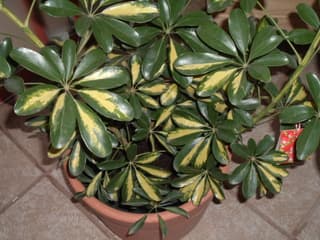
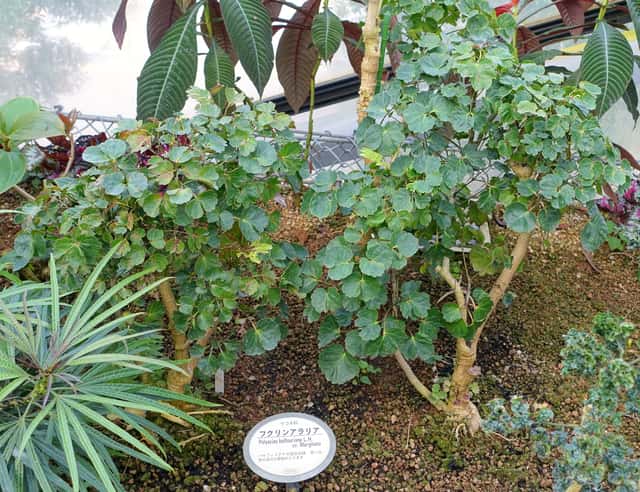
Polyscias balfouriana is an elegant tropical evergreen shrub from the Araliaceae family, native to New Caledonia and the Pacific Islands. Known for its glossy, rounded leaves with scalloped edges that resemble dinner plates, it makes a stunning indoor specimen plant. With its slow, upright growth habit and twisting stems speckled in gray, the Balfour Aralia brings a refined tropical aesthetic to any interior space.
How to Propagate Balfour Aralia?
Stem cutting
Use a heat mat to improve success rate. Keep humidity high with a plastic bag or dome.
- 1 Select a healthy stem with 2-3 leaves
- 2 Cut just below a node using sterilized shears
- 3 Apply rooting hormone to the cut end
- 4 Place in moist perlite or water
- 5 Keep warm (above 70F/21C) with high humidity
- 6 Wait for roots to develop before potting
Materials needed:
Air layering
Best for thick, woody stems that are difficult to root from cuttings. Keep moss consistently moist.
- 1 Choose a healthy thick stem section
- 2 Make a small upward cut about one-third through the stem
- 3 Insert a toothpick to keep the cut open
- 4 Wrap with damp sphagnum moss
- 5 Cover with plastic wrap and secure with ties
- 6 Once roots fill the moss, cut below and pot up
Materials needed:
How Big Does Balfour Aralia Grow?
TLDR: Balfour Aralia can reach up to 1.8m tall with Slow growth rate.
Max height
1.8m
Spread
90cm
Growth rate
Slow
Foliage
Evergreen
Warning: Toxic Plant
This plant can be toxic if ingested. Keep out of reach of:
Plant Uses
Ornamental
Great for decoration
Is your plant showing symptoms?
Click on the symptom to discover possible causes:
What Diseases Commonly Affect Balfour Aralia?
TLDR: Balfour Aralia is susceptible to 10 known diseases. Monitor regularly for early detection.
Root Rot
Root rot is a serious fungal disease that affects the root system of plants, causing them to decay and die. It is primarily caused by overwatering, poor drainage, or soil-borne fungi such as Pythium, Phytophthora, Rhizoctonia, and Fusarium. The disease thrives in waterlogged conditions where roots are deprived of oxygen, making them susceptible to fungal infection.
Fusarium Wilt
Fusarium wilt is a serious fungal disease caused by the soil-borne fungus Fusarium oxysporum. The fungus invades roots and blocks the water-conducting vessels (xylem) of the plant, causing progressive wilting and eventual death. Host-specific forms of the pathogen exist that attack different plant species.
Leaf Spot
Leaf spot is a common fungal disease caused by various pathogens including Alternaria, Ascochyta, Colletotrichum, Septoria, and Venturia. It primarily affects leaves, causing discolored spots that can lead to premature leaf drop if left untreated.
Spider Mites
Spider mites are tiny arachnids (less than 1/20 inch long) related to spiders and ticks that feed on plant sap. They thrive in hot, dry conditions and can cause significant damage to ornamental and vegetable plants. During severe infestations, crop losses can reach 14% or higher as these pests disrupt vital plant processes including photosynthesis, carbon dioxide absorption, and transpiration.
Meaning & Symbolism
Elegance, prosperity, and tropical beauty
Fun Facts
The round, scalloped leaves of Balfour Aralia resemble small dinner plates, earning it the name Dinner Plate Aralia
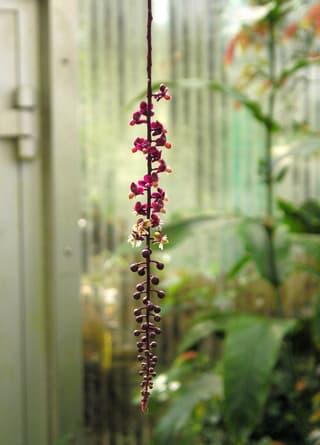
Polyscias balfouriana rarely flowers indoors but in the wild produces small panicles of white-green blooms
The stems develop an attractive gray-speckled pattern as the plant matures, adding to its ornamental value
Frequently asked questions
How often should I water my Balfour Aralia?
Why is my Balfour Aralia dropping leaves?
Is Balfour Aralia toxic to pets?
What is the best light for Balfour Aralia?
Compare with similar plants
| Attribute | Difficulty | Light | Watering | Pet Safe |
|---|---|---|---|---|
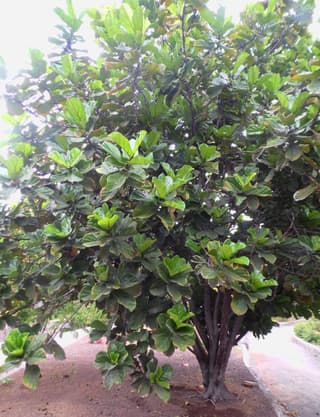
| Fiddle Leaf Fig | Hard | Bright indirect | 10d | ⚠️ |
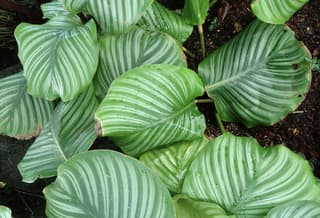
| Round-leaf Calathea | Hard | Partial shade | 7d | ✓ |
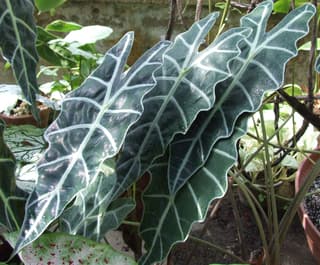
| African Mask Plant | Hard | Partial shade | 5d | ⚠️ |
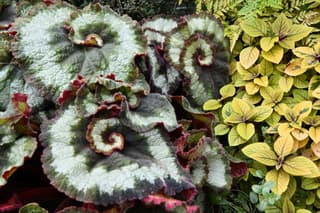
| Rex Begonia | Hard | Partial shade | 7d | ⚠️ |