Berberidaceae
Heavenly Bamboo (Nandina domestica): Complete Care Guide
Nandina domestica
Low-maintenance and adaptable. Water sparingly once established — it tolerates drought well. Provide full sun for the best foliage color; tolerates part shade in hot climates. Lightly prune each year to rejuvenate older canes. Fertilize in spring with a balanced slow-release fertilizer.
Every 14 days
Bright indirect
-15° - 35°C
40% - 70%
Categories
What is Heavenly Bamboo?
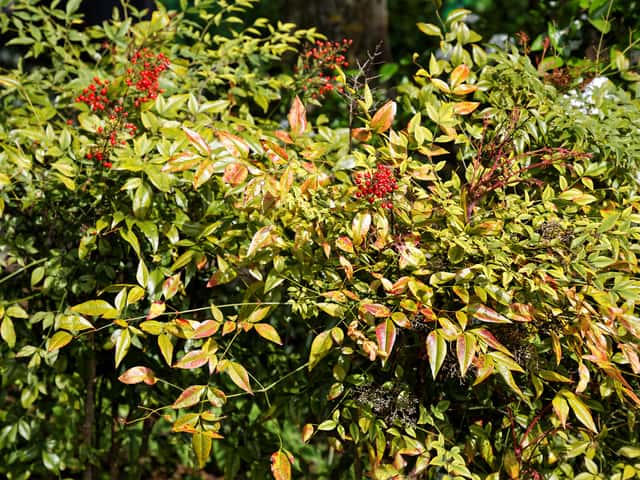
Heavenly Bamboo (Nandina domestica) is a easy-care plant from the Berberidaceae family. Heavenly Bamboo (Nandina domestica) is an evergreen shrub native to China and Japan, celebrated for its ornamental foliage that transitions from bronze-red in spring, through fresh green in summer, to vivid scarlet and burgundy in autumn and winter. Despite its common name, it is not a true bamboo b...
Heavenly Bamboo grows up to 2.4m, with spread of 120cm, watering every 14 days, -15°C – 35°C, 40–70% humidity. It is not suitable for indoor environments and not safe for pets.
Unlike many tropical plants, Heavenly Bamboo tolerates watering mistakes. Best for beginners. Without precautions, ingestion can cause irritation in pets. Keep out of reach of cats and dogs.
How to Care for Heavenly Bamboo?
TLDR: Heavenly Bamboo needs Bright indirect, watering every 14 days, and temperatures between -15-35°C with 40-70% humidity.
How Often Should You Water Heavenly Bamboo?
Water every 14 days during the growing season, allowing the top few centimeters of soil to dry out between waterings. Established garden plants are drought tolerant and rarely need supplemental irrigation. Avoid waterlogged soil to prevent root rot.
How Much Light Does Heavenly Bamboo Need?
Prefers full sun (at least 6 hours of direct sunlight daily) for the most vibrant foliage colors and best berry production. Tolerates partial shade, especially in hot climates; deep shade reduces fruiting significantly.
What Is the Best Soil for Heavenly Bamboo?
Plant in well-draining, slightly acidic to neutral soil (pH 5.5–6.5). Amend clay or compacted soils with sand or perlite to improve drainage. Tolerates a range of soil types from sandy loam to clay, but performs best in fertile, loamy soil.
What Pot Should You Use for Heavenly Bamboo?
Terracotta or ceramic pots with drainage holes work best for dwarf varieties. Standard forms are better suited to garden planting.
Care Schedule
Fertilize
Every 30 days
What Is Heavenly Bamboo and Where Does It Come From?
Heavenly Bamboo (Nandina domestica) is an evergreen shrub native to China and Japan, celebrated for its ornamental foliage that transitions from bronze-red in spring, through fresh green in summer, to vivid scarlet and burgundy in autumn and winter. Despite its common name, it is not a true bamboo but belongs to the Berberidaceae family. It produces airy panicles of small white flowers in late spring and clusters of brilliant red berries that persist through winter, making it a four-season garden standout.
How to Propagate Heavenly Bamboo?
Seed propagation
Seeds germinate best when sown fresh. Cold stratification for 4-8 weeks can improve germination rates. Seedlings may vary from the parent plant.
- 1 Harvest ripe berries in autumn and remove the pulp
- 2 Sow seeds immediately in moist, well-draining seed compost
- 3 Keep in a cool location (15-18°C) with good light
- 4 Transplant seedlings when they reach 10 cm in height
Materials needed:
Semi-hardwood cutting
Use sterilized tools to prevent disease transmission. Cover with plastic to maintain humidity. Rooting takes 6-10 weeks.
- 1 Take 10-15 cm semi-hardwood cuttings in late summer or early autumn
- 2 Remove lower leaves, keeping 2-3 leaves at the tip
- 3 Apply rooting hormone to the cut end
- 4 Insert in well-draining compost and keep moist and shaded
Materials needed:
How Big Does Heavenly Bamboo Grow?
TLDR: Heavenly Bamboo can reach up to 2.4m tall with Slow growth rate.
Max height
2.4m
Spread
1.2m
Growth rate
Slow
Foliage
Evergreen
Warning: Toxic Plant
This plant can be toxic if ingested. Keep out of reach of:
Plant Uses
Ornamental
Great for decoration
Is your plant showing symptoms?
Click on the symptom to discover possible causes:
What Diseases Commonly Affect Heavenly Bamboo?
TLDR: Heavenly Bamboo is susceptible to 11 known diseases. Monitor regularly for early detection.
Cercospora Leaf Spot
Cercospora leaf spot is a common fungal disease caused by Cercospora species that affects many plant types, particularly beets, roses, and leafy vegetables. The disease thrives in warm, humid conditions and can cause significant defoliation, reducing plant vigor and yield. It spreads rapidly through water splash, wind, and contaminated tools.
Leaf Spot
Leaf spot is a common fungal disease caused by various pathogens including Alternaria, Ascochyta, Colletotrichum, Septoria, and Venturia. It primarily affects leaves, causing discolored spots that can lead to premature leaf drop if left untreated.
Root Rot
Root rot is a serious fungal disease that affects the root system of plants, causing them to decay and die. It is primarily caused by overwatering, poor drainage, or soil-borne fungi such as Pythium, Phytophthora, Rhizoctonia, and Fusarium. The disease thrives in waterlogged conditions where roots are deprived of oxygen, making them susceptible to fungal infection.
Spider Mites
Spider mites are tiny arachnids (less than 1/20 inch long) related to spiders and ticks that feed on plant sap. They thrive in hot, dry conditions and can cause significant damage to ornamental and vegetable plants. During severe infestations, crop losses can reach 14% or higher as these pests disrupt vital plant processes including photosynthesis, carbon dioxide absorption, and transpiration.
Meaning & Symbolism
In Japan, Nandina (ナンテン, nanten) is a symbol of good fortune. The name 'nanten' is a homophone of 'nan wo tenjiru' (難を転じる), meaning 'to turn difficulties around' or 'to transform misfortune into luck'. It is traditionally planted near home entrances to ward off evil and protect the household.
Fun Facts
Despite being called 'bamboo', Nandina is not a true bamboo. It belongs to the Berberidaceae family, the same family as barberries and Oregon grape.
The Japanese name 'nanten' (南天) is a homophone of a phrase meaning 'to turn difficulties into good fortune', making it a popular good-luck plant in Japan.
The red berries of Nandina are beautiful but dangerous — they contain cyanogenic compounds that can be fatal to birds like Cedar Waxwings that gorge on them.
Nandina has been cultivated in Japanese gardens for over 1,000 years and is a classic element in traditional Japanese garden design.
Frequently asked questions
How often should I water Heavenly Bamboo?
Is Heavenly Bamboo toxic to pets?
Why are my Heavenly Bamboo leaves turning red?
Can I grow Heavenly Bamboo in a pot?
When and how should I prune Heavenly Bamboo?
Compare with similar plants
| Attribute | Difficulty | Light | Watering | Pet Safe |
|---|---|---|---|---|
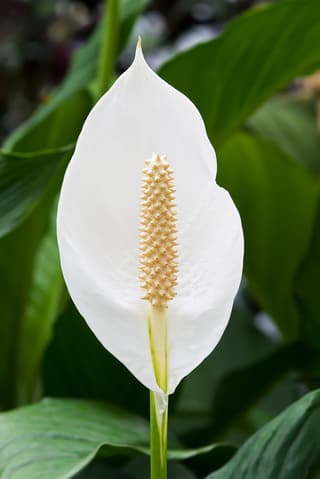
| Peace Lily | Easy | Low light | 4d | ⚠️ |
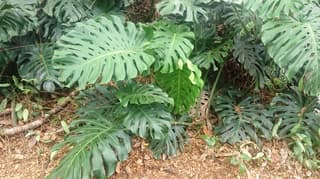
| Swiss Cheese Plant | Easy | Partial shade | 10d | ⚠️ |
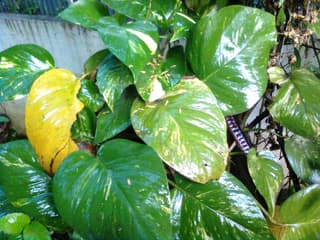
| Golden Pothos | Easy | Low light | 8d | ⚠️ |
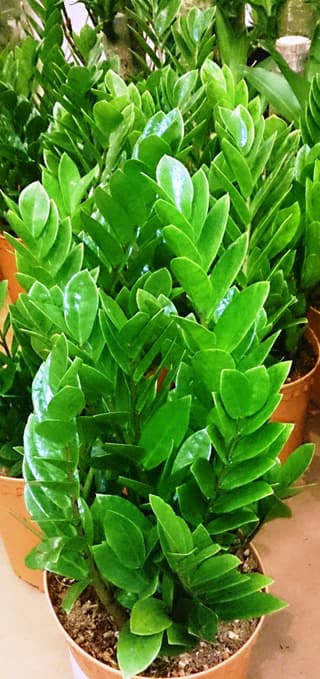
| ZZ Plant | Easy | Low light | 18d | ⚠️ |