Asparagaceae
Lucky Bamboo (Dracaena braunii)
Dracaena braunii
Lucky Bamboo is an easy, low-maintenance plant. It thrives in bright indirect light but tolerates low light well. Water sparingly if grown in soil; if grown in water, change it every 1–2 weeks using filtered or distilled water to avoid fluoride damage. Maintain humidity above 50% and temperatures between 16–35°C. Fertilise lightly every 3 months. Avoid direct sunlight and tap water with high chlorine or fluoride content.
Every 14 days
Low light
16° - 35°C
50% - 80%
Categories
What is Lucky Bamboo?
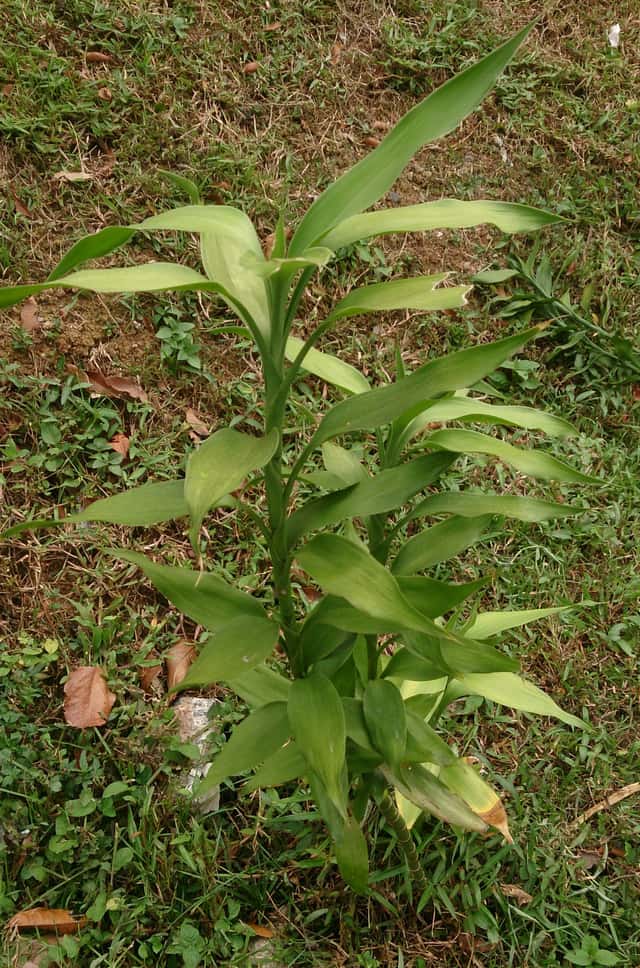
Lucky Bamboo (Dracaena braunii) is a easy-care plant from the Asparagaceae family. Dracaena braunii, commonly known as Lucky Bamboo, is a slender, cane-stemmed perennial native to the rainforests of Cameroon in West Africa. Despite its common name and bamboo-like appearance, it is not a true bamboo but a member of the Asparagaceae family. Taxonomic note: Dracaena braunii Engl. (18...
Lucky Bamboo grows up to 1.5m, spread of 45cm, watering every 14 days, 16°C – 35°C, 50–80% humidity. It is suitable for indoor environments and not safe for pets.
Unlike many tropical plants, Lucky Bamboo tolerates watering mistakes. Best for beginners. Without precautions, ingestion can cause irritation in pets. Keep out of reach of cats and dogs. Without adequate drainage, root rot can develop within 28 days.
How to Care for Lucky Bamboo?
TLDR: Lucky Bamboo needs Low light, watering every 14 days, and temperatures between 16-35°C with 50-80% humidity.
How Often Should You Water Lucky Bamboo?
If grown in soil, water every 14 days and allow the topsoil to dry slightly between waterings. If grown in water, keep roots submerged at all times and change the water every 7–14 days using filtered, distilled, or rainwater — tap water's fluoride and chlorine can cause leaf tip browning over time.
How Much Light Does Lucky Bamboo Need?
Prefers bright, indirect light (500–2500 lux). Tolerates low-light conditions well, making it ideal for offices and shaded indoor spaces. Avoid direct sunlight, which will scorch the leaves and cause yellowing.
What Is the Best Soil for Lucky Bamboo?
If planting in soil, use a rich, well-draining potting mix with a pH of 6.0–6.5. A blend of standard potting mix with perlite or coarse sand works well. Avoid heavy, waterlogged soils. Many growers prefer water culture — using pebbles or decorative stones to anchor the stalks in a vase.
What Pot Should You Use for Lucky Bamboo?
Transparent glass vases or decorative ceramic pots. Lucky Bamboo is traditionally grown in water in tall narrow vases with pebbles. If grown in soil, choose a pot with good drainage holes. Avoid metal containers as they can leach minerals that harm the plant.
Care Schedule
Fertilize
Every 90 days
Misting
Every 3 days
Rotate
Every 14 days
Repot
Every 730 days
What Is Lucky Bamboo and Where Does It Come From?
Dracaena braunii, commonly known as Lucky Bamboo, is a slender, cane-stemmed perennial native to the rainforests of Cameroon in West Africa. Despite its common name and bamboo-like appearance, it is not a true bamboo but a member of the Asparagaceae family. Taxonomic note: Dracaena braunii Engl. (1892) is widely treated as a synonym of Dracaena sanderiana Sander ex Mast. (1892) — both names refer to the same plant. Our database maintains them as separate entries for reference; see also Dracaena sanderiana (ID: f49aa6d9-2af5-4da3-97d6-b03edc18fd95). Lucky Bamboo is one of the most popular indoor plants worldwide, deeply associated with Feng Shui and Asian cultural traditions. It tolerates low light and can be grown in water or well-draining soil, making it exceptionally versatile and beginner-friendly.
How to Propagate Lucky Bamboo?
Stem Cutting
Use filtered or distilled water to avoid fluoride damage. Keep the cutting warm (20-27C) for faster rooting.
- 1 Select a healthy stem with at least 2-3 nodes and leaves
- 2 Cut the stem at a 45 degree angle just below a node using clean sharp scissors
- 3 Remove lower leaves to expose 1-2 nodes
- 4 Place the cutting in a vase of filtered water ensuring the nodes are submerged
- 5 Change the water every 7-10 days and keep in bright indirect light
- 6 Transplant to soil or maintain in water once roots are 2-5 cm long
Materials needed:
Air Layering
Keep the moss consistently moist throughout the process. Perform in warm temperatures above 20C.
- 1 Select a healthy mature stem
- 2 Make a shallow cut or remove a ring of bark about 1 cm wide around the stem
- 3 Wrap the wounded area with moist sphagnum moss
- 4 Cover the moss with clear plastic wrap and secure both ends
- 5 Once roots are visible through the plastic cut below the root mass
- 6 Remove the plastic wrap and pot the new plant in well-draining mix
Materials needed:
How Big Does Lucky Bamboo Grow?
TLDR: Lucky Bamboo can reach up to 1.5m tall with Slow growth rate.
Max height
1.5m
Spread
45cm
Growth rate
Slow
Foliage
Evergreen
Warning: Toxic Plant
This plant can be toxic if ingested. Keep out of reach of:
Plant Uses
Ornamental
Great for decoration
Air Purifying
Improves air quality
Is your plant showing symptoms?
Click on the symptom to discover possible causes:
What Diseases Commonly Affect Lucky Bamboo?
TLDR: Lucky Bamboo is susceptible to 10 known diseases. Monitor regularly for early detection.
Root Rot
Root rot is a serious fungal disease that affects the root system of plants, causing them to decay and die. It is primarily caused by overwatering, poor drainage, or soil-borne fungi such as Pythium, Phytophthora, Rhizoctonia, and Fusarium. The disease thrives in waterlogged conditions where roots are deprived of oxygen, making them susceptible to fungal infection.
Overwatering
Overwatering occurs when plants receive too much water, depriving roots of oxygen and causing root rot. This environmental stress is one of the most common causes of houseplant death, as waterlogged soil prevents roots from breathing and functioning properly.
Mealybugs
Mealybugs are small, soft-bodied insects covered with a white, waxy, cottony material. They are common pests of houseplants and outdoor plants in mild climates. These sap-sucking insects feed on plant tissue, causing damage, stunted growth, and can lead to plant death if left untreated. They produce sticky honeydew which attracts sooty mold.
Scale Insects
Scale insects are small sap-sucking pests that appear as brown, shell-like bumps on plant stems and leaves. There are over 25 species, divided into armored (hard) and unarmored (soft) scales. They feed by piercing plant tissue and extracting sap, which weakens the plant and can lead to yellowing, stunted growth, and even death if left untreated. They also excrete honeydew, which attracts ants and promotes sooty mold growth.
Meaning & Symbolism
In Feng Shui tradition, Lucky Bamboo is believed to bring good luck, prosperity, and positive energy into the home. The number of stalks carries specific meaning: 3 stalks for happiness, 5 for wealth, 6 for health, and 7 for good fortune.
Fun Facts
Lucky Bamboo is not bamboo at all — it belongs to the same family as asparagus (Asparagaceae).
In Chinese culture, 6 Lucky Bamboo stalks symbolise health and are a popular gift for new homes.
Lucky Bamboo can be sculpted into spirals by controlling light direction — a technique widely used in ornamental horticulture.
Despite being native to Cameroon, Africa, Lucky Bamboo became iconic in East Asian Feng Shui and is now commercially grown mainly in Taiwan and China.
Frequently asked questions
Is Lucky Bamboo actually bamboo?
Can Lucky Bamboo grow in just water?
Is Lucky Bamboo toxic to pets?
How many stalks should Lucky Bamboo have?
What is the difference between Dracaena braunii and Dracaena sanderiana?
Compare with similar plants
| Attribute | Difficulty | Light | Watering | Pet Safe |
|---|---|---|---|---|
| Field Maple | Easy | Bright indirect | 14d | ✓ |
| Silver Birch | Easy | Direct sun | 14d | ✓ |
| Cushion Bush | Easy | Direct sun | 14d | ✓ |
| Peruvian peppertree | Easy | Direct sun | 14d | ⚠️ |