Musaceae
Banana (Musa spp.): Complete Care Guide
Musa
Banana plants need bright light, regular watering to keep the soil lightly moist, high humidity, and warm temperatures (15–38 °C / 59–100 °F). Fertilise every 2–4 weeks during the growing season. They do not tolerate frost or temperatures below 10 °C (50 °F).
Every 3 days
Bright indirect
15° - 38°C
60% - 90%
Categories
What is Banana?
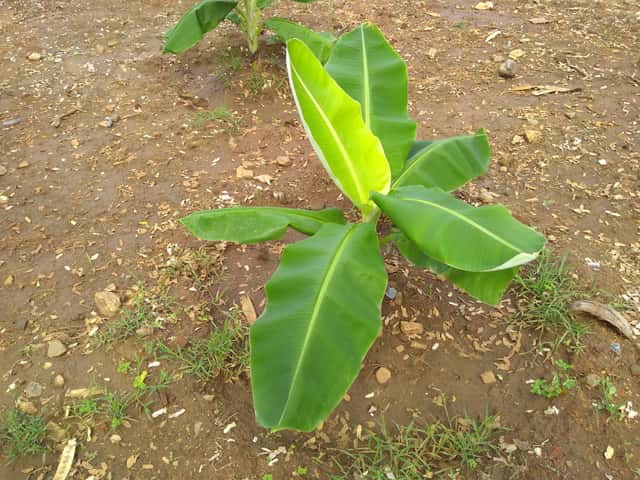
Banana (Musa) is a easy-care plant from the Musaceae family. Banana (Musa spp.) is a large tropical plant belonging to the family Musaceae. This is a genus-level entry with care data representative of commonly grown ornamental and edible bananas, particularly Musa acuminata-type cultivars such as Dwarf Cavendish. Native to tropical Asia, the banana plant is o...
Banana grows up to 5.0m, spread of 300cm, watering every 3 days, 15°C – 38°C, 60–90% humidity. It is suitable for indoor environments and safe for pets.
Unlike many tropical plants, Banana tolerates watering mistakes. Best for beginners. Unlike many popular species, Banana is safe to keep around pets. Without adequate drainage, root rot can develop within 7 days.
How to Care for Banana?
TLDR: Banana needs Bright indirect, watering every 3 days, and temperatures between 15-38°C with 60-90% humidity.
How Often Should You Water Banana?
Water when the top 5 cm (2 inches) of soil dries out — roughly every 3–5 days in summer and every 7–10 days in winter. Avoid waterlogging as roots are prone to rot. Always use water at room temperature.
How Much Light Does Banana Need?
Banana plants need bright, direct or near-direct light — at least 6–8 hours of strong light per day. Indoors, place it at the brightest window available, ideally south- or west-facing. Insufficient light leads to pale leaves and slow growth.
What Is the Best Soil for Banana?
Use a rich, well-draining, slightly acidic soil mix (pH 5.5–6.5). Combine garden soil with organic compost and perlite for good drainage. Avoid compacted soils that retain excess moisture around the roots.
What Pot Should You Use for Banana?
Large terracotta or ceramic pot with generous drainage holes. Banana plants grow fast and develop voluminous roots, so choose a heavy, stable container. In the garden, plant directly in the ground with good drainage.
Care Schedule
Fertilize
Every 30 days
Misting
Every 2 days
Repot
Every 730 days
What Is Banana and Where Does It Come From?
Banana (Musa spp.) is a large tropical plant belonging to the family Musaceae. This is a genus-level entry with care data representative of commonly grown ornamental and edible bananas, particularly Musa acuminata-type cultivars such as Dwarf Cavendish. Native to tropical Asia, the banana plant is one of the most recognizable plants in the world, celebrated for its broad, glossy green leaves and iconic fruit. Cultivated for over 8,000 years, it is a symbol of abundance and fertility across many cultures. As a houseplant, it is a fast-growing specimen that can reach 1.5 to 5 metres depending on the cultivar, creating a dramatic tropical focal point.
How to Propagate Banana?
Pup (offset) division
Spring is the best time to divide pups. Always sterilise cutting tools to prevent disease transmission. Do not leave the pup exposed for more than a few minutes before potting.
- 1 Wait until the pup (offset) is at least 30 cm tall with its own leaves
- 2 Using a sharp, sterilised spade or knife, cut through the rhizome connecting the pup to the mother plant
- 3 Retain some roots attached to the pup during separation
- 4 Plant immediately in rich, moist potting mix in a suitable-sized container
- 5 Water thoroughly and place in a warm, brightly lit location
Materials needed:
How Big Does Banana Grow?
TLDR: Banana can reach up to 5.0m tall with Fast growth rate.
Max height
5.0m
Spread
3.0m
Growth rate
Fast
Foliage
Evergreen
Plant Uses
Ornamental
Great for decoration
Edible
Can be consumed
Medicinal Uses
- Traditional folk medicine use in parts of Africa and Asia; green banana peel is used to treat burns and skin conditions
Culinary Uses
- Edible fruit eaten raw or cooked
- Flowers and inflorescences used in Asian cuisine
- Leaves used as natural food wrapping and for steam cooking
- Banana blossom (heart) eaten in salads and stir-fries
Is your plant showing symptoms?
Click on the symptom to discover possible causes:
What Diseases Commonly Affect Banana?
TLDR: Banana is susceptible to 11 known diseases. Monitor regularly for early detection.
Fusarium Wilt
Fusarium wilt is a serious fungal disease caused by the soil-borne fungus Fusarium oxysporum. The fungus invades roots and blocks the water-conducting vessels (xylem) of the plant, causing progressive wilting and eventual death. Host-specific forms of the pathogen exist that attack different plant species.
Root Rot
Root rot is a serious fungal disease that affects the root system of plants, causing them to decay and die. It is primarily caused by overwatering, poor drainage, or soil-borne fungi such as Pythium, Phytophthora, Rhizoctonia, and Fusarium. The disease thrives in waterlogged conditions where roots are deprived of oxygen, making them susceptible to fungal infection.
Leaf Spot
Leaf spot is a common fungal disease caused by various pathogens including Alternaria, Ascochyta, Colletotrichum, Septoria, and Venturia. It primarily affects leaves, causing discolored spots that can lead to premature leaf drop if left untreated.
Mosaic Virus
Mosaic virus is a group of plant viruses that cause mottled, patchy patterns on leaves and can affect a wide variety of plants. The virus creates characteristic yellow, white, and green mosaic patterns, often accompanied by stunted growth and deformed plant parts. This highly contagious disease spreads rapidly through insect vectors and contaminated tools.
Meaning & Symbolism
Symbol of abundance, fertility, and prosperity. In many Asian and African cultures, the banana plant represents hospitality, generosity, and positive energy. Banana leaves are used in religious ceremonies and festivities across India, Thailand, and parts of Africa.
Fun Facts
The banana plant is not actually a tree — its "trunk" is a pseudostem formed by overlapping leaf sheaths
A banana plant produces only one flower cluster in its lifetime; after fruiting, the pseudostem dies and is replaced by pups
Wild ancestors of the banana had large, hard seeds; modern edible bananas are genetically sterile and propagated vegetatively
The banana is technically a berry — and one of the largest berries in the plant kingdom
Frequently asked questions
How often should I water a banana plant?
Is the banana plant toxic to pets?
Can banana plants grow indoors?
Why are my banana plant leaves splitting?
How and when should I fertilise my banana plant?
Compare with similar plants
| Attribute | Difficulty | Light | Watering | Pet Safe |
|---|---|---|---|---|
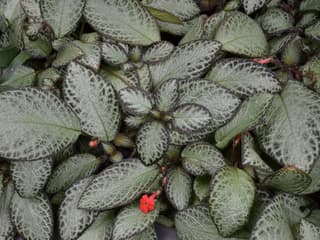
| Flame Violet | Easy | Partial shade | 7d | ✓ |
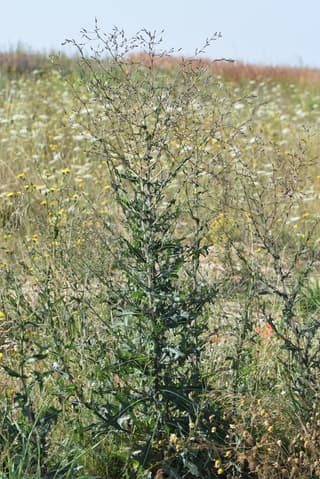
| Prickly Lettuce | Easy | Direct sun | 7d | ✓ |
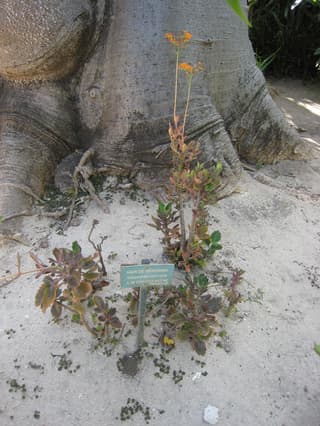
| Christmas Tree Plant | Easy | Bright indirect | 10d | ⚠️ |
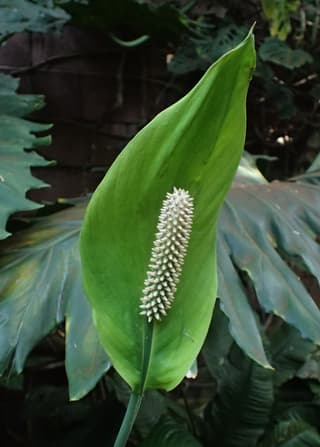
| Peace Lily | Easy | Low light | 7d | ⚠️ |