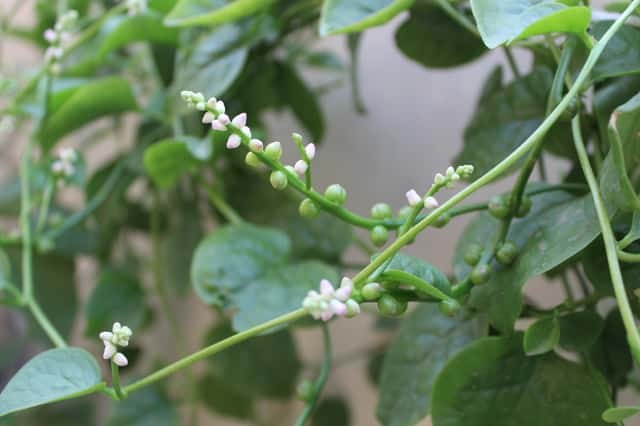
Basellaceae
Malabar Spinach: The Tropical Leafy Green That Thrives in Heat
Basella alba
Plant in full sun and keep soil consistently moist but well-drained. Fertilize monthly and prune regularly to encourage leaf production. Very heat-tolerant and largely pest-resistant.
Every 3 days
Direct sun
15° - 38°C
60% - 90%
Categories
What is Malabar Spinach?
Malabar Spinach (Basella alba) is a easy-care plant from the Basellaceae family. Malabar Spinach (Basella alba) is a fast-growing tropical edible vine native to India and Southeast Asia. Its thick, succulent leaves are rich in vitamins A and C, calcium, and iron, making it a nutritious leafy green for warm climates. It thrives in heat and humidity where traditional spinach fails...
Malabar Spinach grows up to 3.0m, spread of 90cm, watering every 3 days, 15°C – 38°C, 60–90% humidity. It is suitable for indoor environments and safe for pets.
Unlike many tropical plants, Malabar Spinach tolerates watering mistakes. Best for beginners. Unlike many popular species, Malabar Spinach is safe to keep around pets. Without adequate drainage, root rot can develop within 7 days.
How to Care for Malabar Spinach?
TLDR: Malabar Spinach needs Direct sun, watering every 3 days, and temperatures between 15-38°C with 60-90% humidity.
How Often Should You Water Malabar Spinach?
Water every 2-3 days in warm weather, keeping soil moist but never waterlogged. Reduce watering in cooler periods. Mulching helps retain moisture and regulate soil temperature.
How Much Light Does Malabar Spinach Need?
Requires full sun (6+ hours of direct sunlight daily). In extremely hot climates, light afternoon shade can prevent bolting. Yellowing leaves indicate insufficient light.
What Is the Best Soil for Malabar Spinach?
Thrives in fertile, well-draining soil rich in organic matter. Amend with compost or aged manure. Ideal pH 5.5-8.0. Avoid compacted or waterlogged soils.
What Pot Should You Use for Malabar Spinach?
Medium to large containers (minimum 20 cm diameter) with drainage holes. Provide a trellis or stake for the climbing vine. Clay or plastic pots both work well with proper drainage.
Care Schedule
Fertilize
Every 30 days
Repot
Every 365 days
What Is Malabar Spinach and Where Does It Come From?
Malabar Spinach (Basella alba) is a fast-growing tropical edible vine native to India and Southeast Asia. Its thick, succulent leaves are rich in vitamins A and C, calcium, and iron, making it a nutritious leafy green for warm climates. It thrives in heat and humidity where traditional spinach fails.
How to Propagate Malabar Spinach?
Direct Seeding
Sow in spring or early summer. Optimal germination temperature 20-30°C (68-86°F).
- 1 Make 1-2 cm furrows in moist soil
- 2 Plant seeds 30 cm apart
- 3 Cover lightly with soil and water
- 4 Keep moist until germination in 7-14 days
Materials needed:
Stem Cutting
Change water every 2 days if propagating in water. Roots develop very quickly in warm conditions.
- 1 Cut a healthy stem 15-20 cm long with 2-3 leaves
- 2 Remove lower leaves
- 3 Place in water or moist potting mix
- 4 Keep in indirect light until rooted
Materials needed:
How Big Does Malabar Spinach Grow?
TLDR: Malabar Spinach can reach up to 3.0m tall with Fast growth rate.
Max height
3.0m
Spread
90cm
Growth rate
Fast
Foliage
Evergreen
Plant Uses
Edible
Can be consumed
Ornamental
Great for decoration
Medicinal
Medicinal properties
Medicinal Uses
- Traditionally used in Ayurvedic medicine for inflammation and constipation
- High iron content supports treatment of iron-deficiency anemia
- Anti-inflammatory and mild laxative properties reported in folk medicine
Culinary Uses
- Leaves eaten raw in salads or cooked as a spinach substitute
- Used in soups, stir-fries, curries, and egg dishes
- Young stems and leaves can be blended into green smoothies
- Purple berries produce a natural food-safe dye
Is your plant showing symptoms?
Click on the symptom to discover possible causes:
What Diseases Commonly Affect Malabar Spinach?
TLDR: Malabar Spinach is susceptible to 10 known diseases. Monitor regularly for early detection.
Root Rot
Root rot is a serious fungal disease that affects the root system of plants, causing them to decay and die. It is primarily caused by overwatering, poor drainage, or soil-borne fungi such as Pythium, Phytophthora, Rhizoctonia, and Fusarium. The disease thrives in waterlogged conditions where roots are deprived of oxygen, making them susceptible to fungal infection.
Overwatering
Overwatering occurs when plants receive too much water, depriving roots of oxygen and causing root rot. This environmental stress is one of the most common causes of houseplant death, as waterlogged soil prevents roots from breathing and functioning properly.
Aphids
Aphids are small, soft-bodied, pear-shaped insects (1/16 to 1/8 inch long) that feed by sucking nutrient-rich sap from plants. They reproduce rapidly and can quickly weaken plants, causing distorted growth and transmitting plant viruses. Aphids come in various colors including green, black, red, yellow, brown, and gray. They secrete honeydew, a sticky substance that attracts ants and encourages sooty mold growth.
Spider Mites
Spider mites are tiny arachnids (less than 1/20 inch long) related to spiders and ticks that feed on plant sap. They thrive in hot, dry conditions and can cause significant damage to ornamental and vegetable plants. During severe infestations, crop losses can reach 14% or higher as these pests disrupt vital plant processes including photosynthesis, carbon dioxide absorption, and transpiration.
Fun Facts
Malabar Spinach can grow over 10 feet long in ideal tropical conditions
The purple berries produce a natural dye used to color food and cosmetics
It contains more calcium and iron per gram than conventional spinach
Unlike true spinach, it thrives in hot humid summers when other greens bolt
Frequently asked questions
How often should I water Malabar Spinach?
Can Malabar Spinach grow in containers?
Is Malabar Spinach toxic to pets?
How long until I can harvest Malabar Spinach?
Why is my Malabar Spinach bolting early?
Compare with similar plants
| Attribute | Difficulty | Light | Watering | Pet Safe |
|---|---|---|---|---|
| Field Maple | Easy | Bright indirect | 14d | ✓ |
| Silver Birch | Easy | Direct sun | 14d | ✓ |
| Cushion Bush | Easy | Direct sun | 14d | ✓ |
| Peruvian peppertree | Easy | Direct sun | 14d | ⚠️ |





