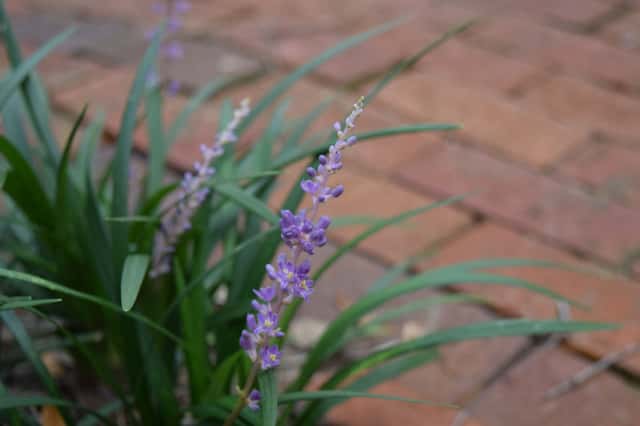
Asparagaceae
Big Blue Lilyturf (Liriope muscari)
Liriope muscari
Liriope muscari is one of the easiest groundcovers to grow. Established plants tolerate drought, shade, heat, and varied soils. Water regularly during the first season to establish roots, then reduce watering. Cut back foliage in late winter before new growth emerges. Fertilize once in spring.
Every 10 days
Partial shade
-15° - 38°C
40% - 80%
Categories
What is Big Blue Lilyturf?
Big Blue Lilyturf (Liriope muscari) is a easy-care plant from the Asparagaceae family. Liriope muscari, commonly known as Big Blue Lilyturf or Monkey Grass, is a clump-forming evergreen perennial native to East Asia. It produces arching, grass-like dark green foliage and upright spikes of violet-purple flowers resembling grape hyacinths in late summer. Extremely adaptable, it thrives...
Big Blue Lilyturf grows up to 45cm, spread of 45cm, watering every 10 days, -15°C – 38°C, 40–80% humidity. It is not suitable for indoor environments and safe for pets.
Unlike many tropical plants, Big Blue Lilyturf tolerates watering mistakes. Best for beginners. Unlike many popular species, Big Blue Lilyturf is safe to keep around pets.
How to Care for Big Blue Lilyturf?
TLDR: Big Blue Lilyturf needs Partial shade, watering every 10 days, and temperatures between -15-38°C with 40-80% humidity.
How Often Should You Water Big Blue Lilyturf?
Water regularly during the first growing season to establish a deep root system. Once established, Liriope muscari is highly drought tolerant and rarely needs supplemental irrigation. Avoid waterlogged soils to prevent root rot.
How Much Light Does Big Blue Lilyturf Need?
Performs best in full sun to partial shade. In hot climates, afternoon shade protects the foliage from scorching. Full shade is tolerated but may reduce flowering. Suitable for underplanting beneath trees.
What Is the Best Soil for Big Blue Lilyturf?
Grow in well-draining soil of any texture — clay, loam, or sandy. Tolerates a wide pH range (6.0–8.0) and even compacted urban soils. Avoid consistently waterlogged conditions.
What Pot Should You Use for Big Blue Lilyturf?
Terracotta or ceramic pots with drainage holes for container growing. In the garden, no container needed.
Care Schedule
Fertilize
Every 90 days
What Is Big Blue Lilyturf and Where Does It Come From?
Liriope muscari, commonly known as Big Blue Lilyturf or Monkey Grass, is a clump-forming evergreen perennial native to East Asia. It produces arching, grass-like dark green foliage and upright spikes of violet-purple flowers resembling grape hyacinths in late summer. Extremely adaptable, it thrives in sun or shade and is widely used as a groundcover, border edging, and lawn alternative.
How to Propagate Big Blue Lilyturf?
Division
Division is the fastest and most reliable propagation method. Divide every 3-4 years to rejuvenate crowded clumps.
- 1 Dig up a mature clump in early spring before new growth begins
- 2 Use a sharp spade to divide the clump into sections, each with several shoots and roots
- 3 Replant divisions at the same depth in prepared soil
- 4 Water thoroughly after planting and keep moist until established
Materials needed:
Seed
Seeds can be slow and variable. Division is preferred for named cultivars.
- 1 Collect ripe black berries in autumn
- 2 Remove pulp and plant seeds in moist seed-raising mix
- 3 Keep in a warm location with indirect light
- 4 Transplant seedlings when large enough to handle
Materials needed:
How Big Does Big Blue Lilyturf Grow?
TLDR: Big Blue Lilyturf can reach up to 45cm tall with Slow growth rate.
Max height
45cm
Spread
45cm
Growth rate
Slow
Foliage
Evergreen
Plant Uses
Ornamental
Great for decoration
Ground Cover
Soil coverage
Is your plant showing symptoms?
Click on the symptom to discover possible causes:
What Diseases Commonly Affect Big Blue Lilyturf?
TLDR: Big Blue Lilyturf is susceptible to 8 known diseases. Monitor regularly for early detection.
Anthracnose
Anthracnose is a fungal disease caused by fungi in the genus Colletotrichum that affects many plants, including vegetables, fruits, and trees. The disease thrives in cool, wet conditions, causing dark, sunken lesions on leaves, stems, flowers, and fruits.
Root Rot
Root rot is a serious fungal disease that affects the root system of plants, causing them to decay and die. It is primarily caused by overwatering, poor drainage, or soil-borne fungi such as Pythium, Phytophthora, Rhizoctonia, and Fusarium. The disease thrives in waterlogged conditions where roots are deprived of oxygen, making them susceptible to fungal infection.
Crown Rot
Crown rot is a serious fungal disease that attacks the crown (base) of the plant where the stem meets the soil. It is caused by various fungal pathogens including Phytophthora, Fusarium, and Rhizoctonia. The disease thrives in waterlogged conditions and can quickly spread to kill the entire plant if not addressed promptly.
Leaf Spot
Leaf spot is a common fungal disease caused by various pathogens including Alternaria, Ascochyta, Colletotrichum, Septoria, and Venturia. It primarily affects leaves, causing discolored spots that can lead to premature leaf drop if left untreated.
Meaning & Symbolism
Symbolizes resilience and endurance, thriving even in difficult conditions such as dense shade and prolonged drought.
Fun Facts
Liriope muscari can produce small, shiny black berries after flowering that persist through winter, providing food for birds.
It is so adaptable it can grow in both USDA zones 5 and 10, meaning it thrives from cold winters to subtropical heat.
Despite being called Monkey Grass, Liriope muscari is not a true grass — it belongs to the asparagus family (Asparagaceae).
The Royal Horticultural Society has awarded it the prestigious Award of Garden Merit for its outstanding garden performance.
Frequently asked questions
How often should I water Liriope muscari?
Can Liriope muscari grow in full shade?
Is Big Blue Lilyturf toxic to pets?
When should I cut back Liriope muscari?
How do I propagate Liriope muscari?
Compare with similar plants
| Attribute | Difficulty | Light | Watering | Pet Safe |
|---|---|---|---|---|
| Field Maple | Easy | Bright indirect | 14d | ✓ |
| Silver Birch | Easy | Direct sun | 14d | ✓ |
| Cushion Bush | Easy | Direct sun | 14d | ✓ |
| Peruvian peppertree | Easy | Direct sun | 14d | ⚠️ |





