Aspleniaceae
Bird's Nest Fern: Best for Low Light
Asplenium nidus
This fern requires consistent moisture, high humidity (50-80%), and protection from direct sunlight. Keep the soil evenly moist but never waterlogged. Place in bright indirect light or partial shade. Mist regularly to maintain humidity or place on a pebble tray with water.
Every 7 days
Low light
15° - 24°C
50% - 80%
Categories
What is Bird's Nest Fern?
Bird's Nest Fern (Asplenium nidus) is a medium-care plant from the Aspleniaceae family. The Bird's Nest Fern (Asplenium nidus) is an elegant tropical epiphytic fern known for its rosette of bright green, lance-shaped fronds that unfurl from a central nest-like crown. Native to Southeast Asia, Australia, and the Pacific Islands, this slow-growing beauty thrives in humid environments and...
Bird's Nest Fern grows up to 1.5m, spread of 90cm, watering every 7 days, 15°C – 24°C, 50–80% humidity. It is suitable for indoor environments and safe for pets.
Unlike many popular species, Bird's Nest Fern is safe to keep around pets. Without adequate drainage, root rot can develop within 14 days.
How to Care for Bird's Nest Fern?
TLDR: Bird's Nest Fern needs Low light, watering every 7 days, and temperatures between 15-24°C with 50-80% humidity.
How Often Should You Water Bird's Nest Fern?
Water when the top inch of soil feels dry, typically every 7-10 days. Avoid pouring water directly into the central rosette as this can cause rot. Use filtered or distilled water if possible, as the plant is sensitive to chlorine and fluoride in tap water.
How Much Light Does Bird's Nest Fern Need?
Provide bright, indirect light or light shade. An east or north-facing window works best. Avoid direct sunlight which can scorch the delicate fronds and cause yellowing. This fern tolerates low light conditions but grows more slowly.
What Is the Best Soil for Bird's Nest Fern?
Use a rich, organic potting mix that retains moisture but drains well. A combination of peat moss (or coco coir), perlite, and orchid bark is ideal. The soil should be slightly acidic with a pH of 5.0-6.0.
What Pot Should You Use for Bird's Nest Fern?
Choose a wide, shallow pot with excellent drainage. Terracotta pots work well as they allow moisture to evaporate, preventing root rot. The pot should be slightly larger than the root ball, as Bird's Nest Ferns prefer being somewhat root-bound.
Care Schedule
Fertilize
Every 30 days
Misting
Every 3 days
Rotate
Every 14 days
Repot
Every 730 days
What Is Bird's Nest Fern and Where Does It Come From?
The Bird's Nest Fern (Asplenium nidus) is an elegant tropical epiphytic fern known for its rosette of bright green, lance-shaped fronds that unfurl from a central nest-like crown. Native to Southeast Asia, Australia, and the Pacific Islands, this slow-growing beauty thrives in humid environments and makes an excellent houseplant for bathrooms and shaded spaces.
How to Propagate Bird's Nest Fern?
Spores
Spore propagation is slow and challenging; patience is essential
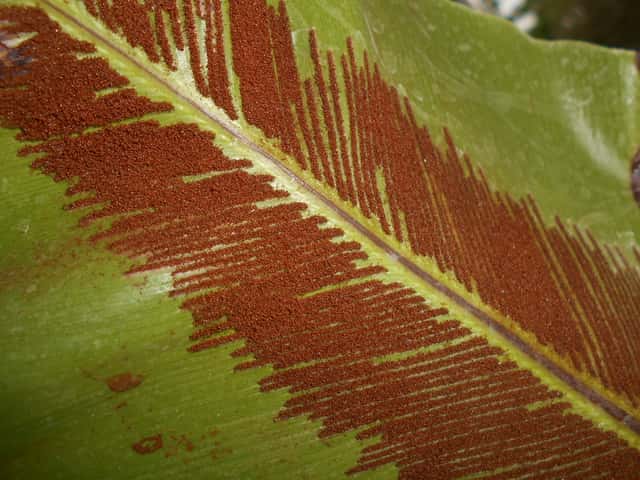
- 1 Wait for mature spores to develop on the undersides of fronds (appearing as brown lines)
- 2 Collect spores by placing fronds on paper in a dry location
- 3 Sow spores on moist peat moss or sphagnum
- 4 Cover with plastic to maintain humidity
- 5 Keep at 70-75°F in indirect light
- 6 Transplant small ferns once established (6-12 months)
Materials needed:
How Big Does Bird's Nest Fern Grow?
TLDR: Bird's Nest Fern can reach up to 1.5m tall with Slow growth rate.
Max height
1.5m
Spread
90cm
Growth rate
Slow
Foliage
Evergreen
Plant Uses
Ornamental
Great for decoration
Air Purifying
Improves air quality
Medicinal
Medicinal properties
Medicinal Uses
- Traditional folk remedies include treating asthma, sores, and halitosis (bad breath). In some cultures, the young unfurling fronds (fiddleheads) have been consumed, though this is not common practice.
Is your plant showing symptoms?
Click on the symptom to discover possible causes:
What Diseases Commonly Affect Bird's Nest Fern?
TLDR: Bird's Nest Fern is susceptible to 12 known diseases. Monitor regularly for early detection.
Root Rot
Root rot is a serious fungal disease that affects the root system of plants, causing them to decay and die. It is primarily caused by overwatering, poor drainage, or soil-borne fungi such as Pythium, Phytophthora, Rhizoctonia, and Fusarium. The disease thrives in waterlogged conditions where roots are deprived of oxygen, making them susceptible to fungal infection.
Scale Insects
Scale insects are small sap-sucking pests that appear as brown, shell-like bumps on plant stems and leaves. There are over 25 species, divided into armored (hard) and unarmored (soft) scales. They feed by piercing plant tissue and extracting sap, which weakens the plant and can lead to yellowing, stunted growth, and even death if left untreated. They also excrete honeydew, which attracts ants and promotes sooty mold growth.
Mealybugs
Mealybugs are small, soft-bodied insects covered with a white, waxy, cottony material. They are common pests of houseplants and outdoor plants in mild climates. These sap-sucking insects feed on plant tissue, causing damage, stunted growth, and can lead to plant death if left untreated. They produce sticky honeydew which attracts sooty mold.
Bacterial Blight
Bacterial blight is a serious plant disease caused by pathogenic bacteria that enters plants through wounds or natural openings. It spreads rapidly in warm, wet conditions and can cause significant damage to leaves, stems, and flowers. The bacteria are transmitted by water splash, contaminated tools, and insects.
Meaning & Symbolism
In ancient Greek medicine, ferns from the Asplenium genus were believed to cure spleen ailments - the name derives from Greek meaning "without spleen." In Hawaiian culture, this fern (called ʻēkaha) adorned hula altars and was used in sacred canoe-cutting ceremonies.
Compare with similar plants
| Attribute | Difficulty | Light | Watering | Pet Safe |
|---|---|---|---|---|
| Dark Fieldcap | Medium | Low light | 2d | ⚠️ |
| Azalea | Medium | Partial shade | 3d | ⚠️ |
| Muriel's Bamboo | Medium | Partial shade | 3d | ✓ |
| Bougainvillea | Medium | Direct sun | 7d | ⚠️ |




