Asteraceae
Black-eyed Susan (Rudbeckia hirta): Complete Care Guide
Rudbeckia hirta
Easy-care wildflower perfect for outdoor gardens and meadow plantings. Thrives in full sun with well-drained soil. Drought-tolerant once established. Self-seeds freely, naturalizing over time.
Every 7 days
Direct sun
-35° - 35°C
40% - 70%
Categories
What is Black-eyed Susan?
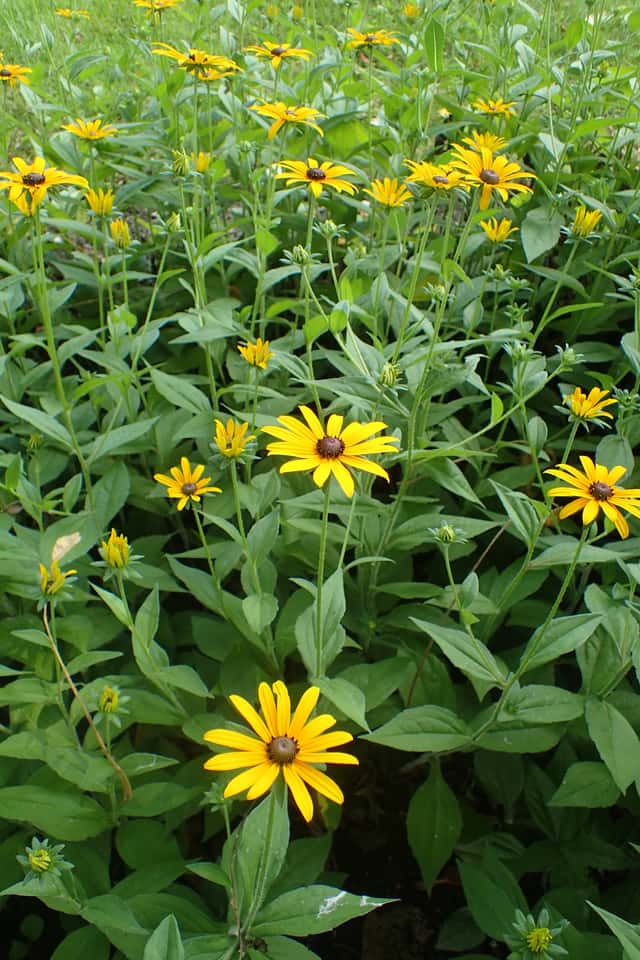
Black-eyed Susan (Rudbeckia hirta) is a easy-care plant from the Asteraceae family. Rudbeckia hirta, commonly known as Black-eyed Susan, is a native North American wildflower beloved for its bright yellow-orange petals surrounding a dark brown center. It blooms prolifically from summer through fall, attracting butterflies, bees, and songbirds.
Black-eyed Susan grows up to 90cm, spread of 45cm, watering every 7 days, -35°C – 35°C, 40–70% humidity. It is not suitable for indoor environments and safe for pets.
Unlike many tropical plants, Black-eyed Susan tolerates watering mistakes. Best for beginners. Unlike many popular species, Black-eyed Susan is safe to keep around pets.
How to Care for Black-eyed Susan?
TLDR: Black-eyed Susan needs Direct sun, watering every 7 days, and temperatures between -35-35°C with 40-70% humidity.
How Often Should You Water Black-eyed Susan?
Water every 7 days during establishment. Once established, Black-eyed Susan is drought-tolerant and only needs watering when the soil is completely dry. Avoid overwatering — root rot is the most common problem.
How Much Light Does Black-eyed Susan Need?
Plant in full sun with at least 6–8 hours of direct sunlight daily. Tolerates partial shade but produces fewer flowers and weaker stems.
What Is the Best Soil for Black-eyed Susan?
Prefers well-drained soil with a pH of 6.0–7.5. Tolerates poor, sandy, or clay soils. Add compost to improve drainage in heavy soils.
What Pot Should You Use for Black-eyed Susan?
Outdoor garden bed, meadow planting, or large terrace container
Care Schedule
Fertilize
Every 30 days
What Is Black-eyed Susan and Where Does It Come From?
Rudbeckia hirta, commonly known as Black-eyed Susan, is a native North American wildflower beloved for its bright yellow-orange petals surrounding a dark brown center. It blooms prolifically from summer through fall, attracting butterflies, bees, and songbirds.
How to Propagate Black-eyed Susan?
Seed Sowing
Direct sowing in the garden after last frost works very well. Plants self-seed readily, forming naturalized colonies.
- 1 Surface-sow seeds on moist soil (light required for germination)
- 2 Keep substrate lightly moist until germination
- 3 Transplant seedlings to final location after last frost
- 4 Space plants 30–45 cm apart
Materials needed:
Crown Division
Divide every 3–4 years to rejuvenate the plant and control spread.
- 1 In early spring, dig up the entire clump
- 2 Divide with a sharp spade or knife into sections with roots
- 3 Replant immediately and water thoroughly
Materials needed:
How Big Does Black-eyed Susan Grow?
TLDR: Black-eyed Susan can reach up to 90cm tall with Fast growth rate.
Max height
90cm
Spread
45cm
Growth rate
Fast
Foliage
Deciduous
Plant Uses
Ornamental
Great for decoration
Is your plant showing symptoms?
Click on the symptom to discover possible causes:
What Diseases Commonly Affect Black-eyed Susan?
TLDR: Black-eyed Susan is susceptible to 6 known diseases. Monitor regularly for early detection.
Powdery Mildew
Powdery mildew is a common fungal disease caused by various fungi species including Erysiphe, Podosphaera, Oïdium, and Leveillula. It affects over 10,000 plant species worldwide. The disease thrives in warm, dry climates with high humidity and appears as a distinctive white powdery coating on plant surfaces.
Downy Mildew
Downy mildew is a fungal-like disease caused by oomycetes (water molds) that thrives in cool, wet conditions. It affects a wide range of plants, causing yellowing leaves with fuzzy white-gray growth underneath, leading to defoliation and reduced yields if left untreated.
Septoria Leaf Spot
Septoria leaf spot is a destructive fungal disease caused by Septoria lycopersici, particularly devastating during seasons of moderate temperature and abundant rainfall. The disease starts on lower leaves and progresses upward, causing small circular spots with tan to gray centers and dark brown margins. If left untreated, it can dramatically reduce plant yields and cause complete leaf blight.
Root Rot
Root rot is a serious fungal disease that affects the root system of plants, causing them to decay and die. It is primarily caused by overwatering, poor drainage, or soil-borne fungi such as Pythium, Phytophthora, Rhizoctonia, and Fusarium. The disease thrives in waterlogged conditions where roots are deprived of oxygen, making them susceptible to fungal infection.
Meaning & Symbolism
Symbol of justice and encouragement; state flower of Maryland; native wildflower of eastern North America.
Fun Facts
It is the state flower of Maryland, USA
Cut flowers last up to 10 days in a vase
Attracts over 40 species of native pollinators
Self-seeds freely, naturalizing into beautiful wildflower colonies
Frequently asked questions
How often should I water Black-eyed Susan?
Can Black-eyed Susan grow in containers?
Is Black-eyed Susan toxic to pets?
When does Black-eyed Susan bloom?
How do I prevent powdery mildew on Black-eyed Susan?
Compare with similar plants
| Attribute | Difficulty | Light | Watering | Pet Safe |
|---|---|---|---|---|
| Field Maple | Easy | Bright indirect | 14d | ✓ |
| Silver Birch | Easy | Direct sun | 14d | ✓ |
| Cushion Bush | Easy | Direct sun | 14d | ✓ |
| Wild Lettuce | Medium | Direct sun | 7d | ⚠️ |





