Bignoniaceae
Blue Jacaranda: Complete Growing and Care Guide
Jacaranda mimosaefolia
Blue Jacaranda is an easy-care tree that thrives in full sun and well-drained soils. Once established, it is drought-tolerant and requires minimal watering. Fertilize twice a year with a phosphorus-rich fertilizer to encourage blooming. Prune after flowering to maintain shape. Plant in a large open space — this tree grows big.
Every 10 days
Direct sun
5° - 35°C
40% - 60%
Categories
What is Blue Jacaranda?
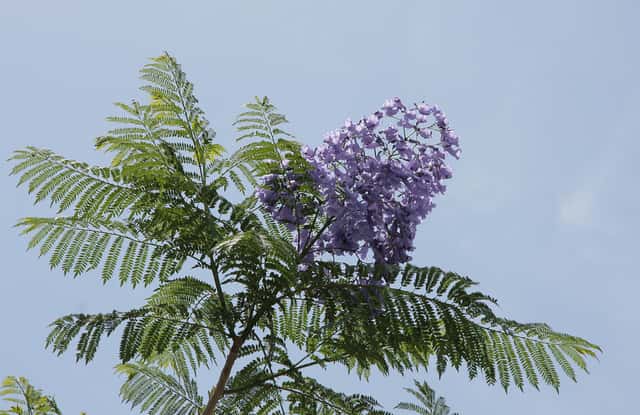
Blue Jacaranda (Jacaranda mimosaefolia) is a easy-care plant from the Bignoniaceae family. The Blue Jacaranda is one of the world's most spectacular flowering trees, native to northwestern Argentina and southern Bolivia. In spring, before the feathery fern-like leaves emerge, the tree erupts in a stunning display of violet-blue trumpet-shaped flowers that carpet entire streets and gardens...
Blue Jacaranda grows up to 12.0m, with spread of 900cm, watering every 10 days, 5°C – 35°C, 40–60% humidity. It is not suitable for indoor environments and safe for pets.
Unlike many tropical plants, Blue Jacaranda tolerates watering mistakes. Best for beginners. Unlike many popular species, Blue Jacaranda is safe to keep around pets.
How to Care for Blue Jacaranda?
TLDR: Blue Jacaranda needs Direct sun, watering every 10 days, and temperatures between 5-35°C with 40-60% humidity.
How Often Should You Water Blue Jacaranda?
Water every 7-14 days when young, allowing the soil to dry slightly between waterings. Once established (2-3 years), Jacaranda is drought-tolerant and rarely needs supplemental watering except during extended dry spells. Avoid overwatering, which leads to root rot.
How Much Light Does Blue Jacaranda Need?
Plant in full sun with at least 6 hours of direct sunlight daily. Full sun exposure is essential for abundant flowering. In extremely hot climates, light afternoon shade is tolerated but may reduce bloom intensity.
What Is the Best Soil for Blue Jacaranda?
Prefers sandy, well-drained soils with a slightly acidic to neutral pH (6.0-7.5). Enrich with compost at planting. Avoid clay or poorly drained soils as waterlogged roots will rot. Sandy loam is ideal.
What Pot Should You Use for Blue Jacaranda?
Not applicable (outdoor tree)
Care Schedule
Fertilize
Every 180 days
What Is Blue Jacaranda and Where Does It Come From?
The Blue Jacaranda is one of the world's most spectacular flowering trees, native to northwestern Argentina and southern Bolivia. In spring, before the feathery fern-like leaves emerge, the tree erupts in a stunning display of violet-blue trumpet-shaped flowers that carpet entire streets and gardens. Growing up to 40 feet tall with a wide spreading canopy, it is a beloved ornamental tree planted across tropical and subtropical regions worldwide.
How to Propagate Blue Jacaranda?
Seed Propagation
Germination occurs in 2-4 weeks. Seedlings grow rapidly in the first year. Keep the medium consistently moist but not waterlogged. Trees grown from seed may take 7-10 years to flower.
- 1 Collect mature seeds from dried seed pods in autumn
- 2 Soak seeds in warm water for 24 hours to scarify
- 3 Sow in light, well-draining seed-starting mix, barely covering seeds
- 4 Keep in a warm location at 22-28°C (72-82°F)
- 5 Transplant seedlings when they reach 4-6 inches tall
Materials needed:
How Big Does Blue Jacaranda Grow?
TLDR: Blue Jacaranda can reach up to 12.0m tall with Fast growth rate.
Max height
12.0m
Spread
9.0m
Growth rate
Fast
Foliage
Deciduous
Plant Uses
Ornamental
Great for decoration
Is your plant showing symptoms?
Click on the symptom to discover possible causes:
What Diseases Commonly Affect Blue Jacaranda?
TLDR: Blue Jacaranda is susceptible to 8 known diseases. Monitor regularly for early detection.
Powdery Mildew
Powdery mildew is a common fungal disease caused by various fungi species including Erysiphe, Podosphaera, Oïdium, and Leveillula. It affects over 10,000 plant species worldwide. The disease thrives in warm, dry climates with high humidity and appears as a distinctive white powdery coating on plant surfaces.
Leaf Spot
Leaf spot is a common fungal disease caused by various pathogens including Alternaria, Ascochyta, Colletotrichum, Septoria, and Venturia. It primarily affects leaves, causing discolored spots that can lead to premature leaf drop if left untreated.
Aphids
Aphids are small, soft-bodied, pear-shaped insects (1/16 to 1/8 inch long) that feed by sucking nutrient-rich sap from plants. They reproduce rapidly and can quickly weaken plants, causing distorted growth and transmitting plant viruses. Aphids come in various colors including green, black, red, yellow, brown, and gray. They secrete honeydew, a sticky substance that attracts ants and encourages sooty mold growth.
Scale Insects
Scale insects are small sap-sucking pests that appear as brown, shell-like bumps on plant stems and leaves. There are over 25 species, divided into armored (hard) and unarmored (soft) scales. They feed by piercing plant tissue and extracting sap, which weakens the plant and can lead to yellowing, stunted growth, and even death if left untreated. They also excrete honeydew, which attracts ants and promotes sooty mold growth.
Meaning & Symbolism
The Blue Jacaranda symbolizes spring, renewal, and good luck. In South Africa, it is associated with exam season — students call it the "panic tree" as exams begin when it blooms. In Australia, it signals the end of the school year. It represents the beauty and vitality of subtropical landscapes.
Fun Facts
Jacaranda can grow up to 20 meters tall in ideal natural conditions
Its flowers emerge before the leaves, covering the entire tree in a breathtaking violet-blue display
Over 70,000 Jacaranda trees line the streets of Pretoria, South Africa, earning it the nickname "Jacaranda City"
Trees grown from seed may take 7-10 years to produce their first flowers
Frequently asked questions
How often should I water a Blue Jacaranda?
Why is my Jacaranda not flowering?
Is Blue Jacaranda toxic to pets?
When does Jacaranda bloom?
How big does a Jacaranda tree get?
Compare with similar plants
| Attribute | Difficulty | Light | Watering | Pet Safe |
|---|---|---|---|---|
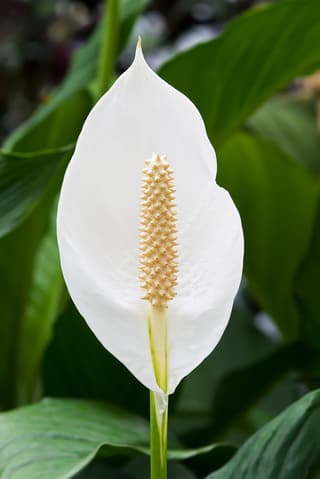
| Peace Lily | Easy | Low light | 4d | ⚠️ |
| Swiss Cheese Plant | Easy | Partial shade | 10d | ⚠️ |
| Golden Pothos | Easy | Low light | 8d | ⚠️ |
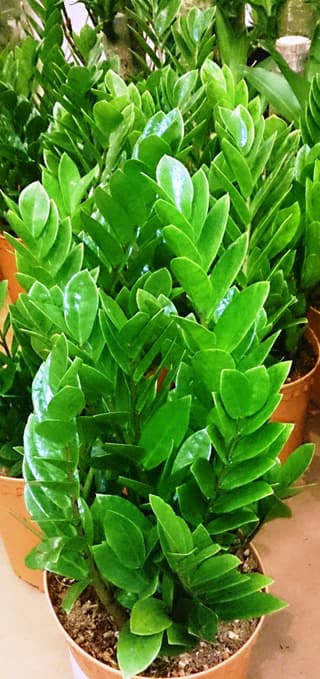
| ZZ Plant | Easy | Low light | 18d | ⚠️ |