Vitaceae
Boston Ivy (Parthenocissus tricuspidata): The Classic Wall Climber
Parthenocissus tricuspidata
Low-maintenance outdoor plant. Tolerates drought, partial shade, and a wide range of soils. Water occasionally during summer dry spells and prune annually to control vigorous growth. Highly cold-hardy down to USDA zone 4.
Every 10 days
Bright indirect
-20° - 35°C
40% - 80%
Categories
What is Boston Ivy?
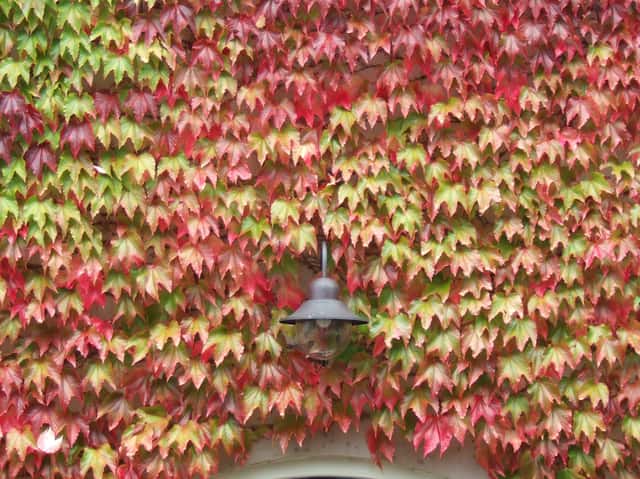
Boston Ivy (Parthenocissus tricuspidata) is a easy-care plant from the Vitaceae family. Boston Ivy (Parthenocissus tricuspidata) is a vigorous, deciduous climbing vine from the Vitaceae family, native to China, Japan, and Korea. Celebrated for its three-lobed dark green leaves that turn brilliant scarlet-red in autumn, it is one of the most popular plants for covering walls, facades, a...
Boston Ivy grows up to 15.0m, with spread of 300cm, watering every 10 days, -20°C – 35°C, 40–80% humidity. It is not suitable for indoor environments and safe for pets.
Unlike many tropical plants, Boston Ivy tolerates watering mistakes. Best for beginners. Unlike many popular species, Boston Ivy is safe to keep around pets.
How to Care for Boston Ivy?
TLDR: Boston Ivy needs Bright indirect, watering every 10 days, and temperatures between -20-35°C with 40-80% humidity.
How Often Should You Water Boston Ivy?
Water when the soil feels dry to the touch. Established plants in the ground rarely need supplemental watering beyond rainfall. In containers, check moisture every 7–10 days in summer. Avoid waterlogged soil.
How Much Light Does Boston Ivy Need?
Thrives in full sun to partial shade. More sun exposure produces the most vibrant autumn foliage color. In deep shade, plants survive but leaf color intensity is reduced.
What Is the Best Soil for Boston Ivy?
Adapts to average, well-drained soils with pH 6.0–7.5. Tolerates clay, dry, and rocky soils. For containers, use a quality potting mix amended with perlite for good drainage.
What Pot Should You Use for Boston Ivy?
Large terracotta or concrete outdoor planter. Best planted directly in the ground for maximum growth. Provide a wall, trellis, or fence for it to climb.
Care Schedule
Repot
Every 365 days
What Is Boston Ivy and Where Does It Come From?
Boston Ivy (Parthenocissus tricuspidata) is a vigorous, deciduous climbing vine from the Vitaceae family, native to China, Japan, and Korea. Celebrated for its three-lobed dark green leaves that turn brilliant scarlet-red in autumn, it is one of the most popular plants for covering walls, facades, and trellises. It clings to surfaces via adhesive disc-tipped tendrils, requiring no additional support.
How to Propagate Boston Ivy?
Stem Cutting
Dip the cut end in rooting hormone to increase success rate. Avoid direct sun during rooting.
- 1 Cut a healthy stem with 2-3 nodes at a diagonal angle
- 2 Remove lower leaves, keeping 2 leaves at the top
- 3 Plant in moist, well-draining medium in partial shade
- 4 Keep medium slightly moist until roots establish
Materials needed:
Seed Propagation
Cold stratification significantly improves germination rates.
- 1 Collect ripe berries in autumn
- 2 Cold-stratify seeds for 2-3 months in the refrigerator
- 3 Sow in moist seed-starting mix in spring
- 4 Keep in indirect light at 18–22°C until germination
Materials needed:
How Big Does Boston Ivy Grow?
TLDR: Boston Ivy can reach up to 15.0m tall with Fast growth rate.
Max height
15.0m
Spread
3.0m
Growth rate
Fast
Foliage
Deciduous
Warning: Toxic Plant
This plant can be toxic if ingested. Keep out of reach of:
Plant Uses
Ornamental
Great for decoration
Ground Cover
Soil coverage
Is your plant showing symptoms?
Click on the symptom to discover possible causes:
What Diseases Commonly Affect Boston Ivy?
TLDR: Boston Ivy is susceptible to 6 known diseases. Monitor regularly for early detection.
Leaf Spot
Leaf spot is a common fungal disease caused by various pathogens including Alternaria, Ascochyta, Colletotrichum, Septoria, and Venturia. It primarily affects leaves, causing discolored spots that can lead to premature leaf drop if left untreated.
Cercospora Leaf Spot
Cercospora leaf spot is a common fungal disease caused by Cercospora species that affects many plant types, particularly beets, roses, and leafy vegetables. The disease thrives in warm, humid conditions and can cause significant defoliation, reducing plant vigor and yield. It spreads rapidly through water splash, wind, and contaminated tools.
Powdery Mildew
Powdery mildew is a common fungal disease caused by various fungi species including Erysiphe, Podosphaera, Oïdium, and Leveillula. It affects over 10,000 plant species worldwide. The disease thrives in warm, dry climates with high humidity and appears as a distinctive white powdery coating on plant surfaces.
Canker
Canker is a disease caused by various fungi and bacteria that create necrotic, sunken areas on bark of branches, stems, and trunks. Pathogens enter through wounds and natural openings, especially when plants are stressed. Canker can gradually weaken or kill branches by disrupting water and nutrient flow.
Meaning & Symbolism
In Japanese culture, the three-lobed leaf served as the mon (heraldic crest) of the Tōdō clan, symbolizing tenacity, persistent growth, and the beauty of transience through its spectacular autumn foliage.
Fun Facts
The outfield walls of Wrigley Field in Chicago are famously covered with Boston Ivy, planted in 1937
Its adhesive tendrils do not need wire or trellis — they grip directly onto concrete and stone
The dark blue-black berries are an important food source for migrating birds in autumn
In Japan, the three-lobed leaf was a samurai clan emblem for centuries
Frequently asked questions
How often should I water Boston Ivy?
Is Boston Ivy toxic to humans?
How fast does Boston Ivy grow?
Will Boston Ivy damage my walls?
Can Boston Ivy grow in shade?
Compare with similar plants
| Attribute | Difficulty | Light | Watering | Pet Safe |
|---|---|---|---|---|
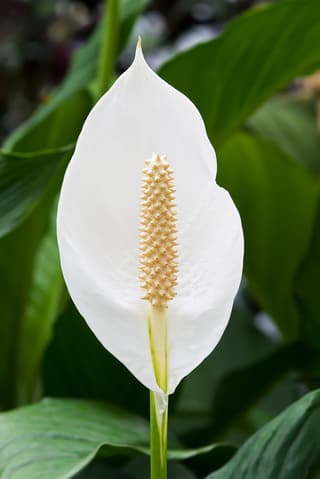
| Peace Lily | Easy | Low light | 4d | ⚠️ |
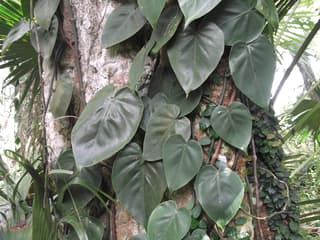
| Swiss Cheese Plant | Easy | Partial shade | 10d | ⚠️ |
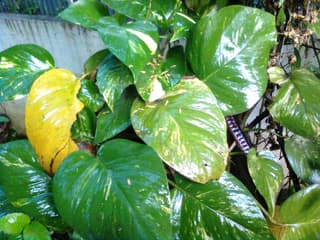
| Golden Pothos | Easy | Low light | 8d | ⚠️ |
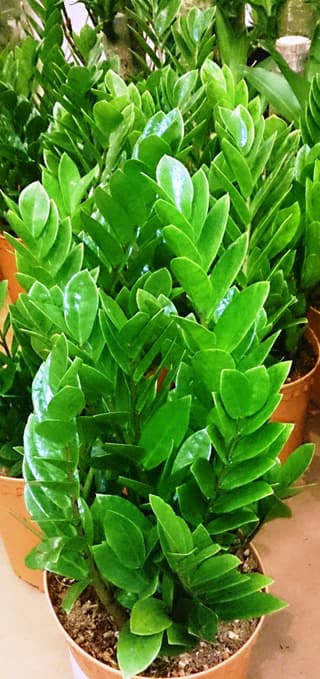
| ZZ Plant | Easy | Low light | 18d | ⚠️ |