Asteraceae
Golden Button (Unxia kubitzkii): How to Grow and Care
Unxia kubitzkii
Very easy to grow. Requires full sun for abundant flowering. Water regularly keeping the soil slightly moist but never waterlogged. Fertilize semi-annually with NPK or organic fertilizer.
Every 5 days
Direct sun
15° - 38°C
50% - 80%
Categories
What is Golden Button?
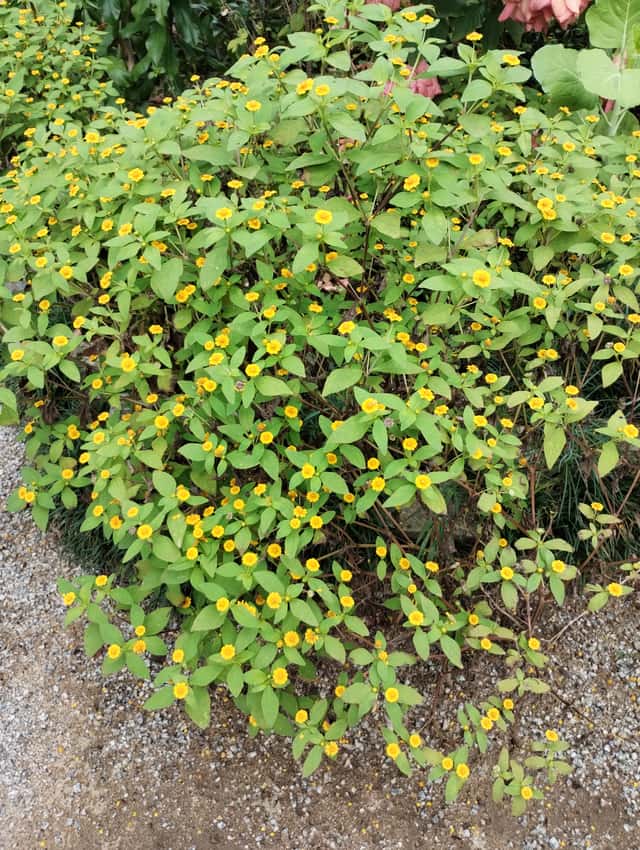
Golden Button (Unxia kubitzkii) is a easy-care plant from the Asteraceae family. Unxia kubitzkii, commonly known as Golden Button, is a perennial herbaceous plant native to Brazil, belonging to the Asteraceae family. It grows 30–50 cm tall and produces small golden-yellow flowers year-round, with peak blooming in spring and summer. Hardy and virtually immune to pests and disease...
Golden Button grows up to 50cm, with spread of 40cm, watering every 5 days, 15°C – 38°C, 50–80% humidity. It is not suitable for indoor environments and safe for pets.
Unlike many tropical plants, Golden Button tolerates watering mistakes. Best for beginners. Unlike many popular species, Golden Button is safe to keep around pets.
How to Care for Golden Button?
TLDR: Golden Button needs Direct sun, watering every 5 days, and temperatures between 15-38°C with 50-80% humidity.
How Often Should You Water Golden Button?
Water every 4–6 days, keeping the soil slightly moist. Avoid waterlogging as it can cause root rot. During the establishment phase (first 15 days after planting cuttings), keep the soil consistently moist.
How Much Light Does Golden Button Need?
Plant in full sun, ensuring at least 6 hours of direct sunlight per day. This is essential for continuous and abundant golden-yellow flowering.
What Is the Best Soil for Golden Button?
Use fertile, light, well-draining soil rich in organic matter. Enrich with organic compost and bone meal for best results.
What Pot Should You Use for Golden Button?
Clay or ceramic pots with drainage holes are ideal for container planting. Choose wide, shallow pots suited to the plant's low-growing habit.
Care Schedule
Fertilize
Every 180 days
What Is Golden Button and Where Does It Come From?
Unxia kubitzkii, commonly known as Golden Button, is a perennial herbaceous plant native to Brazil, belonging to the Asteraceae family. It grows 30–50 cm tall and produces small golden-yellow flowers year-round, with peak blooming in spring and summer. Hardy and virtually immune to pests and diseases, it is widely used in borders, flower beds, and container gardens.
How to Propagate Golden Button?
Stem tip cutting
Water with a gentle mist to avoid displacing newly planted cuttings. Plant 20 cm apart for quick ground coverage.
- 1 Select healthy stems and cut 6–7 cm tip cuttings
- 2 Remove lower leaves, keeping 2–3 pairs at the top
- 3 Plant cuttings directly in moist, fertile substrate
- 4 Keep soil consistently moist for the first 15 days
- 5 Protect from intense sun until roots establish
Materials needed:
Seed sowing
Once established, the plant self-seeds naturally in the garden.
- 1 Collect seeds when capsules are dry
- 2 Sow superficially on moist substrate
- 3 Cover lightly with a thin layer of substrate
- 4 Keep temperature above 22°C
- 5 Transplant when seedlings reach 5 cm
Materials needed:
How Big Does Golden Button Grow?
TLDR: Golden Button can reach up to 50cm tall with Medium growth rate.
Max height
50cm
Spread
40cm
Growth rate
Medium
Foliage
Evergreen
Plant Uses
Ornamental
Great for decoration
Is your plant showing symptoms?
Click on the symptom to discover possible causes:
What Diseases Commonly Affect Golden Button?
TLDR: Golden Button is susceptible to 3 known diseases. Monitor regularly for early detection.
Root Rot
Root rot is a serious fungal disease that affects the root system of plants, causing them to decay and die. It is primarily caused by overwatering, poor drainage, or soil-borne fungi such as Pythium, Phytophthora, Rhizoctonia, and Fusarium. The disease thrives in waterlogged conditions where roots are deprived of oxygen, making them susceptible to fungal infection.
Overwatering
Overwatering occurs when plants receive too much water, depriving roots of oxygen and causing root rot. This environmental stress is one of the most common causes of houseplant death, as waterlogged soil prevents roots from breathing and functioning properly.
Cold Damage
Cold damage, also known as frost injury, occurs when plants are exposed to freezing or near-freezing temperatures. This environmental stress can cause cellular damage as ice crystals form within plant tissues, rupturing cells and disrupting normal plant functions. Chilling injury can also occur in sensitive species at temperatures between 32-55°F (0-10°C), even without actual freezing.
Meaning & Symbolism
Symbol of joy, vitality, and prosperity in Brazilian gardens. Its continuous golden bloom is associated with positive energy and abundance.
Fun Facts
It is a 100% Brazilian plant, endemic to Brazil, belonging to the genus Unxia in the Asteraceae family.
It blooms year-round, making it one of the few native plants with continuous flowering.
Widely used in landscaping for its ability to quickly cover flower beds, forming dense golden patches.
Once established in the garden, it self-seeds naturally, providing new plants each spring.
Frequently asked questions
How often should I water Golden Button?
Does Golden Button need direct sunlight?
Can Golden Button be grown in pots?
Is Golden Button resistant to pests and diseases?
How do I propagate Golden Button?
Compare with similar plants
| Attribute | Difficulty | Light | Watering | Pet Safe |
|---|---|---|---|---|
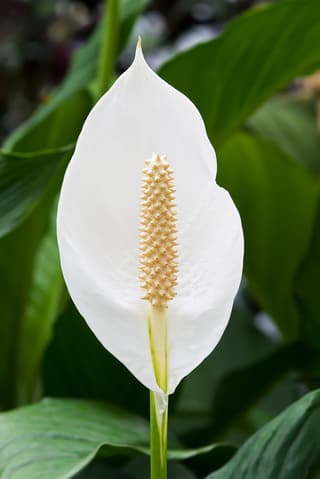
| Peace Lily | Easy | Low light | 4d | ⚠️ |
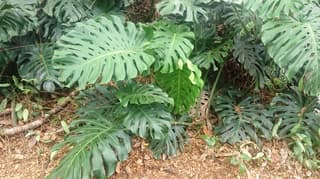
| Swiss Cheese Plant | Easy | Partial shade | 10d | ⚠️ |
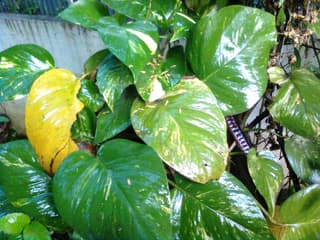
| Golden Pothos | Easy | Low light | 8d | ⚠️ |
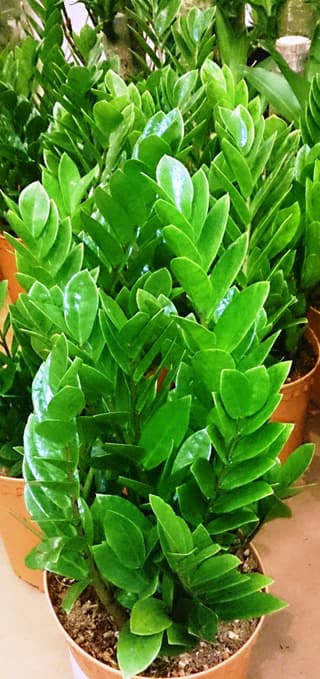
| ZZ Plant | Easy | Low light | 18d | ⚠️ |