Poaceae
Buddha Belly Bamboo (Bambusa ventricosa): Complete Care Guide
Bambusa ventricosa
A resilient, fast-growing plant that thrives in full sun to partial shade with well-draining soil. Water regularly to keep soil slightly moist. In containers, reduce watering and use lean soil to encourage the distinctive swollen internodes. Fertilize every 30 days during the growing season.
Every 7 days
Bright indirect
10° - 35°C
50% - 80%
Categories
What is Buddha Belly Bamboo?
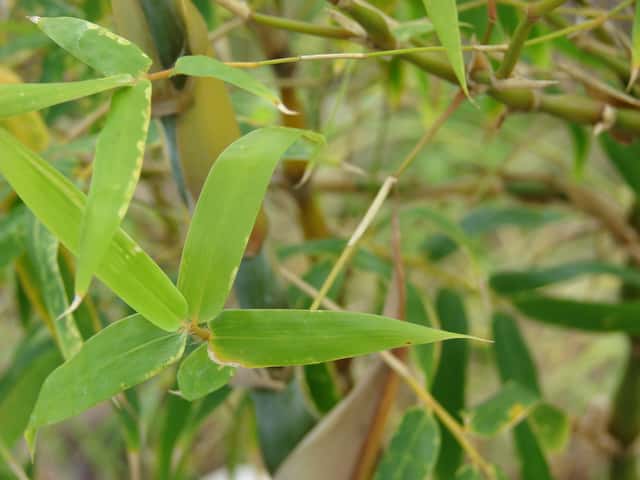
Buddha Belly Bamboo (Bambusa ventricosa) is a easy-care plant from the Poaceae family. Buddha Belly Bamboo (Bambusa ventricosa) is a clumping bamboo native to China and Southeast Asia, celebrated for its distinctively swollen internodes resembling the rounded belly of the Buddha statue. This ornamental feature is most pronounced when the plant is grown in containers or under mild stre...
Buddha Belly Bamboo grows up to 17.0m, with spread of 400cm, watering every 7 days, 10°C – 35°C, 50–80% humidity. It is suitable for indoor environments and safe for pets.
Unlike many tropical plants, Buddha Belly Bamboo tolerates watering mistakes. Best for beginners. Unlike many popular species, Buddha Belly Bamboo is safe to keep around pets. Without adequate drainage, root rot can develop within 14 days.
How to Care for Buddha Belly Bamboo?
TLDR: Buddha Belly Bamboo needs Bright indirect, watering every 7 days, and temperatures between 10-35°C with 50-80% humidity.
How Often Should You Water Buddha Belly Bamboo?
Water deeply every 7 days, thoroughly soaking the root zone and allowing excess to drain freely. In containers, let the top 2-3 cm of soil dry slightly between waterings to promote characteristic node development. Avoid water pooling in the saucer to prevent root rot.
How Much Light Does Buddha Belly Bamboo Need?
Requires full sun to partial shade with at least 4-6 hours of direct sunlight daily. Indoors, place near east or south-facing windows. Insufficient light results in thin culms without the characteristic belly swellings.
What Is the Best Soil for Buddha Belly Bamboo?
Use well-draining, slightly sandy, low-fertility soil to encourage swollen internodes. Mix coarse sand with quality potting mix in a 1:2 ratio. Nutrient-poor compacted soil paradoxically produces the most pronounced belly effect.
What Pot Should You Use for Buddha Belly Bamboo?
Choose heavy ceramic or concrete pots to accommodate the robust root system. Pots 40-60 cm in diameter are ideal for medium specimens. The weight of the pot helps stabilize tall plants. Ensure generous drainage holes.
Care Schedule
Fertilize
Every 30 days
Repot
Every 730 days
What Is Buddha Belly Bamboo and Where Does It Come From?
Buddha Belly Bamboo (Bambusa ventricosa) is a clumping bamboo native to China and Southeast Asia, celebrated for its distinctively swollen internodes resembling the rounded belly of the Buddha statue. This ornamental feature is most pronounced when the plant is grown in containers or under mild stress conditions. It is one of the most attractive bamboo species available, equally valued in gardens, patios, and as a bonsai subject.
How to Propagate Buddha Belly Bamboo?
Clump division
Divide in spring when the plant starts active growth. Keep at least 3-4 culms per division to ensure success.
- 1 Identify a healthy clump with multiple culms
- 2 Dig around the clump to expose the rhizomes
- 3 Cut the division with a clean spade or machete keeping roots intact
- 4 Plant immediately in well-draining substrate and water thoroughly
- 5 Keep in partial shade for 2-3 weeks until established
Materials needed:
Rhizome cutting
Maintain temperature above 20°C for best rooting results. Replace substrate if signs of rot appear.
- 1 Cut rhizome sections 20-30 cm long with at least 2 nodes
- 2 Apply rooting hormone to the cuts
- 3 Plant in moist, well-draining substrate
- 4 Cover with plastic to retain humidity
- 5 Wait for sprouting in a warm location with indirect light
Materials needed:
How Big Does Buddha Belly Bamboo Grow?
TLDR: Buddha Belly Bamboo can reach up to 17.0m tall with Fast growth rate.
Max height
17.0m
Spread
4.0m
Growth rate
Fast
Foliage
Evergreen
Plant Uses
Ornamental
Great for decoration
Is your plant showing symptoms?
Click on the symptom to discover possible causes:
What Diseases Commonly Affect Buddha Belly Bamboo?
TLDR: Buddha Belly Bamboo is susceptible to 7 known diseases. Monitor regularly for early detection.
Root Rot
Root rot is a serious fungal disease that affects the root system of plants, causing them to decay and die. It is primarily caused by overwatering, poor drainage, or soil-borne fungi such as Pythium, Phytophthora, Rhizoctonia, and Fusarium. The disease thrives in waterlogged conditions where roots are deprived of oxygen, making them susceptible to fungal infection.
Overwatering
Overwatering occurs when plants receive too much water, depriving roots of oxygen and causing root rot. This environmental stress is one of the most common causes of houseplant death, as waterlogged soil prevents roots from breathing and functioning properly.
Aphids
Aphids are small, soft-bodied, pear-shaped insects (1/16 to 1/8 inch long) that feed by sucking nutrient-rich sap from plants. They reproduce rapidly and can quickly weaken plants, causing distorted growth and transmitting plant viruses. Aphids come in various colors including green, black, red, yellow, brown, and gray. They secrete honeydew, a sticky substance that attracts ants and encourages sooty mold growth.
Spider Mites
Spider mites are tiny arachnids (less than 1/20 inch long) related to spiders and ticks that feed on plant sap. They thrive in hot, dry conditions and can cause significant damage to ornamental and vegetable plants. During severe infestations, crop losses can reach 14% or higher as these pests disrupt vital plant processes including photosynthesis, carbon dioxide absorption, and transpiration.
Meaning & Symbolism
Symbolizes abundance, prosperity, good luck, and longevity. In Asian culture, the rounded internodes are associated with the belly of the Laughing Buddha, believed to bring happiness and fortune to the home.
Fun Facts
Can reach up to 17 meters tall in its natural habitat, but only grows 1.5-2.4 meters in containers
The belly swellings are stress-induced: the more restricted the space and poorer the soil, the more pronounced they become
It is one of the most popular bamboos in bonsai art due to its unique ornamental character
Unlike invasive running bamboos, Bambusa ventricosa is a clumping bamboo that does not spread aggressively
Frequently asked questions
How often should I water Buddha Belly Bamboo?
Can Buddha Belly Bamboo grow indoors?
How do I encourage the belly swellings to develop?
Is Buddha Belly Bamboo toxic to pets?
How often should I fertilize?
Compare with similar plants
| Attribute | Difficulty | Light | Watering | Pet Safe |
|---|---|---|---|---|
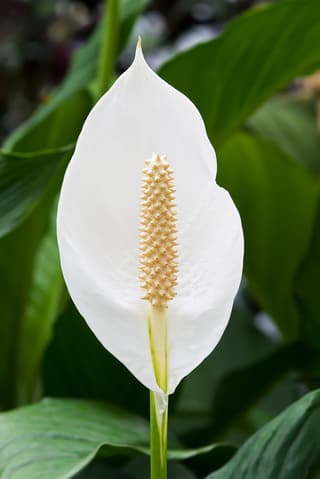
| Peace Lily | Easy | Low light | 4d | ⚠️ |
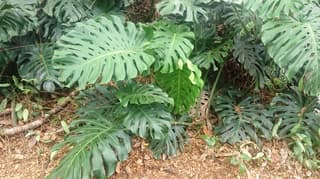
| Swiss Cheese Plant | Easy | Partial shade | 10d | ⚠️ |
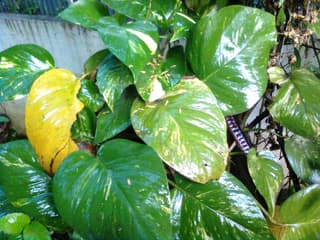
| Golden Pothos | Easy | Low light | 8d | ⚠️ |
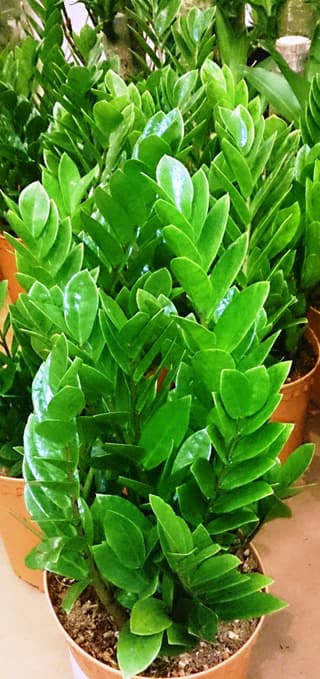
| ZZ Plant | Easy | Low light | 18d | ⚠️ |