Asparagaceae
Cabbage Tree (Cordyline australis): Complete Care Guide
Cordyline australis
Cabbage Tree is an easy-care, drought-tolerant outdoor tree. Plant in full sun in well-drained soil. Water regularly when young; once established, it needs very little attention. Fertilise in spring, prune dead leaves annually, and protect young plants from severe frost.
Every 10 days
Bright indirect
-7° - 35°C
40% - 70%
Categories
What is Cabbage Tree?
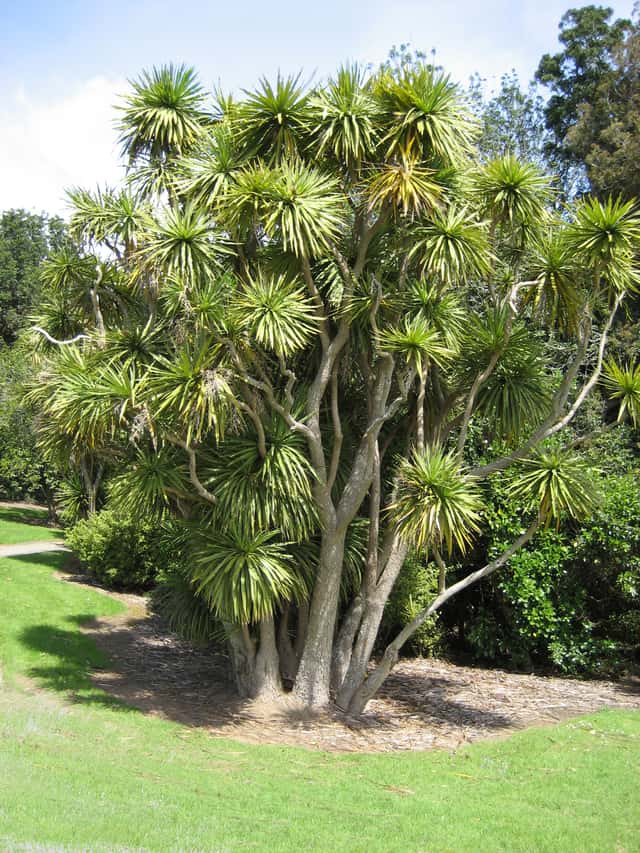
Cabbage Tree (Cordyline australis) is a easy-care plant from the Asparagaceae family. Cordyline australis, commonly known as the Cabbage Tree or Tī kōuka, is an iconic palm-like tree native to New Zealand. Despite its tropical appearance, it is a remarkably hardy outdoor specimen that can tolerate temperatures as low as -7°C. It produces long, sword-shaped leaves that form a dramatic...
Cabbage Tree grows up to 10.0m, spread of 300cm, watering every 10 days, -7°C – 35°C, 40–70% humidity. It is not suitable for indoor environments and not safe for pets.
Unlike many tropical plants, Cabbage Tree tolerates watering mistakes. Best for beginners. Without precautions, ingestion can cause irritation in pets. Keep out of reach of cats and dogs.
How to Care for Cabbage Tree?
TLDR: Cabbage Tree needs Bright indirect, watering every 10 days, and temperatures between -7-35°C with 40-70% humidity.
How Often Should You Water Cabbage Tree?
Water young plants regularly during the first growing season. Once established, Cabbage Tree is highly drought-tolerant — water only every 10 days or when the soil is dry. Reduce watering in autumn and winter. Avoid waterlogged soil to prevent root rot.
How Much Light Does Cabbage Tree Need?
Thrives in full sun. Green-leaved varieties can handle direct sunlight; coloured cultivars prefer bright indirect light. Position in a south- or west-facing spot for best growth and leaf colour intensity.
What Is the Best Soil for Cabbage Tree?
Plant in well-draining soil amended with grit or sand if needed. Tolerates sandy, loamy, and chalky soils. Neutral to slightly acidic or alkaline pH (6.0–7.5) is ideal. Heavy clay must be improved with drainage material.
What Pot Should You Use for Cabbage Tree?
Plant directly in the ground in a garden bed with excellent drainage. For containers, use a large, heavy pot (terracotta or ceramic) with John Innes No. 3 compost mixed with extra grit to ensure stability and drainage.
Care Schedule
Fertilize
Every 30 days
Repot
Every 730 days
What Is Cabbage Tree and Where Does It Come From?
Cordyline australis, commonly known as the Cabbage Tree or Tī kōuka, is an iconic palm-like tree native to New Zealand. Despite its tropical appearance, it is a remarkably hardy outdoor specimen that can tolerate temperatures as low as -7°C. It produces long, sword-shaped leaves that form a dramatic architectural crown, and mature trees develop a thick, fibrous trunk. In summer, established plants produce spectacular frothy spikes of tiny, fragrant white flowers. A beloved symbol of New Zealand landscapes, it is widely used as a bold architectural plant in gardens and streetscapes worldwide.
How to Propagate Cabbage Tree?
Stem Cutting
Use clean, sharp tools to avoid infection. Bottom heat improves rooting success.
- 1 Cut a healthy stem section of 10–15 cm with at least one bud
- 2 Allow the cut end to dry for 1–2 hours
- 3 Plant in moist, well-draining propagation mix
- 4 Keep warm (18–22°C) and in bright indirect light
- 5 Water sparingly until roots establish
Materials needed:
Division
Division is the most reliable propagation method for Cordyline australis. Choose healthy, well-rooted offsets.
- 1 Identify rooted suckers at the base of the plant
- 2 Carefully separate the sucker with its roots using a spade
- 3 Plant immediately in well-draining soil
- 4 Water thoroughly and keep in a sheltered spot until established
Materials needed:
Seed Propagation
Fresh seed germinates best. Seedlings may vary from the parent plant.
- 1 Collect fresh seeds after flowering in late summer
- 2 Sow at 16°C in a heated propagator from April to June
- 3 Keep substrate moist but not waterlogged
- 4 Germination may take several weeks to months
- 5 Pot on seedlings when large enough to handle
Materials needed:
How Big Does Cabbage Tree Grow?
TLDR: Cabbage Tree can reach up to 10.0m tall with Slow growth rate.
Max height
10.0m
Spread
3.0m
Growth rate
Slow
Foliage
Evergreen
Warning: Toxic Plant
This plant can be toxic if ingested. Keep out of reach of:
Plant Uses
Ornamental
Great for decoration
Is your plant showing symptoms?
Click on the symptom to discover possible causes:
What Diseases Commonly Affect Cabbage Tree?
TLDR: Cabbage Tree is susceptible to 11 known diseases. Monitor regularly for early detection.
Root Rot
Root rot is a serious fungal disease that affects the root system of plants, causing them to decay and die. It is primarily caused by overwatering, poor drainage, or soil-borne fungi such as Pythium, Phytophthora, Rhizoctonia, and Fusarium. The disease thrives in waterlogged conditions where roots are deprived of oxygen, making them susceptible to fungal infection.
Leaf Spot
Leaf spot is a common fungal disease caused by various pathogens including Alternaria, Ascochyta, Colletotrichum, Septoria, and Venturia. It primarily affects leaves, causing discolored spots that can lead to premature leaf drop if left untreated.
Spider Mites
Spider mites are tiny arachnids (less than 1/20 inch long) related to spiders and ticks that feed on plant sap. They thrive in hot, dry conditions and can cause significant damage to ornamental and vegetable plants. During severe infestations, crop losses can reach 14% or higher as these pests disrupt vital plant processes including photosynthesis, carbon dioxide absorption, and transpiration.
Scale Insects
Scale insects are small sap-sucking pests that appear as brown, shell-like bumps on plant stems and leaves. There are over 25 species, divided into armored (hard) and unarmored (soft) scales. They feed by piercing plant tissue and extracting sap, which weakens the plant and can lead to yellowing, stunted growth, and even death if left untreated. They also excrete honeydew, which attracts ants and promotes sooty mold growth.
Meaning & Symbolism
In New Zealand, the Cabbage Tree (Tī kōuka) is a taonga (treasure) of the Māori people, symbolising strength, resilience, and connection to the land. It is an enduring emblem of Aotearoa New Zealand, appearing in its unique skyline and natural landscapes.
Fun Facts
Cordyline australis can grow up to 10 metres tall in the wild, with mature trees living for hundreds of years.
The Māori people used almost every part of the Cabbage Tree — leaves for weaving, roots for food, and the sweet inner shoots as a delicacy.
Tī kōuka is considered a taonga (treasure) by the Māori and is a protected species in some areas of New Zealand.
A single mature tree can produce up to 100,000 tiny fragrant flowers in a single summer season.
Frequently asked questions
How often should I water a Cabbage Tree?
Is Cordyline australis frost-hardy?
Is the Cabbage Tree toxic to cats and dogs?
Can I grow a Cabbage Tree indoors?
When does the Cabbage Tree flower?
Compare with similar plants
| Attribute | Difficulty | Light | Watering | Pet Safe |
|---|---|---|---|---|
| Field Maple | Easy | Bright indirect | 14d | ✓ |
| Silver Birch | Easy | Direct sun | 14d | ✓ |
| Cushion Bush | Easy | Direct sun | 14d | ✓ |
| Peruvian peppertree | Easy | Direct sun | 14d | ⚠️ |





