Cactaceae
Fluminense Column Cactus: Brazil's Rare Inselberg Endemic
Coleocephalocereus fluminensis
An extremely hardy cactus adapted to rocky, arid environments. Requires intense direct sunlight, very sparse watering, and a fast-draining substrate. In winter it needs almost no water at all.
Every 21 days
Direct sun
8° - 35°C
30% - 60%
Categories
What is Fluminense Column Cactus?
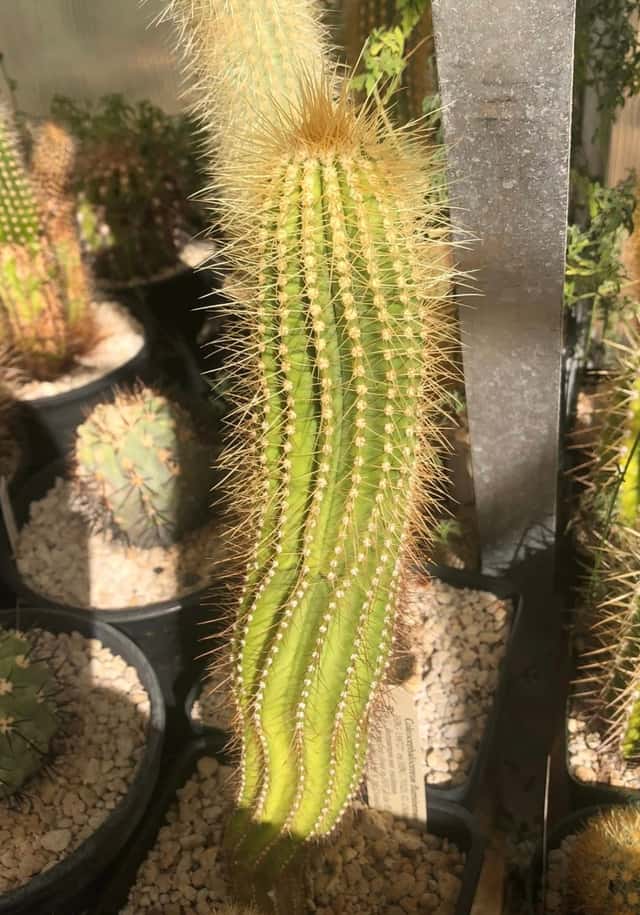
Fluminense Column Cactus (Coleocephalocereus fluminensis) is a hard-care plant from the Cactaceae family. Coleocephalocereus fluminensis is a columnar cactus endemic to the rocky inselbergs (isolated rocky hills) of southeastern Brazil, particularly in Rio de Janeiro and Espírito Santo states. It grows on exposed crystalline rock outcrops, forming dense clusters of erect ribbed stems covered in sharp sp...
Fluminense Column Cactus grows up to 1.5m, spread of 60cm, watering every 21 days, 8°C – 35°C, 30–60% humidity. It is suitable for indoor environments and safe for pets.
Unlike easy-care plants, Fluminense Column Cactus demands constant attention to humidity and light. Not recommended for beginners. Unlike many popular species, Fluminense Column Cactus is safe to keep around pets. Without adequate drainage, root rot can develop within 42 days.
How to Care for Fluminense Column Cactus?
TLDR: Fluminense Column Cactus needs Direct sun, watering every 21 days, and temperatures between 8-35°C with 30-60% humidity.
How Often Should You Water Fluminense Column Cactus?
Water every 3 weeks in summer, once a month in winter. Never allow water to pool at the base — root rot is the primary threat to this species.
How Much Light Does Fluminense Column Cactus Need?
Requires at least 6 hours of direct sunlight daily. Indoors, place at the sunniest window available. Insufficient light causes etiolation and weakened growth.
What Is the Best Soil for Fluminense Column Cactus?
Use a cactus mix with 50% inorganic material (perlite, coarse sand, or crushed granite). Ideal pH: 5.5–7.0.
What Pot Should You Use for Fluminense Column Cactus?
Terracotta or clay pot with large drainage holes. Avoid deep pots — the root system is shallow and lateral.
Care Schedule
Fertilize
Every 60 days
Repot
Every 730 days
What Is Fluminense Column Cactus and Where Does It Come From?
Coleocephalocereus fluminensis is a columnar cactus endemic to the rocky inselbergs (isolated rocky hills) of southeastern Brazil, particularly in Rio de Janeiro and Espírito Santo states. It grows on exposed crystalline rock outcrops, forming dense clusters of erect ribbed stems covered in sharp spines. Adult plants develop a distinctive white woolly cephalium at the apex from which white to yellowish nocturnal flowers emerge.
How Big Does Fluminense Column Cactus Grow?
TLDR: Fluminense Column Cactus can reach up to 1.5m tall with Slow growth rate.
Max height
1.5m
Spread
60cm
Growth rate
Slow
Foliage
Evergreen
Plant Uses
Ornamental
Great for decoration
Is your plant showing symptoms?
Click on the symptom to discover possible causes:
What Diseases Commonly Affect Fluminense Column Cactus?
TLDR: Fluminense Column Cactus is susceptible to 9 known diseases. Monitor regularly for early detection.
Root Rot
Root rot is a serious fungal disease that affects the root system of plants, causing them to decay and die. It is primarily caused by overwatering, poor drainage, or soil-borne fungi such as Pythium, Phytophthora, Rhizoctonia, and Fusarium. The disease thrives in waterlogged conditions where roots are deprived of oxygen, making them susceptible to fungal infection.
Overwatering
Overwatering occurs when plants receive too much water, depriving roots of oxygen and causing root rot. This environmental stress is one of the most common causes of houseplant death, as waterlogged soil prevents roots from breathing and functioning properly.
Mealybugs
Mealybugs are small, soft-bodied insects covered with a white, waxy, cottony material. They are common pests of houseplants and outdoor plants in mild climates. These sap-sucking insects feed on plant tissue, causing damage, stunted growth, and can lead to plant death if left untreated. They produce sticky honeydew which attracts sooty mold.
Scale Insects
Scale insects are small sap-sucking pests that appear as brown, shell-like bumps on plant stems and leaves. There are over 25 species, divided into armored (hard) and unarmored (soft) scales. They feed by piercing plant tissue and extracting sap, which weakens the plant and can lead to yellowing, stunted growth, and even death if left untreated. They also excrete honeydew, which attracts ants and promotes sooty mold growth.
Meaning & Symbolism
A symbol of resilience — thriving atop bare exposed rocks in one of Earth's most biodiverse yet threatened ecosystems, the Brazilian Atlantic Forest.
Fun Facts
The 'hairy' appearance comes from the cephalium — a unique woolly, bristled structure that develops only on reproductive adults.
It is endemic to inselbergs, isolated rocky outcrops rising above the Atlantic Rainforest, one of the most threatened biomes on Earth.
Flowers open at night, pollinated by bats and moths attracted to their pale color and subtle fragrance.
It grows less than 5 cm per year, making large specimens true living heirlooms.
Frequently asked questions
How often should I water Coleocephalocereus fluminensis?
Can it survive cold temperatures?
Why is my plant shrinking or shriveling?
Compare with similar plants
| Attribute | Difficulty | Light | Watering | Pet Safe |
|---|---|---|---|---|
| Chilean Cacti | Easy | Direct sun | 14d | ✓ |
| Creeping bentgrass | Hard | Direct sun | 3d | ✓ |
| Mexican Organ Pipe Cactus | Medium | Direct sun | 21d | ✓ |
| Thimble Cactus | Easy | Direct sun | 14d | ✓ |