Araceae
Calla Lily (Zantedeschia aethiopica)
Zantedeschia aethiopica
Calla Lily thrives with consistent moisture, bright indirect to full sun, and moderate temperatures. Keep soil moist but not waterlogged. Provide a period of dormancy in late autumn. Feed monthly during the growing season and repot annually as needed.
Every 3 days
Bright indirect
10° - 24°C
50% - 75%
Categories
What is Calla Lily?
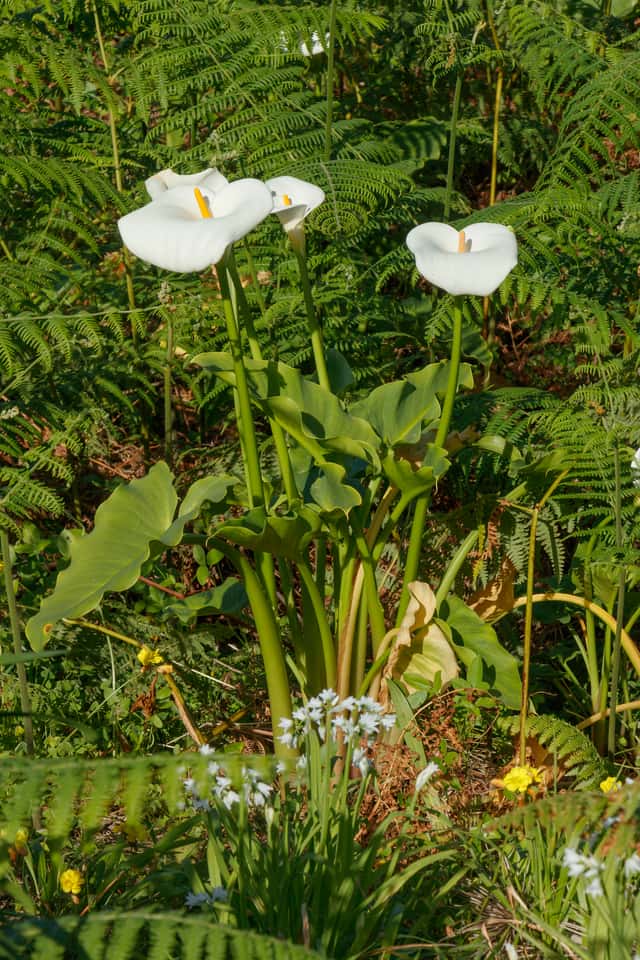
Calla Lily (Zantedeschia aethiopica) is a easy-care plant from the Araceae family. Zantedeschia aethiopica, commonly known as Calla Lily or Arum Lily, is a striking perennial from the family Araceae, native to southern Africa. It produces iconic trumpet-shaped white spathes surrounding a yellow spadix, with large, glossy, arrow-shaped leaves. Widely grown as an ornamental plant in...
Calla Lily grows up to 1.0m, spread of 60cm, watering every 3 days, 10°C – 24°C, 50–75% humidity. It is suitable for indoor environments and not safe for pets.
Unlike many tropical plants, Calla Lily tolerates watering mistakes. Best for beginners. Without precautions, ingestion can cause irritation in pets. Keep out of reach of cats and dogs. Without adequate drainage, root rot can develop within 7 days.
How to Care for Calla Lily?
TLDR: Calla Lily needs Bright indirect, watering every 3 days, and temperatures between 10-24°C with 50-75% humidity.
How Often Should You Water Calla Lily?
Water regularly to keep the soil evenly moist. In summer, the plant may need watering every 2-3 days. Reduce watering significantly in autumn and winter to allow the rhizome to rest. Avoid letting it completely dry out during the active growing period.
How Much Light Does Calla Lily Need?
Prefers bright light with some direct sun — ideally 4-6 hours of sunlight per day. In hot climates, provide afternoon shade to prevent leaf scorch. Indoors, place near a south or east-facing window for best results.
What Is the Best Soil for Calla Lily?
Plant in rich, loamy, moisture-retentive soil with a pH of 5.5–7.0. Amend with compost or organic matter before planting. The plant tolerates wet conditions and can even grow with its roots in shallow water, making it ideal for pond margins.
What Pot Should You Use for Calla Lily?
Use a wide, heavy ceramic or terracotta pot with drainage holes to accommodate the large rhizome. A pot 25–30 cm deep and wide is ideal. Terracotta helps prevent waterlogging while maintaining soil moisture.
Care Schedule
Fertilize
Every 30 days
Repot
Every 365 days
What Is Calla Lily and Where Does It Come From?
Zantedeschia aethiopica, commonly known as Calla Lily or Arum Lily, is a striking perennial from the family Araceae, native to southern Africa. It produces iconic trumpet-shaped white spathes surrounding a yellow spadix, with large, glossy, arrow-shaped leaves. Widely grown as an ornamental plant in gardens and as a cut flower, it thrives in moist, fertile soil.
How to Propagate Calla Lily?
Rhizome Division
Division is best done in late summer or early spring. Use clean, sharp tools to prevent disease spread. Divisions should include at least one visible growth bud.
- 1 Dig up the entire clump after the plant goes dormant
- 2 Separate the rhizome into sections, each with at least one growth bud (eye)
- 3 Allow cut surfaces to dry and callus for 1-2 days
- 4 Replant sections 3-4 inches deep in moist, fertile soil
- 5 Water well and keep moist until new growth appears
Materials needed:
Seed Propagation
Seeds are slower and less reliable than division. Plants grown from seed may take 2-3 years to flower.
- 1 Collect seeds from mature flower heads after the spathe fades
- 2 Soak seeds in warm water for 24 hours before planting
- 3 Sow seeds 1 cm deep in moist potting mix
- 4 Keep in a warm location (18-22°C) with bright indirect light
- 5 Germination takes 4-8 weeks; transplant when seedlings are large enough to handle
Materials needed:
How Big Does Calla Lily Grow?
TLDR: Calla Lily can reach up to 1.0m tall with Medium growth rate.
Max height
1.0m
Spread
60cm
Growth rate
Medium
Foliage
Evergreen
Warning: Toxic Plant
This plant can be toxic if ingested. Keep out of reach of:
Plant Uses
Ornamental
Great for decoration
Is your plant showing symptoms?
Click on the symptom to discover possible causes:
What Diseases Commonly Affect Calla Lily?
TLDR: Calla Lily is susceptible to 17 known diseases. Monitor regularly for early detection.
Bacterial Soft Rot
Bacterial soft rot is a destructive plant disease caused primarily by bacteria from the genera Pectobacterium (formerly Erwinia) and Dickeya. These bacteria produce enzymes that break down plant cell walls, causing rapid and foul-smelling tissue decomposition. It mainly affects succulent tissues such as tubers, fruits, stems, and bulbs, being especially problematic in warm and humid conditions.
Gray Mold (Botrytis Blight)
Gray mold, caused by the fungus Botrytis cinerea, is one of the most common fungal diseases in plants. It affects over 200 plant species, including ornamentals, vegetables, fruits, and houseplants. The disease thrives in cool, humid conditions with poor air circulation, causing grayish spots and soft rot on infected tissues.
Gray Mold (Botrytis Blight)
Gray mold, caused by the fungus Botrytis cinerea, is a widespread necrotrophic pathogen affecting over 1,400 plant species. It thrives in cool, humid conditions and attacks weakened or aging plant tissues, causing soft rot and characteristic gray fuzzy growth.
Powdery Mildew
Powdery mildew is a common fungal disease caused by various fungi species including Erysiphe, Podosphaera, Oïdium, and Leveillula. It affects over 10,000 plant species worldwide. The disease thrives in warm, dry climates with high humidity and appears as a distinctive white powdery coating on plant surfaces.
Meaning & Symbolism
Symbol of purity, rebirth, and resurrection in Western culture. Associated with weddings and funerals. During Easter, it symbolizes the resurrection of Christ. In Ireland, it has long been a symbol of Irish republicanism.
Fun Facts
The Calla Lily is not a true lily — it belongs to the Araceae family, the same family as peace lilies and anthuriums.
Its iconic funnel-shaped white flower is actually a modified leaf called a spathe, not a true petal.
Calla Lily can grow in up to 12 inches of standing water, making it one of the few ornamental plants suited to pond margins.
In Victorian flower language, the Calla Lily symbolized magnificent beauty.
Frequently asked questions
How often should I water Calla Lily?
Is Calla Lily toxic to pets?
How do I get my Calla Lily to bloom again?
Can Calla Lily grow indoors?
How do I propagate Calla Lily?
Compare with similar plants
| Attribute | Difficulty | Light | Watering | Pet Safe |
|---|---|---|---|---|
| Field Maple | Easy | Bright indirect | 14d | ✓ |
| Silver Birch | Easy | Direct sun | 14d | ✓ |
| Common Blanketflower | Easy | Direct sun | 10d | ✓ |
| Cushion Bush | Easy | Direct sun | 14d | ✓ |





