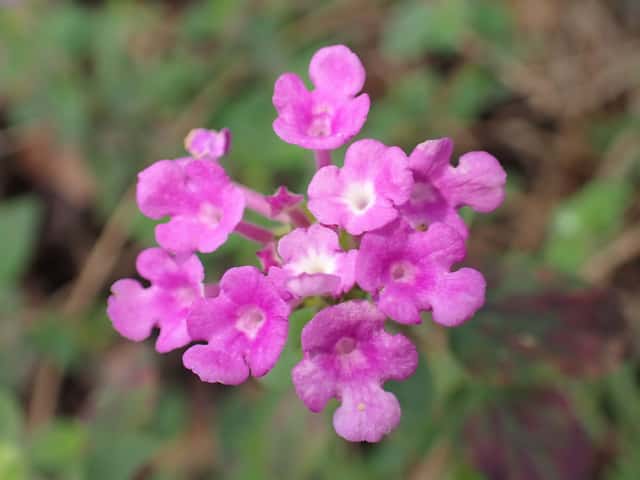
Verbenaceae
Trailing Lantana (Lantana montevidensis)
Lantana montevidensis
Very low maintenance plant: full sun, infrequent watering, and well-draining soil are all it needs. Drought-tolerant once established. Prune lightly in late winter to encourage vigorous spring growth and prolific flowering.
Every 10 days
Direct sun
-5° - 38°C
40% - 70%
Categories
What is Trailing Lantana?
Trailing Lantana (Lantana montevidensis) is a easy-care plant from the Verbenaceae family. Trailing Lantana (Lantana montevidensis) is a sprawling, perennial groundcover native to South America (Brazil, Uruguay, Argentina). It produces clusters of small purple-violet flowers in rounded umbels from spring through fall, making it a favorite for slopes, hanging baskets, and dry landscapes. E...
Trailing Lantana grows up to 60cm, spread of 150cm, watering every 10 days, -5°C – 38°C, 40–70% humidity. It is not suitable for indoor environments and not safe for pets.
Unlike many tropical plants, Trailing Lantana tolerates watering mistakes. Best for beginners. Without precautions, ingestion can cause irritation in pets. Keep out of reach of cats and dogs.
How to Care for Trailing Lantana?
TLDR: Trailing Lantana needs Direct sun, watering every 10 days, and temperatures between -5-38°C with 40-70% humidity.
How Often Should You Water Trailing Lantana?
Water every 10-14 days during dry spells, allowing the soil to dry out completely between waterings. Once established, this plant is highly drought-tolerant and rarely needs supplemental irrigation where rainfall is adequate.
How Much Light Does Trailing Lantana Need?
Requires full sun — at least 6 hours of direct sunlight daily. Insufficient light reduces flowering and increases susceptibility to powdery mildew. The more sun it receives, the more abundant and prolonged the bloom.
What Is the Best Soil for Trailing Lantana?
Prefers sandy or loamy soils with excellent drainage. Avoid heavy clay or waterlogged conditions, as excess moisture promotes root rot. Not demanding of soil fertility — actually thrives in poor, dry soils.
What Pot Should You Use for Trailing Lantana?
Terra cotta or ceramic pots with generous drainage holes. In hanging baskets or window boxes, the plant creates a beautiful cascading effect.
Care Schedule
Fertilize
Every 30 days
Misting
Every 3 days
Rotate
Every 7 days
Repot
Every 365 days
What Is Trailing Lantana and Where Does It Come From?
Trailing Lantana (Lantana montevidensis) is a sprawling, perennial groundcover native to South America (Brazil, Uruguay, Argentina). It produces clusters of small purple-violet flowers in rounded umbels from spring through fall, making it a favorite for slopes, hanging baskets, and dry landscapes. Exceptionally drought-tolerant once established, it thrives in hot, sunny conditions with minimal care.
How to Propagate Trailing Lantana?
Stem Cutting
Use sterilized scissors. Rooting is fastest in spring and summer. Avoid overwatering during the rooting period.
- 1 Cut a healthy stem 10-15 cm long, just below a node
- 2 Remove lower leaves, leaving only 2-3 leaves at the tip
- 3 Dip the base in rooting hormone powder
- 4 Plant in moist, well-draining medium (sand + perlite)
- 5 Keep in indirect light and maintain moisture until roots form
Materials needed:
How Big Does Trailing Lantana Grow?
TLDR: Trailing Lantana can reach up to 60cm tall with Fast growth rate.
Max height
60cm
Spread
1.5m
Growth rate
Fast
Foliage
Evergreen
Warning: Toxic Plant
This plant can be toxic if ingested. Keep out of reach of:
Plant Uses
Ornamental
Great for decoration
Ground Cover
Soil coverage
Is your plant showing symptoms?
Click on the symptom to discover possible causes:
What Diseases Commonly Affect Trailing Lantana?
TLDR: Trailing Lantana is susceptible to 8 known diseases. Monitor regularly for early detection.
Leaf Spot
Leaf spot is a common fungal disease caused by various pathogens including Alternaria, Ascochyta, Colletotrichum, Septoria, and Venturia. It primarily affects leaves, causing discolored spots that can lead to premature leaf drop if left untreated.
Powdery Mildew
Powdery mildew is a common fungal disease caused by various fungi species including Erysiphe, Podosphaera, Oïdium, and Leveillula. It affects over 10,000 plant species worldwide. The disease thrives in warm, dry climates with high humidity and appears as a distinctive white powdery coating on plant surfaces.
Root Rot
Root rot is a serious fungal disease that affects the root system of plants, causing them to decay and die. It is primarily caused by overwatering, poor drainage, or soil-borne fungi such as Pythium, Phytophthora, Rhizoctonia, and Fusarium. The disease thrives in waterlogged conditions where roots are deprived of oxygen, making them susceptible to fungal infection.
Spider Mites
Spider mites are tiny arachnids (less than 1/20 inch long) related to spiders and ticks that feed on plant sap. They thrive in hot, dry conditions and can cause significant damage to ornamental and vegetable plants. During severe infestations, crop losses can reach 14% or higher as these pests disrupt vital plant processes including photosynthesis, carbon dioxide absorption, and transpiration.
Meaning & Symbolism
Trailing Lantana symbolizes resilience and tenacious beauty — a plant that blooms brilliantly even in the harshest, driest conditions.
Fun Facts
Trailing Lantana can spread up to 1.5 meters in a single growing season under favorable conditions.
It is a magnet for butterflies and hummingbirds, making it an excellent plant for pollinator gardens.
Despite its delicate appearance, it can withstand light frosts and rebounds vigorously in spring.
The ripe purple berries are eaten by birds, which help disperse the seeds across the landscape.
Frequently asked questions
How often should I water Trailing Lantana?
Does Trailing Lantana need full sun?
When should I prune Trailing Lantana?
Is Trailing Lantana toxic to pets?
How do I propagate Trailing Lantana?
Compare with similar plants
| Attribute | Difficulty | Light | Watering | Pet Safe |
|---|---|---|---|---|
| Small Scabious | Easy | Direct sun | 7d | ✓ |
| Field Maple | Easy | Bright indirect | 14d | ✓ |
| Silver Birch | Easy | Direct sun | 14d | ✓ |
| Red valerian | Easy | Direct sun | 10d | ✓ |


