Aizoaceae
Sally-my-handsome (Carpobrotus acinaciformis): Complete Growing Guide
Carpobrotus acinaciformis
An extremely low-maintenance plant. Thrives in full sun and well-draining sandy soils. Highly drought-tolerant, salt-wind resistant, and suitable for poor soils. Perfect for coastal gardens and slopes.
Every 21 days
Direct sun
-5° - 40°C
30% - 60%
Categories
What is Sally-my-handsome?
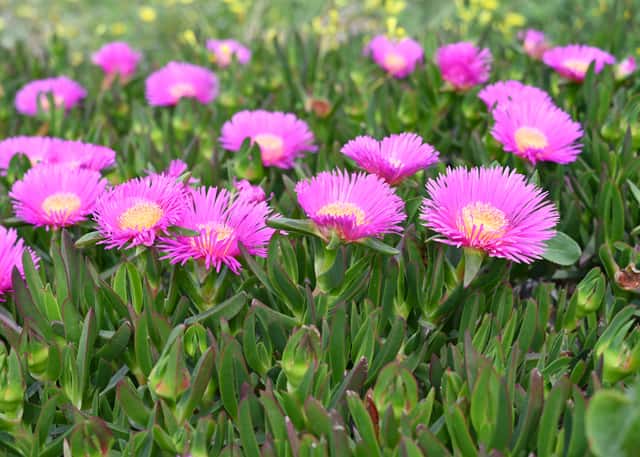
Sally-my-handsome (Carpobrotus acinaciformis) is a easy-care plant from the Aizoaceae family. Carpobrotus acinaciformis is a fast-growing, mat-forming succulent native to the coastal dunes of South Africa. It produces spectacular magenta flowers up to 15 cm wide and features thick, sickle-shaped leaves. Widely used as ground cover in coastal and Mediterranean gardens.
Sally-my-handsome grows up to 20cm, spread of 200cm, watering every 21 days, -5°C – 40°C, 30–60% humidity. It is not suitable for indoor environments and safe for pets.
Unlike many tropical plants, Sally-my-handsome tolerates watering mistakes. Best for beginners. Unlike many popular species, Sally-my-handsome is safe to keep around pets.
How to Care for Sally-my-handsome?
TLDR: Sally-my-handsome needs Direct sun, watering every 21 days, and temperatures between -5-40°C with 30-60% humidity.
How Often Should You Water Sally-my-handsome?
Water only when soil is completely dry, approximately every 3 weeks. Overwatering is the main threat — avoid wetting the foliage and ensure excellent drainage.
How Much Light Does Sally-my-handsome Need?
Requires full direct sun for abundant flowering. Avoid shaded positions — reduced light leads to poor growth and few flowers.
What Is the Best Soil for Sally-my-handsome?
Thrives in sandy, well-draining soils. Tolerates poor and saline soils. Avoid clay or waterlogged substrates.
What Pot Should You Use for Sally-my-handsome?
Wide, shallow terracotta pot with excellent drainage holes, or directly in outdoor garden beds.
What Is Sally-my-handsome and Where Does It Come From?
Carpobrotus acinaciformis is a fast-growing, mat-forming succulent native to the coastal dunes of South Africa. It produces spectacular magenta flowers up to 15 cm wide and features thick, sickle-shaped leaves. Widely used as ground cover in coastal and Mediterranean gardens.
How to Propagate Sally-my-handsome?
Stem Cutting
Do not cover with plastic — this plant prefers dry air. Use clean tools to prevent rot.
- 1 Cut a healthy stem 10-15 cm long
- 2 Allow cut end to callous for 1-2 days
- 3 Plant in slightly moist sandy soil
- 4 Water moderately until roots form
Materials needed:
Seed Sowing
Germination is irregular. Keep substrate slightly moist but never waterlogged.
- 1 Sow seeds in sandy moist substrate
- 2 Cover lightly with a thin layer of sand
- 3 Keep in a warm, bright location
- 4 Transplant when seedlings reach 5 cm
Materials needed:
How Big Does Sally-my-handsome Grow?
TLDR: Sally-my-handsome can reach up to 20cm tall with Fast growth rate.
Max height
20cm
Spread
2.0m
Growth rate
Fast
Foliage
Evergreen
Plant Uses
Ornamental
Great for decoration
Ground Cover
Soil coverage
Medicinal
Medicinal properties
Medicinal Uses
- Leaf juice used as natural astringent and emergency treatment for jellyfish stings
- Applied topically for minor sunburns and skin irritations
Is your plant showing symptoms?
Click on the symptom to discover possible causes:
What Diseases Commonly Affect Sally-my-handsome?
TLDR: Sally-my-handsome is susceptible to 4 known diseases. Monitor regularly for early detection.
Root Rot
Root rot is a serious fungal disease that affects the root system of plants, causing them to decay and die. It is primarily caused by overwatering, poor drainage, or soil-borne fungi such as Pythium, Phytophthora, Rhizoctonia, and Fusarium. The disease thrives in waterlogged conditions where roots are deprived of oxygen, making them susceptible to fungal infection.
Gray Mold (Botrytis Blight)
Gray mold, caused by the fungus Botrytis cinerea, is one of the most common fungal diseases in plants. It affects over 200 plant species, including ornamentals, vegetables, fruits, and houseplants. The disease thrives in cool, humid conditions with poor air circulation, causing grayish spots and soft rot on infected tissues.
Mealybugs
Mealybugs are small, soft-bodied insects covered with a white, waxy, cottony material. They are common pests of houseplants and outdoor plants in mild climates. These sap-sucking insects feed on plant tissue, causing damage, stunted growth, and can lead to plant death if left untreated. They produce sticky honeydew which attracts sooty mold.
Slugs and Snails
Slugs and snails are mollusks that feed on plant tissue, causing irregular holes in leaves and damage to young seedlings. They are most active at night and in moist conditions, leaving characteristic silvery slime trails. These pests can quickly devastate gardens, especially during wet seasons.
Fun Facts
Flowers can reach up to 15 cm in diameter — among the largest of any succulent
The leaf juice is a popular beachside remedy for jellyfish stings in South Africa
Listed as an invasive species in Portugal and along Mediterranean coasts due to its rapid spread
Withstands salt winds and poor soils, making it ideal for coastal landscaping
Frequently asked questions
How often should I water Sally-my-handsome?
Is Carpobrotus acinaciformis toxic to pets?
Can I grow Sally-my-handsome in a pot?
Why is my Carpobrotus not flowering?
How do I propagate Carpobrotus acinaciformis?
Compare with similar plants
| Attribute | Difficulty | Light | Watering | Pet Safe |
|---|---|---|---|---|
| Field Maple | Easy | Bright indirect | 14d | ✓ |
| Silver Birch | Easy | Direct sun | 14d | ✓ |
| Cushion Bush | Easy | Direct sun | 14d | ✓ |
| Peruvian peppertree | Easy | Direct sun | 14d | ⚠️ |





