Amaranthaceae
Wheat Celosia (Celosia spicata): Complete Care Guide
Celosia spicata
Easy to grow in full sun gardens. Water every 2-3 days, letting the top soil dry between waterings. Fertilize every 15 days during the growing season. Light pinching encourages bushier plants with more flower spikes. Frost-sensitive — bring indoors or treat as annual in temperate zones.
Every 3 days
Direct sun
18° - 35°C
40% - 70%
Categories
What is Wheat Celosia?
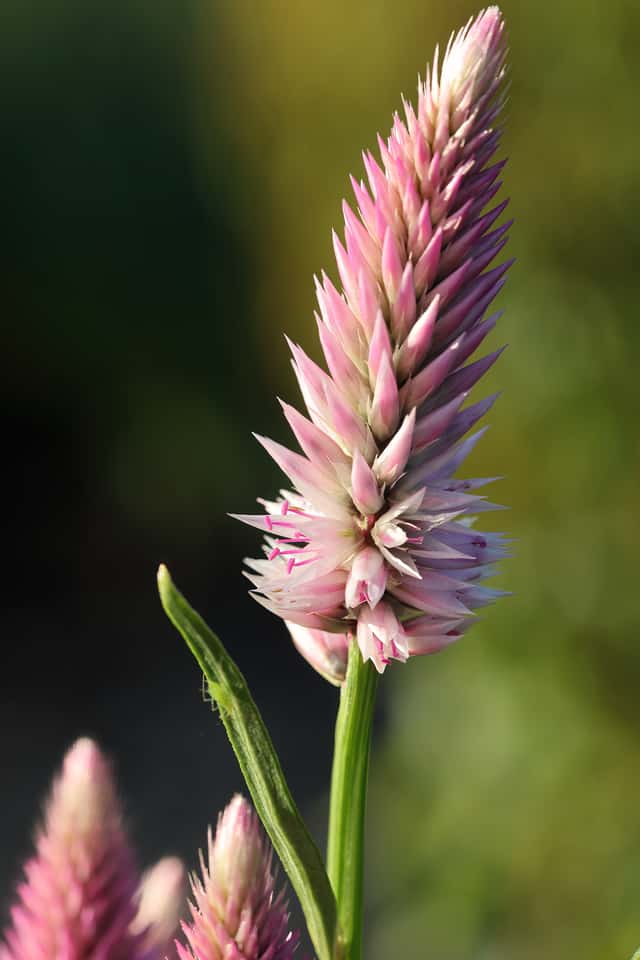
Wheat Celosia (Celosia spicata) is a easy-care plant from the Amaranthaceae family. Celosia spicata, commonly known as Wheat Celosia, is a tropical annual native to Asia and Africa. Its slender, wheat-like flower spikes in shades of pink, purple, and red — often developing a beautiful metallic silver sheen — make it one of the most distinctive ornamental flowers for gardens and cut...
Wheat Celosia grows up to 1.0m, spread of 60cm, watering every 3 days, 18°C – 35°C, 40–70% humidity. It is not suitable for indoor environments and safe for pets.
Unlike many tropical plants, Wheat Celosia tolerates watering mistakes. Best for beginners. Unlike many popular species, Wheat Celosia is safe to keep around pets.
How to Care for Wheat Celosia?
TLDR: Wheat Celosia needs Direct sun, watering every 3 days, and temperatures between 18-35°C with 40-70% humidity.
How Often Should You Water Wheat Celosia?
Water every 2-3 days, allowing the top 2-3 cm of soil to dry between waterings. Avoid waterlogging as wet roots promote root rot. Increase frequency during heat waves.
How Much Light Does Wheat Celosia Need?
Requires full sun — at least 6-8 hours of direct sunlight daily. In partial shade, stems become leggy and flower production drops significantly.
What Is the Best Soil for Wheat Celosia?
Use well-draining soil with pH between 6.0 and 7.0. Amend with coarse sand or perlite to ensure good drainage. Avoid clay or compacted soils.
What Pot Should You Use for Wheat Celosia?
Terracotta or plastic pots with drainage holes. Best planted directly in garden beds for optimal growth.
Care Schedule
Fertilize
Every 15 days
What Is Wheat Celosia and Where Does It Come From?
Celosia spicata, commonly known as Wheat Celosia, is a tropical annual native to Asia and Africa. Its slender, wheat-like flower spikes in shades of pink, purple, and red — often developing a beautiful metallic silver sheen — make it one of the most distinctive ornamental flowers for gardens and cut flower arrangements.
How to Propagate Wheat Celosia?
Seed Sowing
Start seeds indoors 6-8 weeks before the last frost for larger transplants. Seeds need light to germinate — do not cover completely.
- 1 Sow seeds on the surface of moist seed-starting mix without fully burying them
- 2 Keep in a warm location (22-25°C) with indirect light
- 3 Expect germination in 8-14 days
- 4 Transplant outdoors after the last frost date
Materials needed:
How Big Does Wheat Celosia Grow?
TLDR: Wheat Celosia can reach up to 1.0m tall with Fast growth rate.
Max height
1.0m
Spread
60cm
Growth rate
Fast
Foliage
Deciduous
Plant Uses
Ornamental
Great for decoration
Culinary Uses
- Dried flowers are edible and used in salads in parts of Africa and Asia
- Young leaves are consumed as a vegetable in countries such as Nigeria and Benin
Is your plant showing symptoms?
Click on the symptom to discover possible causes:
What Diseases Commonly Affect Wheat Celosia?
TLDR: Wheat Celosia is susceptible to 9 known diseases. Monitor regularly for early detection.
Powdery Mildew
Powdery mildew is a common fungal disease caused by various fungi species including Erysiphe, Podosphaera, Oïdium, and Leveillula. It affects over 10,000 plant species worldwide. The disease thrives in warm, dry climates with high humidity and appears as a distinctive white powdery coating on plant surfaces.
Root Rot
Root rot is a serious fungal disease that affects the root system of plants, causing them to decay and die. It is primarily caused by overwatering, poor drainage, or soil-borne fungi such as Pythium, Phytophthora, Rhizoctonia, and Fusarium. The disease thrives in waterlogged conditions where roots are deprived of oxygen, making them susceptible to fungal infection.
Gray Mold (Botrytis Blight)
Gray mold, caused by the fungus Botrytis cinerea, is one of the most common fungal diseases in plants. It affects over 200 plant species, including ornamentals, vegetables, fruits, and houseplants. The disease thrives in cool, humid conditions with poor air circulation, causing grayish spots and soft rot on infected tissues.
Leaf Spot
Leaf spot is a common fungal disease caused by various pathogens including Alternaria, Ascochyta, Colletotrichum, Septoria, and Venturia. It primarily affects leaves, causing discolored spots that can lead to premature leaf drop if left untreated.
Meaning & Symbolism
Symbol of immortality, boldness, and eternal love. Used in prosperity rituals across African and Asian cultures.
Fun Facts
The metallic silver sheen that develops on spent spikes gives the plant its distinctive wheat-like appearance
Celosia spicata self-seeds readily and may naturalize in the garden, returning each season
The flowers dry naturally on the plant, retaining vibrant colors for weeks
Under ideal conditions, a single plant can produce over 50 flower spikes in one season
Frequently asked questions
How often should I water Wheat Celosia?
Is Wheat Celosia toxic to cats and dogs?
How much sun does Wheat Celosia need?
When does Wheat Celosia bloom?
How do I get more flowers on my Wheat Celosia?
Compare with similar plants
| Attribute | Difficulty | Light | Watering | Pet Safe |
|---|---|---|---|---|
| Small Scabious | Easy | Direct sun | 7d | ✓ |
| Field Maple | Easy | Bright indirect | 14d | ✓ |
| Silver Birch | Easy | Direct sun | 14d | ✓ |
| Red valerian | Easy | Direct sun | 10d | ✓ |


