Amaryllidaceae
How to Grow and Care for Chives (Allium schoenoprasum)
Allium schoenoprasum
Chives are a low-maintenance herb that thrives in full sun with regular watering. Keep soil consistently moist but well-drained. Harvest leaves regularly to encourage fresh growth. Cut flowers to prolong leaf production. Fertilize every 2 months during the growing season. In cold climates they die back in winter and return each spring.
Every 5 days
Direct sun
-15° - 30°C
40% - 70%
Categories
What is Chives?
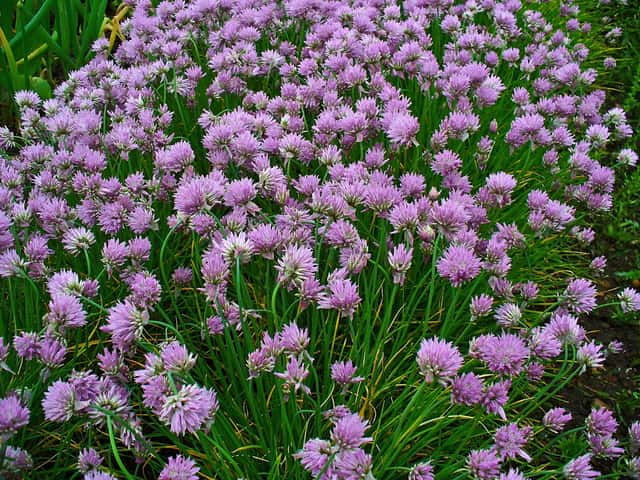
Chives (Allium schoenoprasum) is a easy-care plant from the Amaryllidaceae family. Chives (Allium schoenoprasum) are a versatile herbaceous perennial native to Europe and Asia, prized for their mild onion-like flavor and attractive globe-shaped purple flowers. Forming dense grass-like clumps of hollow, cylindrical leaves up to 50 cm tall, they are among the easiest edible herbs to...
Chives grows up to 50cm, spread of 45cm, watering every 5 days, -15°C – 30°C, 40–70% humidity. It is suitable for indoor environments and not safe for pets.
Unlike many tropical plants, Chives tolerates watering mistakes. Best for beginners. Without precautions, ingestion can cause irritation in pets. Keep out of reach of cats and dogs. Without adequate drainage, root rot can develop within 10 days.
How to Care for Chives?
TLDR: Chives needs Direct sun, watering every 5 days, and temperatures between -15-30°C with 40-70% humidity.
How Often Should You Water Chives?
Water every 4–6 days, keeping the soil evenly moist but never waterlogged. Reduce watering in winter when the plant is dormant. Drought stress causes yellowing and wilting—check soil moisture 2 cm deep before watering.
How Much Light Does Chives Need?
Chives need at least 6 hours of direct sunlight daily. Place near a south-facing window indoors or in a sunny garden bed. They tolerate partial shade but produce fewer flowers and less flavorful leaves. Supplement with grow lights indoors if natural light is insufficient.
What Is the Best Soil for Chives?
Plant in well-draining, fertile soil enriched with compost. A loamy or sandy-loam mix with a pH of 6.0–7.0 is ideal. Avoid heavy clay soils that retain excess moisture, which can cause root rot. Container-grown chives do well in a quality herb potting mix.
What Pot Should You Use for Chives?
Terracotta pots with drainage holes work best for chives, as they help prevent waterlogging. A container at least 15 cm deep and 20 cm wide accommodates a healthy clump. Window boxes and herb planters are excellent options.
Care Schedule
Fertilize
Every 60 days
What Is Chives and Where Does It Come From?
Chives (Allium schoenoprasum) are a versatile herbaceous perennial native to Europe and Asia, prized for their mild onion-like flavor and attractive globe-shaped purple flowers. Forming dense grass-like clumps of hollow, cylindrical leaves up to 50 cm tall, they are among the easiest edible herbs to grow. Hardy in zones 4–8, chives die back in winter and regrow vigorously each spring. Both the leaves and flowers are edible, making this plant a favorite in herb gardens and kitchen windowsills worldwide.
How to Propagate Chives?
Clump Division
Division every 2-3 years rejuvenates the plant and prevents overcrowding. Divided clumps establish quickly and produce harvestable leaves within 4-6 weeks.
- 1 Dig up the entire clump in early spring before new growth begins
- 2 Gently pull or cut the clump into sections of 4-6 bulbs each
- 3 Replant divisions at the same depth in prepared, well-drained soil
- 4 Water thoroughly after planting and keep consistently moist for 2-3 weeks
Materials needed:
Seed Sowing
Start seeds indoors 8-10 weeks before the last frost for an earlier harvest. First harvest is typically 4 months from seed sowing.
- 1 Sow seeds 0.5 cm deep in moist seed-starting mix
- 2 Keep at 18-21°C for germination in 6-14 days
- 3 Thin seedlings to 10-15 cm apart once 5 cm tall
- 4 Transplant outdoors after last frost, or direct sow in spring
Materials needed:
How Big Does Chives Grow?
TLDR: Chives can reach up to 50cm tall with Medium growth rate.
Max height
50cm
Spread
45cm
Growth rate
Medium
Foliage
Deciduous
Warning: Toxic Plant
This plant can be toxic if ingested. Keep out of reach of:
Plant Uses
Ornamental
Great for decoration
Edible
Can be consumed
Medicinal
Medicinal properties
Aromatic
Pleasant fragrance
Medicinal Uses
- Traditionally used to stimulate appetite and digestion
- Applied in folk medicine as a mild antiseptic due to sulfur compounds
- Used in herbal preparations to support cardiovascular health
Culinary Uses
- Fresh or dried as garnish on soups, salads, and baked potatoes
- Blended into cream cheese, dips, and compound butters
- Stirred into scrambled eggs, omelets, and quiches
- Used in classic French cuisine for fine herbes blends
Is your plant showing symptoms?
Click on the symptom to discover possible causes:
What Diseases Commonly Affect Chives?
TLDR: Chives is susceptible to 7 known diseases. Monitor regularly for early detection.
Downy Mildew
Downy mildew is a fungal-like disease caused by oomycetes (water molds) that thrives in cool, wet conditions. It affects a wide range of plants, causing yellowing leaves with fuzzy white-gray growth underneath, leading to defoliation and reduced yields if left untreated.
Root Rot
Root rot is a serious fungal disease that affects the root system of plants, causing them to decay and die. It is primarily caused by overwatering, poor drainage, or soil-borne fungi such as Pythium, Phytophthora, Rhizoctonia, and Fusarium. The disease thrives in waterlogged conditions where roots are deprived of oxygen, making them susceptible to fungal infection.
Aphids
Aphids are small, soft-bodied, pear-shaped insects (1/16 to 1/8 inch long) that feed by sucking nutrient-rich sap from plants. They reproduce rapidly and can quickly weaken plants, causing distorted growth and transmitting plant viruses. Aphids come in various colors including green, black, red, yellow, brown, and gray. They secrete honeydew, a sticky substance that attracts ants and encourages sooty mold growth.
Thrips
Thrips are tiny cigar-shaped insects (1/25-inch long) that damage plants by sucking plant juices and scraping at fruits, flowers, and leaves. With over 6,000 species and rapid reproduction (lifecycle as short as 14 days), they can quickly infest plants and transmit viruses like tomato spotted wilt virus.
Meaning & Symbolism
Chives have been symbols of good fortune and protection throughout European folklore. They were hung over doorways to ward off evil spirits and planted near homes to attract prosperity.
Fun Facts
Chives are one of the few herbs that are equally ornamental and edible—their globe-shaped purple flowers attract bees, butterflies, and other pollinators.
Chives have been cultivated for over 5,000 years, with records of use in ancient China and throughout medieval Europe as both food and medicine.
Planting chives near roses and carrots is a traditional companion planting method believed to repel aphids and improve neighboring plant vigor.
Unlike most herbs, chives are fully hardy perennials that die back in winter and reliably return each spring without replanting.
Frequently asked questions
How often should I water chives?
Can chives grow indoors?
Are chives toxic to cats and dogs?
How do I harvest chives without killing the plant?
Why are my chives turning yellow?
Compare with similar plants
| Attribute | Difficulty | Light | Watering | Pet Safe |
|---|---|---|---|---|
| Field Maple | Easy | Bright indirect | 14d | ✓ |
| Silver Birch | Easy | Direct sun | 14d | ✓ |
| Common Blanketflower | Easy | Direct sun | 10d | ✓ |
| Cushion Bush | Easy | Direct sun | 14d | ✓ |





