Cactaceae
Christmas Cactus (Schlumbergera buckleyi): Complete Care Guide
Schlumbergera buckleyi
Easy-care plant perfect for beginners. Prefers bright indirect light, moderate watering, and medium-high humidity. Blooms in winter triggered by shorter days and cooler nights. Does not tolerate waterlogged soil or direct sunlight.
Every 14 days
Partial shade
10° - 24°C
50% - 70%
Categories
What is Christmas Cactus?
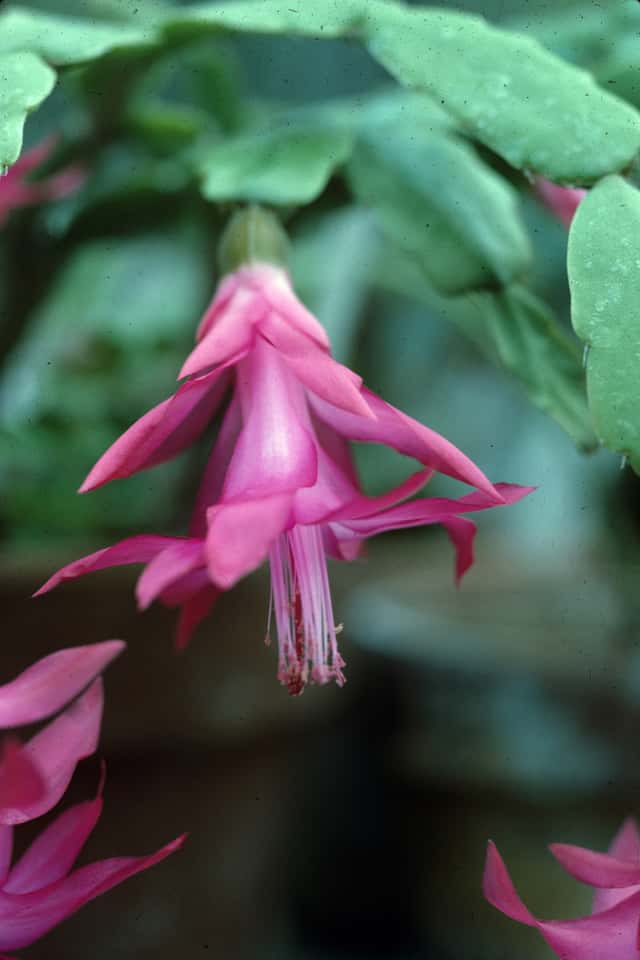
Christmas Cactus (Schlumbergera buckleyi) is a easy-care plant from the Cactaceae family. The Christmas Cactus (Schlumbergera buckleyi) is a tropical epiphytic cactus native to the cloud forests of southeastern Brazil. Unlike desert cacti, it thrives in humid conditions with bright indirect light, producing spectacular tubular flowers in shades of pink, red, white, purple, and coral duri...
Christmas Cactus grows up to 30cm, spread of 60cm, watering every 14 days, 10°C – 24°C, 50–70% humidity. It is suitable for indoor environments and safe for pets.
Unlike many tropical plants, Christmas Cactus tolerates watering mistakes. Best for beginners. Unlike many popular species, Christmas Cactus is safe to keep around pets. Without adequate drainage, root rot can develop within 28 days.
How to Care for Christmas Cactus?
TLDR: Christmas Cactus needs Partial shade, watering every 14 days, and temperatures between 10-24°C with 50-70% humidity.
How Often Should You Water Christmas Cactus?
Water every 10-14 days, allowing the top inch of soil to dry between waterings. Reduce watering in fall to encourage bud formation. Never leave the plant sitting in standing water, as this causes root rot.
How Much Light Does Christmas Cactus Need?
Place in bright indirect light near an east or north-facing window. Avoid direct sun, which scorches the stems. In fall, provide 13-16 hours of complete darkness per night to trigger blooming.
What Is the Best Soil for Christmas Cactus?
Use a well-draining mix of cactus soil combined with perlite and pine bark. Ideal pH is 5.5-6.5. Avoid heavy clay soils that retain too much moisture.
What Pot Should You Use for Christmas Cactus?
Terracotta or ceramic pots with adequate drainage holes are ideal. Small-to-medium pots work best, as Christmas Cacti bloom better when slightly root-bound. Avoid plastic pots without drainage.
Care Schedule
Fertilize
Every 30 days
Misting
Every 3 days
Repot
Every 365 days
What Is Christmas Cactus and Where Does It Come From?
The Christmas Cactus (Schlumbergera buckleyi) is a tropical epiphytic cactus native to the cloud forests of southeastern Brazil. Unlike desert cacti, it thrives in humid conditions with bright indirect light, producing spectacular tubular flowers in shades of pink, red, white, purple, and coral during winter. It is one of the most beloved holiday houseplants worldwide, celebrated for blooming around Christmas.
How to Propagate Christmas Cactus?
Stem segment cutting
Use clean, sharp tools when cutting. Avoid overwatering immediately after planting to prevent rot. Apply rooting hormone powder to speed up rooting.
- 1 Cut a healthy stem segment with 3-5 phylloclades (leaf segments)
- 2 Allow the cut end to dry for 24 hours to callous over
- 3 Plant the segment in slightly moist, well-draining cactus mix
- 4 Keep in a warm spot with bright indirect light
- 5 Roots develop in 2-4 weeks
Materials needed:
How Big Does Christmas Cactus Grow?
TLDR: Christmas Cactus can reach up to 30cm tall with Slow growth rate.
Max height
30cm
Spread
60cm
Growth rate
Slow
Foliage
Evergreen
Plant Uses
Ornamental
Great for decoration
Is your plant showing symptoms?
Click on the symptom to discover possible causes:
What Diseases Commonly Affect Christmas Cactus?
TLDR: Christmas Cactus is susceptible to 13 known diseases. Monitor regularly for early detection.
Root Rot
Root rot is a serious fungal disease that affects the root system of plants, causing them to decay and die. It is primarily caused by overwatering, poor drainage, or soil-borne fungi such as Pythium, Phytophthora, Rhizoctonia, and Fusarium. The disease thrives in waterlogged conditions where roots are deprived of oxygen, making them susceptible to fungal infection.
Pythium Root Rot
Pythium root rot is a serious fungal disease caused by various Pythium species including P. aphanidermatum, P. ultimum, and P. irregulare. These water molds are present in practically all cultivated soils and attack plant roots under wet conditions, causing rapid wet rot that can extend into the stem. The disease is favored by poor drainage, overwatering, and specific temperatures depending on the species.
Phytophthora Blight
Devastating fungal disease caused by Phytophthora species (primarily P. capsici and P. infestans), famously responsible for the Irish Potato Famine in the 1840s. Affects all plant parts including roots, stems, leaves, and fruits in warm, wet conditions. The pathogen is technically an oomycete (water mold) that thrives in saturated soils and can survive in soil for 5+ years.
Gray Mold (Botrytis Blight)
Gray mold, caused by the fungus Botrytis cinerea, is one of the most common fungal diseases in plants. It affects over 200 plant species, including ornamentals, vegetables, fruits, and houseplants. The disease thrives in cool, humid conditions with poor air circulation, causing grayish spots and soft rot on infected tissues.
Meaning & Symbolism
Symbol of joy and celebration, the Christmas Cactus represents hope and renewal, bringing color and life to the home during the holiday season.
Fun Facts
Christmas Cactus is native to the cloud forests near Rio de Janeiro, where it grows as an epiphyte on trees
Unlike desert cacti, it loves humidity and cannot tolerate prolonged drought
With proper care, it can live for decades - some specimens have survived over 100 years in cultivation
Its tubular flowers are perfectly shaped to attract hummingbirds in its native habitat
Frequently asked questions
How often should I water my Christmas Cactus?
Why is my Christmas Cactus not blooming?
Is Christmas Cactus toxic to pets?
Can I put my Christmas Cactus in direct sunlight?
When should I repot my Christmas Cactus?
Compare with similar plants
| Attribute | Difficulty | Light | Watering | Pet Safe |
|---|---|---|---|---|
| Field Maple | Easy | Bright indirect | 14d | ✓ |
| Silver Birch | Easy | Direct sun | 14d | ✓ |
| Common Blanketflower | Easy | Direct sun | 10d | ✓ |
| Cushion Bush | Easy | Direct sun | 14d | ✓ |





