Boraginaceae
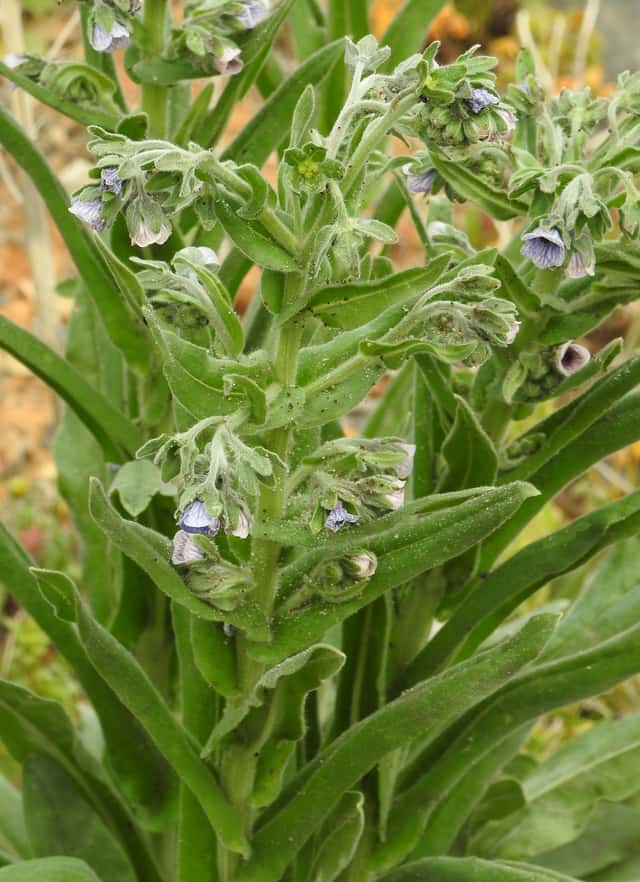
Blue Houndstongue (Cynoglossum creticum)
Cynoglossum creticum
Hardy outdoor plant adapted to the Mediterranean climate. Thrives in full sun with well-draining soil. Drought-tolerant; requires only moderate watering. Not suitable indoors. Severely toxic — keep away from children and pets.
Every 10 days
Direct sun
5° - 30°C
40% - 60%
Categories
What is Blue Houndstongue?
Blue Houndstongue (Cynoglossum creticum) is a easy-care plant from the Boraginaceae family. Blue Houndstongue (Cynoglossum creticum) is a biennial or perennial herb in the family Boraginaceae, native to the Mediterranean Basin including the island of Crete. It produces distinctive pale blue to violet flowers with darker blue veins, blooming from spring through early summer. Well adapted to...
Blue Houndstongue grows up to 60cm, spread of 40cm, watering every 10 days, 5°C – 30°C, 40–60% humidity. It is not suitable for indoor environments and not safe for pets.
Unlike many tropical plants, Blue Houndstongue tolerates watering mistakes. Best for beginners. Without precautions, ingestion can cause irritation in pets. Keep out of reach of cats and dogs.
How to Care for Blue Houndstongue?
TLDR: Blue Houndstongue needs Direct sun, watering every 10 days, and temperatures between 5-30°C with 40-60% humidity.
How Often Should You Water Blue Houndstongue?
Water only when the soil is partially dry, approximately every 7-10 days in summer and every 14-21 days in autumn and winter. Avoid overwatering as the plant is susceptible to root rot.
How Much Light Does Blue Houndstongue Need?
Plant in full sun with at least 6 hours of direct sunlight daily. Ideal for borders, rockeries, and Mediterranean-style dry gardens.
What Is the Best Soil for Blue Houndstongue?
Use well-draining soil with good aeration. Mix coarse sand or perlite into regular potting mix. Prefers slightly alkaline to neutral soil (pH 6.0–7.5).
What Pot Should You Use for Blue Houndstongue?
Terracotta or stone pot with drainage hole. Best suited to rockeries and dry garden borders.
Care Schedule
Fertilize
Every 90 days
What Is Blue Houndstongue and Where Does It Come From?
Blue Houndstongue (Cynoglossum creticum) is a biennial or perennial herb in the family Boraginaceae, native to the Mediterranean Basin including the island of Crete. It produces distinctive pale blue to violet flowers with darker blue veins, blooming from spring through early summer. Well adapted to dry, rocky soils and full sun, it is popular in wildflower and Mediterranean-style gardens. WARNING: contains pyrrolizidine alkaloids — severely toxic to humans, cats, and dogs.
How to Propagate Blue Houndstongue?
Seed Sowing
Blue Houndstongue prefers direct sowing. Avoid excessive transplanting as it has a sensitive taproot. Germination occurs in 14-21 days.
- 1 Sow directly in the final location or in seed trays in early spring or late summer
- 2 Cover lightly with fine soil
- 3 Keep soil moist until germination
- 4 Transplant seedlings when 10 cm tall if needed
Materials needed:
How Big Does Blue Houndstongue Grow?
TLDR: Blue Houndstongue can reach up to 60cm tall with Medium growth rate.
Max height
60cm
Spread
40cm
Growth rate
Medium
Foliage
Deciduous
Warning: Toxic Plant
This plant can be toxic if ingested. Keep out of reach of:
Plant Uses
Ornamental
Great for decoration
Is your plant showing symptoms?
Click on the symptom to discover possible causes:
What Diseases Commonly Affect Blue Houndstongue?
TLDR: Blue Houndstongue is susceptible to 3 known diseases. Monitor regularly for early detection.
Powdery Mildew
Powdery mildew is a common fungal disease caused by various fungi species including Erysiphe, Podosphaera, Oïdium, and Leveillula. It affects over 10,000 plant species worldwide. The disease thrives in warm, dry climates with high humidity and appears as a distinctive white powdery coating on plant surfaces.
Root Rot
Root rot is a serious fungal disease that affects the root system of plants, causing them to decay and die. It is primarily caused by overwatering, poor drainage, or soil-borne fungi such as Pythium, Phytophthora, Rhizoctonia, and Fusarium. The disease thrives in waterlogged conditions where roots are deprived of oxygen, making them susceptible to fungal infection.
Aphids
Aphids are small, soft-bodied, pear-shaped insects (1/16 to 1/8 inch long) that feed by sucking nutrient-rich sap from plants. They reproduce rapidly and can quickly weaken plants, causing distorted growth and transmitting plant viruses. Aphids come in various colors including green, black, red, yellow, brown, and gray. They secrete honeydew, a sticky substance that attracts ants and encourages sooty mold growth.
Fun Facts
Blue Houndstongue contains at least 13 pyrrolizidine alkaloids identified by GC-mass spectrometry, making it one of the most toxicologically studied plants in the Boraginaceae family.
Its blue-violet flowers are excellent for pollinators, contributing significantly to honey production across the Mediterranean Basin.
The genus name Cynoglossum comes from Greek: "kynos" (dog) + "glossa" (tongue), referring to the velvety texture of its leaves that resemble a dog's tongue.
Frequently asked questions
Is Blue Houndstongue toxic?
How often should I water Blue Houndstongue?
Can I grow Blue Houndstongue indoors?
When does Blue Houndstongue bloom?
How do I propagate Blue Houndstongue?
Compare with similar plants
| Attribute | Difficulty | Light | Watering | Pet Safe |
|---|---|---|---|---|
| Field Maple | Easy | Bright indirect | 14d | ✓ |
| Silver Birch | Easy | Direct sun | 14d | ✓ |
| Cushion Bush | Easy | Direct sun | 14d | ✓ |
| Peruvian peppertree | Easy | Direct sun | 14d | ⚠️ |





