Thuidiaceae
Common Tamarisk Moss: Complete Care Guide
Thuidium tamariscinum
Keep substrate consistently moist but not waterlogged. Thrives in shade or partial shade with high humidity. No fertilization needed. Mist regularly with filtered or rainwater to maintain moisture levels.
Every 3 days
Partial shade
5° - 24°C
70% - 95%
Categories
What is Common Tamarisk Moss?
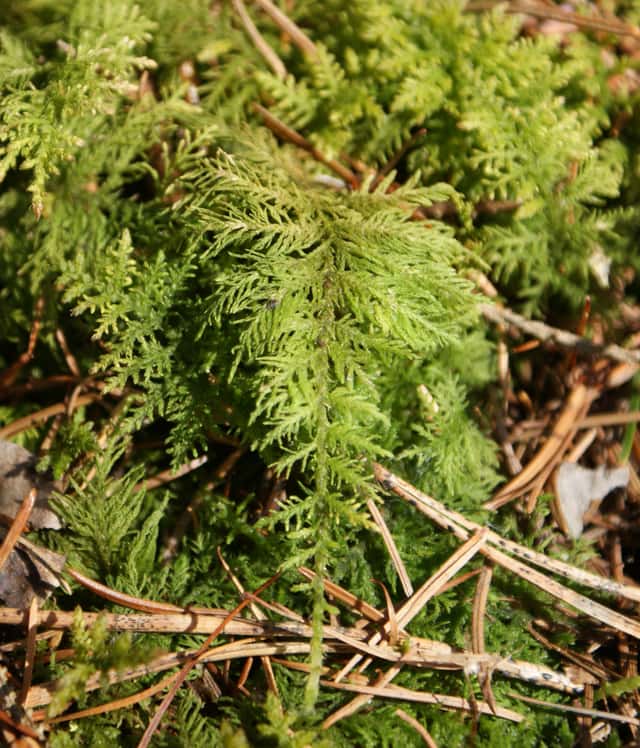
Common Tamarisk Moss (Thuidium tamariscinum) is a easy-care plant from the Thuidiaceae family. Thuidium tamariscinum, commonly known as Common Tamarisk Moss, is a feathery, evergreen bryophyte that forms lush, bright-green mats on forest floors, rocks, and fallen logs. Native to Europe and now widespread across temperate regions worldwide, it does not flower and reproduces via spores. It thri...
Common Tamarisk Moss grows up to 10cm, spread of 50cm, watering every 3 days, 5°C – 24°C, 70–95% humidity. It is suitable for indoor environments and safe for pets.
Unlike many tropical plants, Common Tamarisk Moss tolerates watering mistakes. Best for beginners. Unlike many popular species, Common Tamarisk Moss is safe to keep around pets. Without adequate drainage, root rot can develop within 7 days.
How to Care for Common Tamarisk Moss?
TLDR: Common Tamarisk Moss needs Partial shade, watering every 3 days, and temperatures between 5-24°C with 70-95% humidity.
How Often Should You Water Common Tamarisk Moss?
Water every 2-3 days or whenever the substrate begins to dry out. Never allow the moss to fully desiccate. Use filtered or rainwater when possible, as tap water may be too alkaline.
How Much Light Does Common Tamarisk Moss Need?
Prefers indirect light or partial shade. Avoid direct sunlight, which causes rapid desiccation and bleaching. Indoors, place near a diffused-light window; outdoors, choose a north-facing or shaded spot.
What Is the Best Soil for Common Tamarisk Moss?
Use acidic, peaty substrate with good drainage. A mix of peat and perlite works well. Ideal pH is 4.5–6.5. Avoid alkaline or lime-rich soils.
What Pot Should You Use for Common Tamarisk Moss?
Shallow terracotta or clay pot; closed glass terrarium is ideal for maintaining high humidity.
Care Schedule
Misting
Every 2 days
What Is Common Tamarisk Moss and Where Does It Come From?
Thuidium tamariscinum, commonly known as Common Tamarisk Moss, is a feathery, evergreen bryophyte that forms lush, bright-green mats on forest floors, rocks, and fallen logs. Native to Europe and now widespread across temperate regions worldwide, it does not flower and reproduces via spores. It thrives in shaded, humid environments and is ideal for terrariums, shade gardens, and natural ground cover.
How to Propagate Common Tamarisk Moss?
Spore propagation
Spore propagation is difficult and slow. Division of existing clumps is the most practical method.
- 1 Collect mature spore capsules from the sporophyte
- 2 Spread spores over moist peaty substrate
- 3 Cover with transparent film to retain humidity
- 4 Keep in diffused light at 15-20°C
- 5 Wait for germination and protonema development
Materials needed:
Clump division
Choose healthy, vibrant green clumps. Keep the moss moist at all times during and after division.
- 1 Gently separate a clump from the existing mat
- 2 Place on moist substrate in the new location
- 3 Press gently to ensure contact with the substrate
- 4 Mist with water and partially cover to retain humidity
- 5 Keep moist until the moss establishes
Materials needed:
How Big Does Common Tamarisk Moss Grow?
TLDR: Common Tamarisk Moss can reach up to 10cm tall with Slow growth rate.
Max height
10cm
Spread
50cm
Growth rate
Slow
Foliage
Evergreen
Plant Uses
Ornamental
Great for decoration
Ground Cover
Soil coverage
Is your plant showing symptoms?
Click on the symptom to discover possible causes:
What Diseases Commonly Affect Common Tamarisk Moss?
TLDR: Common Tamarisk Moss is susceptible to 2 known diseases. Monitor regularly for early detection.
Gray Mold (Botrytis Blight)
Gray mold, caused by the fungus Botrytis cinerea, is a widespread necrotrophic pathogen affecting over 1,400 plant species. It thrives in cool, humid conditions and attacks weakened or aging plant tissues, causing soft rot and characteristic gray fuzzy growth.
Underwatering
Underwatering or drought stress is a physiological disorder that occurs when the amount of water a plant loses through transpiration exceeds the amount its roots can absorb from the soil. This leads to cellular dehydration and various visible symptoms that can compromise plant health and productivity.
Meaning & Symbolism
Resilience, patience, and deep connection with nature
Fun Facts
Common Tamarisk Moss can form mats covering several square meters in temperate, humid forests.
As a bryophyte, it has no true roots — it absorbs water and nutrients directly through its tiny leaf-like structures.
It is one of the most common mosses in Europe, frequently found in oak and beech forests.
Its layered, frond-like structure gives it a miniature fern-like appearance.
Frequently asked questions
How often should I water Common Tamarisk Moss?
Does Common Tamarisk Moss need direct sunlight?
Is Common Tamarisk Moss toxic to pets?
Can I grow Common Tamarisk Moss in a terrarium?
Does Common Tamarisk Moss flower?
Compare with similar plants
| Attribute | Difficulty | Light | Watering | Pet Safe |
|---|---|---|---|---|
| Field Maple | Easy | Bright indirect | 14d | ✓ |
| Silver Birch | Easy | Direct sun | 14d | ✓ |
| Cushion Bush | Easy | Direct sun | 14d | ✓ |
| Peruvian peppertree | Easy | Direct sun | 14d | ⚠️ |