Asteraceae
Dendrophorbium peregrinum: Advanced Care Guide
Dendrophorbium peregrinum
A wild-habit species, rarely cultivated outside its natural habitat. It prefers medium light (filtered sun/partial shade of forest edges), regular watering to keep the substrate moist but well-drained, high air humidity, and mild temperatures typical of subtropical montane forests.
Every 7 days
Partial shade
5° - 26°C
60% - 85%
Categories
What is Dendrophorbium peregrinum?
Dendrophorbium peregrinum (Dendrophorbium peregrinum) is a hard-care plant from the Asteraceae family. Dendrophorbium peregrinum is a shrub in the Asteraceae family (Senecioneae tribe), native to the subtropical montane forests of northwestern Argentina and Bolivia, typically occurring between 1,300 and 2,800 m in altitude. It was originally described by August Grisebach in 1879 as Senecio peregrinus...
Dendrophorbium peregrinum grows up to watering every 7 days, 5°C – 26°C, 60–85% humidity. It is not suitable for indoor environments and safe for pets.
Unlike easy-care plants, Dendrophorbium peregrinum demands constant attention to humidity and light. Not recommended for beginners. Unlike many popular species, Dendrophorbium peregrinum is safe to keep around pets.
How to Care for Dendrophorbium peregrinum?
TLDR: Dendrophorbium peregrinum needs Partial shade, watering every 7 days, and temperatures between 5-26°C with 60-85% humidity.
How Often Should You Water Dendrophorbium peregrinum?
Water when the first few inches of the substrate begin to dry, avoiding waterlogging—the soil should remain moist but never saturated, mimicking the montane forest where the species naturally occurs.
How Much Light Does Dendrophorbium peregrinum Need?
Prefers medium to filtered light, similar to the understory or edges of Andean forests; avoid direct, intense sun for long periods.
What Is the Best Soil for Dendrophorbium peregrinum?
Use a substrate rich in organic matter and well-drained, which retains moisture without soaking the roots.
What Pot Should You Use for Dendrophorbium peregrinum?
If grown in a pot, prefer a container with good drainage holes and a light, organic substrate suitable for a medium-sized shrub.
What Is Dendrophorbium peregrinum and Where Does It Come From?
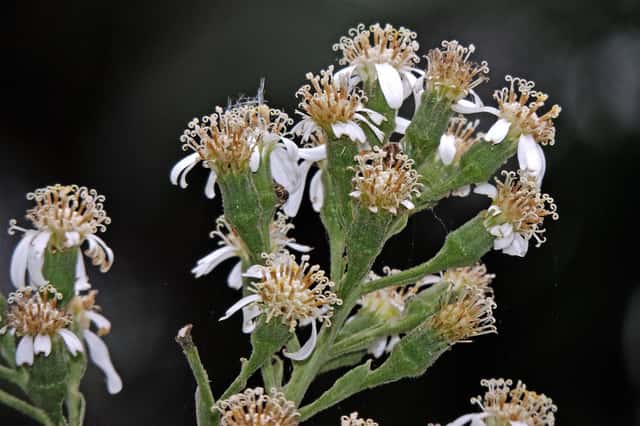
Dendrophorbium peregrinum is a shrub in the Asteraceae family (Senecioneae tribe), native to the subtropical montane forests of northwestern Argentina and Bolivia, typically occurring between 1,300 and 2,800 m in altitude. It was originally described by August Grisebach in 1879 as Senecio peregrinus and later transferred to the genus Dendrophorbium by C. Jeffrey in 1992. Like other species in the genus, it has a shrubby (arborescent) habit, large leaves with serrated/toothed margins, and corymbiform inflorescences with numerous radiate flower heads: white ray florets surrounding a central disk of light yellow tubular florets. It should not be confused with the popular ornamental succulent called "string of dolphins" (Curio/Senecio peregrinus), a completely different garden hybrid that shares only a similar historical scientific name.
How to Propagate Dendrophorbium peregrinum?
Seed propagation
Species little studied in cultivation; germination and development can be slow and irregular.
- 1 Collect mature seeds from the flower heads after blooming
- 2 Sow in a light, well-drained substrate, maintaining constant moisture
- 3 Keep in a location with filtered light and mild temperatures until germination
Materials needed:
Stem cutting
Typical method for woody shrubs of the Asteraceae family; maintain stable humidity without waterlogging.
- 1 Cut a healthy, semi-woody stem segment
- 2 Remove the basal leaves and allow to callus for a few hours
- 3 Plant in moist, well-drained substrate until rooting occurs
Materials needed:
How Big Does Dendrophorbium peregrinum Grow?
TLDR: Dendrophorbium peregrinum can reach up to ?cm tall with Slow growth rate.
Growth rate
Slow
Foliage
Evergreen
Is your plant showing symptoms?
Click on the symptom to discover possible causes:
What Diseases Commonly Affect Dendrophorbium peregrinum?
TLDR: Dendrophorbium peregrinum is susceptible to 3 known diseases. Monitor regularly for early detection.
Aphids
Aphids are small, soft-bodied, pear-shaped insects (1/16 to 1/8 inch long) that feed by sucking nutrient-rich sap from plants. They reproduce rapidly and can quickly weaken plants, causing distorted growth and transmitting plant viruses. Aphids come in various colors including green, black, red, yellow, brown, and gray. They secrete honeydew, a sticky substance that attracts ants and encourages sooty mold growth.
Powdery Mildew
Powdery mildew is a common fungal disease caused by various fungi species including Erysiphe, Podosphaera, Oïdium, and Leveillula. It affects over 10,000 plant species worldwide. The disease thrives in warm, dry climates with high humidity and appears as a distinctive white powdery coating on plant surfaces.
Root Rot
Root rot is a serious fungal disease that affects the root system of plants, causing them to decay and die. It is primarily caused by overwatering, poor drainage, or soil-borne fungi such as Pythium, Phytophthora, Rhizoctonia, and Fusarium. The disease thrives in waterlogged conditions where roots are deprived of oxygen, making them susceptible to fungal infection.
Compare with similar plants
| Attribute | Difficulty | Light | Watering | Pet Safe |
|---|---|---|---|---|
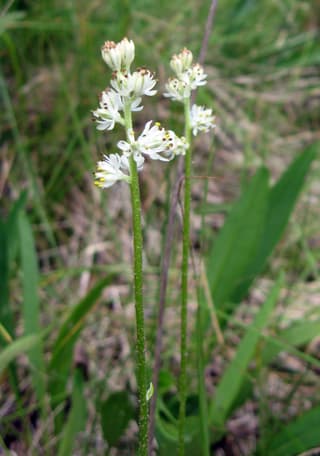
| Sticky false asphodel | Hard | Bright indirect | 1d | ✓ |
| Common Blanketflower | Easy | Direct sun | 10d | ✓ |
| Cushion Bush | Easy | Direct sun | 14d | ✓ |
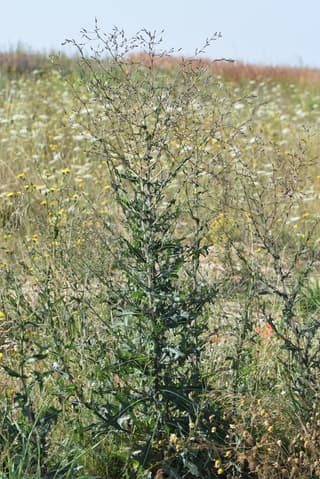
| Wild Lettuce | Medium | Direct sun | 7d | ⚠️ |
Choose & Compare
Sources & References
- Dendrophorbium peregrinum - Wikipedia (taxobox/synonymy)
- GBIF Backbone Taxonomy - Dendrophorbium peregrinum (occurrences, elevation, phenology)
- Plants of the World Online (Kew) - Dendrophorbium peregrinum
- Montesinos-Tubée 2024, Nordic J. Botany - Checklist of genus Dendrophorbium (habit/morphology)
- Wikimedia Commons CC0 photo (flower color verification)