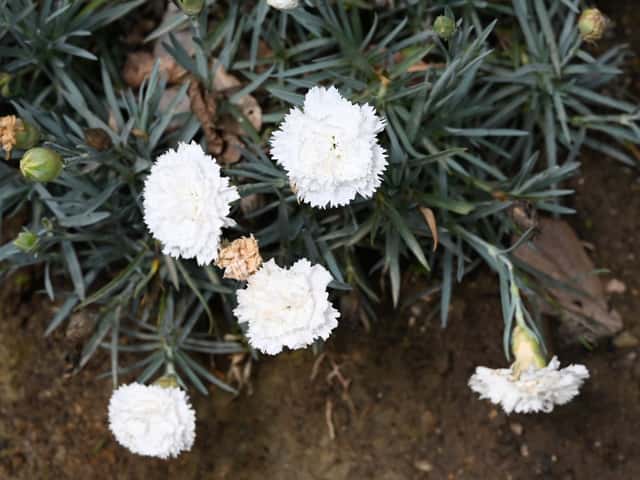
Caryophyllaceae
Dianthus (Carnation / Pink): Complete Care Guide
Dianthus
Plant in full sun with well-draining soil. Water every 5-7 days at the base, avoiding wet foliage. Fertilize monthly during the growing season. Deadhead spent blooms regularly to encourage continuous flowering.
Every 6 days
Direct sun
-20° - 35°C
40% - 60%
Categories
What is Pink / Carnation (genus)?
Pink / Carnation (genus) (Dianthus) is a easy-care plant from the Caryophyllaceae family. Dianthus is one of the most beloved flowering genera in horticulture, comprising over 300 species including carnations (D. caryophyllus), sweet williams (D. barbatus), and cottage pinks (D. plumarius). Known for their spicy-clove fragrance and fringed petals, they are easy to grow, long-blooming, an...
Pink / Carnation (genus) grows up to 90cm, spread of 45cm, watering every 6 days, -20°C – 35°C, 40–60% humidity. It is not suitable for indoor environments and not safe for pets.
Unlike many tropical plants, Pink / Carnation (genus) tolerates watering mistakes. Best for beginners. Without precautions, ingestion can cause irritation in pets. Keep out of reach of cats and dogs.
How to Care for Pink / Carnation (genus)?
TLDR: Pink / Carnation (genus) needs Direct sun, watering every 6 days, and temperatures between -20-35°C with 40-60% humidity.
How Often Should You Water Pink / Carnation (genus)?
Water every 5-7 days at the base, allowing the soil to dry slightly between waterings. Avoid overhead watering to prevent fungal diseases. In hot summer weather, check soil moisture more frequently.
How Much Light Does Pink / Carnation (genus) Need?
Dianthus thrives with at least 6 hours of full sun daily. In very hot climates, light afternoon shade can protect flowers from heat scorch.
What Is the Best Soil for Pink / Carnation (genus)?
Use well-draining soil with a slightly alkaline pH of 6.0-7.5. Amend heavy soils with coarse sand or perlite. Avoid waterlogged conditions which lead to root rot.
What Pot Should You Use for Pink / Carnation (genus)?
Terracotta or ceramic pots with good drainage holes are ideal. Avoid pots without drainage to prevent waterlogging.
Care Schedule
Fertilize
Every 30 days
What Is Pink / Carnation (genus) and Where Does It Come From?
Dianthus is one of the most beloved flowering genera in horticulture, comprising over 300 species including carnations (D. caryophyllus), sweet williams (D. barbatus), and cottage pinks (D. plumarius). Known for their spicy-clove fragrance and fringed petals, they are easy to grow, long-blooming, and perfect for borders, containers, and cutting gardens.
How to Propagate Pink / Carnation (genus)?
Stem Cutting
Use clean, sharp scissors. Keep the medium slightly moist but not waterlogged.
- 1 Cut a healthy stem 10-12 cm long with at least 2 nodes
- 2 Remove lower leaves and dip the base in rooting hormone
- 3 Insert into moist, well-draining propagation mix
- 4 Keep in bright indirect light until rooted
Materials needed:
Seed Sowing
Start seeds indoors 6-8 weeks before last frost for earlier blooms.
- 1 Sow seeds thinly on the surface of seed-starting mix
- 2 Press lightly — seeds need light to germinate, do not bury deeply
- 3 Keep moist at 18-21°C until germination
- 4 Transplant seedlings when they have 2-3 pairs of true leaves
Materials needed:
How Big Does Pink / Carnation (genus) Grow?
TLDR: Pink / Carnation (genus) can reach up to 90cm tall with Medium growth rate.
Max height
90cm
Spread
45cm
Growth rate
Medium
Foliage
Evergreen
Warning: Toxic Plant
This plant can be toxic if ingested. Keep out of reach of:
Plant Uses
Ornamental
Great for decoration
Aromatic
Pleasant fragrance
Is your plant showing symptoms?
Click on the symptom to discover possible causes:
What Diseases Commonly Affect Pink / Carnation (genus)?
TLDR: Pink / Carnation (genus) is susceptible to 6 known diseases. Monitor regularly for early detection.
Rust
Rust is a common fungal disease caused by fungi in the order Pucciniales that affects a wide variety of plants. The disease gets its name from the characteristic orange, yellow, or reddish-brown pustules that appear on leaves, resembling metal rust. This obligate fungal parasite requires living plants to survive and can cause significant economic losses in agricultural crops.
Leaf Spot
Leaf spot is a common fungal disease caused by various pathogens including Alternaria, Ascochyta, Colletotrichum, Septoria, and Venturia. It primarily affects leaves, causing discolored spots that can lead to premature leaf drop if left untreated.
Fusarium Wilt
Fusarium wilt is a serious fungal disease caused by the soil-borne fungus Fusarium oxysporum. The fungus invades roots and blocks the water-conducting vessels (xylem) of the plant, causing progressive wilting and eventual death. Host-specific forms of the pathogen exist that attack different plant species.
Aphids
Aphids are small, soft-bodied, pear-shaped insects (1/16 to 1/8 inch long) that feed by sucking nutrient-rich sap from plants. They reproduce rapidly and can quickly weaken plants, causing distorted growth and transmitting plant viruses. Aphids come in various colors including green, black, red, yellow, brown, and gray. They secrete honeydew, a sticky substance that attracts ants and encourages sooty mold growth.
Meaning & Symbolism
Carnations and pinks have symbolized love, admiration, and distinction for over 2,000 years. Red carnations represent deep love, white signify purity, and pink convey gratitude.
Fun Facts
The Dianthus genus has been cultivated for over 2,000 years and includes more than 300 species
The name Dianthus comes from Greek meaning "flower of the gods" (Dios = Zeus, anthos = flower)
The carnation (D. caryophyllus) is the national flower of Spain and a symbol of the 1974 Carnation Revolution in Portugal
Many Dianthus species are strongly fragrant with a distinctive spicy-clove scent
Frequently asked questions
How often should I water Dianthus?
Does Dianthus need full sun?
Is Dianthus toxic to cats and dogs?
How do I get Dianthus to bloom more?
Is Dianthus annual or perennial?
Compare with similar plants
| Attribute | Difficulty | Light | Watering | Pet Safe |
|---|---|---|---|---|
| Field Maple | Easy | Bright indirect | 14d | ✓ |
| Silver Birch | Easy | Direct sun | 14d | ✓ |
| Cushion Bush | Easy | Direct sun | 14d | ✓ |
| Peruvian peppertree | Easy | Direct sun | 14d | ⚠️ |





