Lamiaceae
Mediterranean Thyme: Ground Cover Plant
Thymus longicaulis
Thymus longicaulis is an extremely robust and low-maintenance plant that thrives best in full sun and well-drained, sandy to calcareous soil. It tolerates drought well and prefers growing in poor soil rather than nutrient-rich soil. Watering should be done sparingly—allow the soil to dry out completely between waterings. The plant is hardy in USDA zones 5-9 and tolerates frost down to 14 °F (-10 °C). Prune it back after flowering to maintain a compact growth habit. Fertilizer is rarely necessary; excessive fertilization can weaken the aromatic intensity.
Every 10 days
Direct sun
-10° - 30°C
30% - 50%
Categories
What is Mediterranean Thyme?
Mediterranean Thyme (Thymus longicaulis) is a easy-care plant from the Lamiaceae family. Thymus longicaulis, also known as Mediterranean thyme or long-stemmed thyme, is a low-growing, mat-forming perennial herb from the Lamiaceae family. The plant is native to southern Europe and grows naturally on dry, rocky slopes and in Mediterranean scrubland. It forms dense, prostrate mats with spa...
Mediterranean Thyme grows up to 10cm, spread of 40cm, watering every 10 days, -10°C – 30°C, 30–50% humidity. It is not suitable for indoor environments and safe for pets.
Unlike many tropical plants, Mediterranean Thyme tolerates watering mistakes. Best for beginners. Unlike many popular species, Mediterranean Thyme is safe to keep around pets.
How to Care for Mediterranean Thyme?
TLDR: Mediterranean Thyme needs Direct sun, watering every 10 days, and temperatures between -10-30°C with 30-50% humidity.
How Often Should You Water Mediterranean Thyme?
Water sparingly and let the soil dry out completely between waterings. Thymus longicaulis is very drought-tolerant and suffers far more from overwatering than from drought. Avoid letting water sit in the root zone—good drainage is essential to prevent root rot. During the winter season, reduce watering to an absolute minimum.
How Much Light Does Mediterranean Thyme Need?
The plant requires full sun to thrive optimally—at least 6-8 hours of direct sunlight daily. In shade, growth will become weak and leggy, and the aromatic scent will be reduced. Place it in a south-facing or west-facing location in the garden, or in a bright windowsill if grown in a pot.
What Is the Best Soil for Mediterranean Thyme?
Use a light, sandy, and well-draining soil mix with a neutral to alkaline pH (6.5-8.0). Thyme thrives in lean, poor soil and lime. Avoid heavy clay soil or nutrient-rich potting soil, which retains too much water. Adding gravel or perlite significantly improves drainage. Thymus longicaulis grows in its natural habitat on rocky slopes and performs well in poor soil.
What Pot Should You Use for Mediterranean Thyme?
Choose a terracotta or clay pot with large drainage holes—these materials pull moisture away from the roots and mimic the plant's natural growing conditions. A shallower, wide pot is best suited for its mat-forming growth habit. Use a soil mix intended for herbs or succulents mixed with extra sand or perlite for optimal drainage.
Care Schedule
Fertilize
Every 60 days
What Is Mediterranean Thyme and Where Does It Come From?
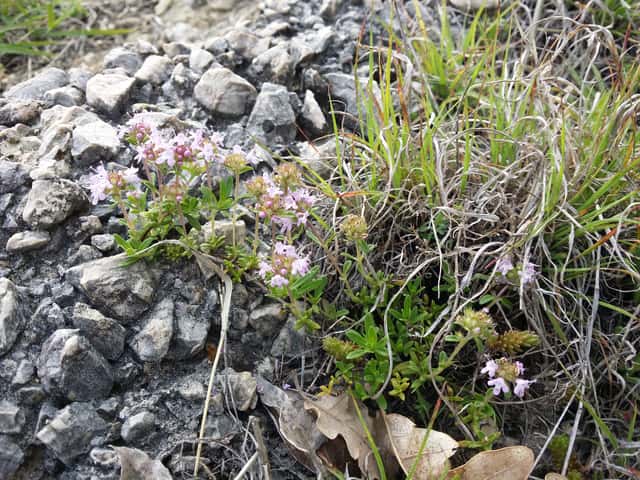
Thymus longicaulis, also known as Mediterranean thyme or long-stemmed thyme, is a low-growing, mat-forming perennial herb from the Lamiaceae family. The plant is native to southern Europe and grows naturally on dry, rocky slopes and in Mediterranean scrubland. It forms dense, prostrate mats with sparse, twig-like stems that can reach up to 4 inches (10 cm) in height and spread up to 16 inches (40 cm) wide. The leaves are lanceolate, dark green, and aromatic. In spring and summer, the plant produces clusters of pale pink flowers that attract bees and other pollinators. Like all thyme species, Thymus longicaulis contains essential oils with antibacterial and antifungal properties.
How to Propagate Mediterranean Thyme?
Cuttings
Division
Seeds
Layering
How Big Does Mediterranean Thyme Grow?
TLDR: Mediterranean Thyme can reach up to 10cm tall with Medium growth rate.
Max height
10cm
Spread
40cm
Growth rate
Medium
Foliage
Evergreen
Plant Uses
Ornamental
Great for decoration
Edible
Can be consumed
Medicinal
Medicinal properties
Aromatic
Pleasant fragrance
Ground Cover
Soil coverage
Medicinal Uses
- Traditionally used as an antiseptic
- Used for coughs and bronchitis in folk medicine
- Contains thymol with antibacterial properties
- Used in herbal teas to soothe indigestion
Culinary Uses
- Fresh and dried leaves are used as a seasoning in cooking
- Suitable for meat, fish, and vegetable dishes
- Can be used in bouquet garni and soups
- The leaves can be added to oils and vinegars
Is your plant showing symptoms?
Click on the symptom to discover possible causes:
What Diseases Commonly Affect Mediterranean Thyme?
TLDR: Mediterranean Thyme is susceptible to 8 known diseases. Monitor regularly for early detection.
Root Rot
Root rot is a serious fungal disease that affects the root system of plants, causing them to decay and die. It is primarily caused by overwatering, poor drainage, or soil-borne fungi such as Pythium, Phytophthora, Rhizoctonia, and Fusarium. The disease thrives in waterlogged conditions where roots are deprived of oxygen, making them susceptible to fungal infection.
Overwatering
Overwatering occurs when plants receive too much water, depriving roots of oxygen and causing root rot. This environmental stress is one of the most common causes of houseplant death, as waterlogged soil prevents roots from breathing and functioning properly.
Powdery Mildew
Powdery mildew is a common fungal disease caused by various fungi species including Erysiphe, Podosphaera, Oïdium, and Leveillula. It affects over 10,000 plant species worldwide. The disease thrives in warm, dry climates with high humidity and appears as a distinctive white powdery coating on plant surfaces.
Gray Mold (Botrytis Blight)
Gray mold, caused by the fungus Botrytis cinerea, is a widespread necrotrophic pathogen affecting over 1,400 plant species. It thrives in cool, humid conditions and attacks weakened or aging plant tissues, causing soft rot and characteristic gray fuzzy growth.
Compare with similar plants
| Attribute | Difficulty | Light | Watering | Pet Safe |
|---|---|---|---|---|
| Flame Violet | Easy | Partial shade | 7d | ✓ |
| Prickly Lettuce | Easy | Direct sun | 7d | ✓ |
| Christmas Tree Plant | Easy | Bright indirect | 10d | ⚠️ |
| Peace Lily | Easy | Low light | 7d | ⚠️ |