Cupressaceae
Eastern Red Cedar: Aromatic Plant
Juniperus virginiana
An extremely resilient and low-maintenance species, ideal for sunny areas. It tolerates poor soils, strong winds, and prolonged droughts once established.
Every 14 days
Direct sun
-40° - 40°C
30% - 60%
Categories
What is Eastern Red Cedar?
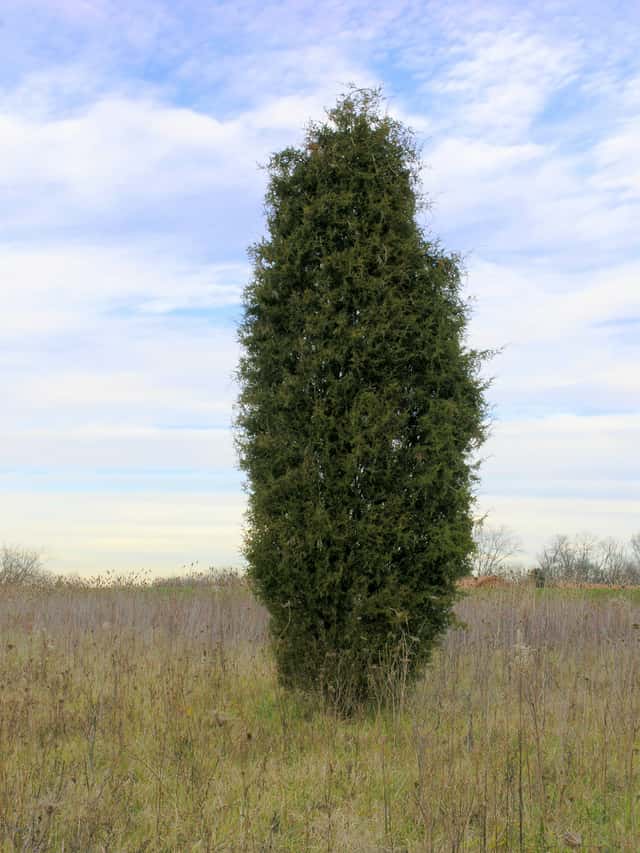
Eastern Red Cedar (Juniperus virginiana) is a easy-care plant from the Cupressaceae family. Juniperus virginiana, commonly known as the Eastern Red Cedar, is an evergreen conifer native to eastern North America. This tree is famous for its aromatic, durable, and rot-resistant wood, often used in chests and closets. Its foliage is dense, consisting of scale-like leaves that remain green yea...
Eastern Red Cedar grows up to 18.3m, spread of 600cm, watering every 14 days, -40°C – 40°C, 30–60% humidity. It is not suitable for indoor environments and not safe for pets.
Unlike many tropical plants, Eastern Red Cedar tolerates watering mistakes. Best for beginners. Without precautions, ingestion can cause irritation in pets. Keep out of reach of cats and dogs.
How to Care for Eastern Red Cedar?
TLDR: Eastern Red Cedar needs Direct sun, watering every 14 days, and temperatures between -40-40°C with 30-60% humidity.
How Often Should You Water Eastern Red Cedar?
Water young plants deeply once a week; mature trees are highly drought-tolerant and rarely need extra watering.
How Much Light Does Eastern Red Cedar Need?
Requires full sun to maintain its compact shape and vigorous health; it does not thrive in shade.
What Is the Best Soil for Eastern Red Cedar?
Adapts to almost any soil type, including limestone and rocky soils, as long as drainage is efficient.
What Pot Should You Use for Eastern Red Cedar?
Should be planted directly in the ground; if grown as a bonsai, use ceramic pots with excellent drainage.
Care Schedule
Fertilize
Every 90 days
What Is Eastern Red Cedar and Where Does It Come From?
Juniperus virginiana, commonly known as the Eastern Red Cedar, is an evergreen conifer native to eastern North America. This tree is famous for its aromatic, durable, and rot-resistant wood, often used in chests and closets. Its foliage is dense, consisting of scale-like leaves that remain green year-round, though they may take on bronze tones in winter. It produces small bluish cones that resemble berries, serving as a vital food source for various birds.
How to Propagate Eastern Red Cedar?
Stem Cuttings
- Keep humidity high around the cutting
- Be patient, as juniper rooting is slow
- 1 Collecting the cutting
Cut a semi-hardwood branch about 4-6 inches (10-15 cm) long during winter.
- 2 Preparation
Remove leaves from the bottom half and dip the base in rooting hormone.
- 3 Planting
Insert into a substrate composed of sand and peat, keeping it slightly moist in a sheltered location.
Materials needed:
Seeds
- Germination can be very irregular
- Acid scarification can help speed up the process
- 1 Stratification
Seeds require a cold period (stratification) to break dormancy.
- 2 Sowing
Plant in well-draining soil in the fall so the process occurs naturally over winter.
Materials needed:
How Big Does Eastern Red Cedar Grow?
TLDR: Eastern Red Cedar can reach up to 18.3m tall with Medium growth rate.
Max height
18.3m
Spread
6.0m
Growth rate
Medium
Foliage
Evergreen
Warning: Toxic Plant
This plant can be toxic if ingested. Keep out of reach of:
Plant Uses
Ornamental
Great for decoration
Aromatic
Pleasant fragrance
Medicinal
Medicinal properties
Medicinal Uses
- Treatment of respiratory issues (oil inhalation)
- Antiseptic properties
- Natural insect repellent
Culinary Uses
- Flavoring for meats (limited use of berries)
- Aromatic infusions
Is your plant showing symptoms?
Click on the symptom to discover possible causes:
What Diseases Commonly Affect Eastern Red Cedar?
TLDR: Eastern Red Cedar is susceptible to 8 known diseases. Monitor regularly for early detection.
Phytophthora Root Rot
Disease caused by fungus-like organisms (oomycetes) that live in soil and can survive for years. It affects roots, stem, and crown of plants, being especially severe in waterlogged or poorly drained soils. It is the second most common cause of root rot in trees and shrubs.
Spider Mites
Spider mites are tiny arachnids (less than 1/20 inch long) related to spiders and ticks that feed on plant sap. They thrive in hot, dry conditions and can cause significant damage to ornamental and vegetable plants. During severe infestations, crop losses can reach 14% or higher as these pests disrupt vital plant processes including photosynthesis, carbon dioxide absorption, and transpiration.
Scale Insects
Scale insects are small sap-sucking pests that appear as brown, shell-like bumps on plant stems and leaves. There are over 25 species, divided into armored (hard) and unarmored (soft) scales. They feed by piercing plant tissue and extracting sap, which weakens the plant and can lead to yellowing, stunted growth, and even death if left untreated. They also excrete honeydew, which attracts ants and promotes sooty mold growth.
Root Rot
Root rot is a serious fungal disease that affects the root system of plants, causing them to decay and die. It is primarily caused by overwatering, poor drainage, or soil-borne fungi such as Pythium, Phytophthora, Rhizoctonia, and Fusarium. The disease thrives in waterlogged conditions where roots are deprived of oxygen, making them susceptible to fungal infection.
Meaning & Symbolism
Represents protection, longevity, and spiritual renewal in various Native American cultures.
Compare with similar plants
| Attribute | Difficulty | Light | Watering | Pet Safe |
|---|---|---|---|---|
| Field Maple | Easy | Bright indirect | 14d | ✓ |
| Silver Birch | Easy | Direct sun | 14d | ✓ |
| Cushion Bush | Easy | Direct sun | 14d | ✓ |
| Peruvian peppertree | Easy | Direct sun | 14d | ⚠️ |





