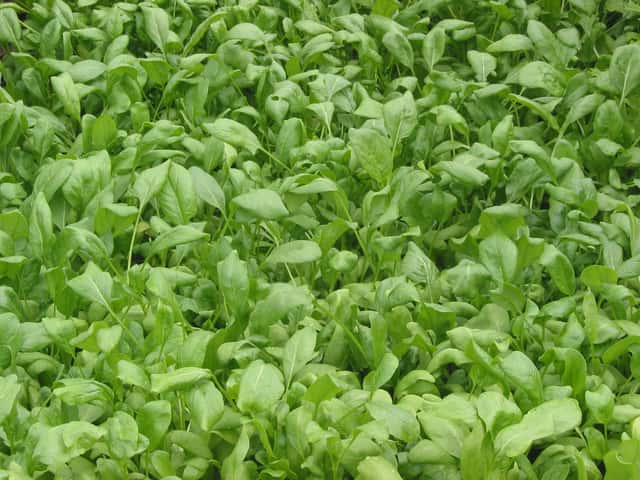
Amaranthaceae
Spinach: Edible Plant
Spinacia oleracea
It is a fast-growing crop that prefers cool temperatures and consistent watering. Avoid extreme heat to prevent the plant from bolting prematurely.
Every 3 days
Bright indirect
-6° - 21°C
40% - 70%
Categories
What is Spinach?
Spinach (Spinacia oleracea) is a easy-care plant from the Amaranthaceae family. Spinach (Spinacia oleracea) is an annual herbaceous plant in the Amaranthaceae family, cultivated for its nutritious, fleshy, deep green leaves. It is a cool-season crop known for its nutrient density, particularly iron, vitamins A, C, and K, and folic acid.
Spinach grows up to 30cm, with spread of 30cm, watering every 3 days, -6°C – 21°C, 40–70% humidity. It is suitable for indoor environments and safe for pets.
Unlike many tropical plants, Spinach tolerates watering mistakes. Best for beginners. Unlike many popular species, Spinach is safe to keep around pets. Without adequate drainage, root rot can develop within 7 days.
How to Care for Spinach?
TLDR: Spinach needs Bright indirect, watering every 3 days, and temperatures between -6-21°C with 40-70% humidity.
How Often Should You Water Spinach?
Keep the soil uniformly moist; water stress causes the plant to flower prematurely.
How Much Light Does Spinach Need?
Prefers full sun in cool climates but requires partial shade in warm regions to prevent the leaves from becoming bitter.
What Is the Best Soil for Spinach?
Thrives in deep, nitrogen-rich soils with plenty of organic matter and a neutral pH.
What Pot Should You Use for Spinach?
Wide pots with medium depth (6-8 inches / 15-20 cm) and excellent drainage.
Care Schedule
Fertilize
Every 21 days
What Is Spinach and Where Does It Come From?
Spinach (Spinacia oleracea) is an annual herbaceous plant in the Amaranthaceae family, cultivated for its nutritious, fleshy, deep green leaves. It is a cool-season crop known for its nutrient density, particularly iron, vitamins A, C, and K, and folic acid.
How to Propagate Spinach?
Direct sowing
- Soaking seeds in water for 12-24 hours before planting accelerates germination.
- 1 Substrate preparation
Enrich the soil with organic compost and ensure it is well-loosened.
- 2 Sowing
Place seeds 0.5 inches (1.5 cm) deep with a spacing of 2 inches (5 cm) between them.
- 3 Initial watering
Water gently with a sprayer to maintain moisture without displacing the seeds.
Materials needed:
How Big Does Spinach Grow?
TLDR: Spinach can reach up to 30cm tall with Fast growth rate.
Max height
30cm
Spread
30cm
Growth rate
Fast
Foliage
Deciduous
Plant Uses
Edible
Can be consumed
Ornamental
Great for decoration
Medicinal
Medicinal properties
Medicinal Uses
- Anemia prevention
- Antioxidant properties
- Improved digestive health
Culinary Uses
- Fresh salads
- Sautéed dishes
- Soups and stews
- Green smoothies
Is your plant showing symptoms?
Click on the symptom to discover possible causes:
What Diseases Commonly Affect Spinach?
TLDR: Spinach is susceptible to 9 known diseases. Monitor regularly for early detection.
Downy Mildew
Downy mildew is a fungal-like disease caused by oomycetes (water molds) that thrives in cool, wet conditions. It affects a wide range of plants, causing yellowing leaves with fuzzy white-gray growth underneath, leading to defoliation and reduced yields if left untreated.
Leaf Spot
Leaf spot is a common fungal disease caused by various pathogens including Alternaria, Ascochyta, Colletotrichum, Septoria, and Venturia. It primarily affects leaves, causing discolored spots that can lead to premature leaf drop if left untreated.
Cercospora Leaf Spot
Cercospora leaf spot is a common fungal disease caused by Cercospora species that affects many plant types, particularly beets, roses, and leafy vegetables. The disease thrives in warm, humid conditions and can cause significant defoliation, reducing plant vigor and yield. It spreads rapidly through water splash, wind, and contaminated tools.
Anthracnose
Anthracnose is a fungal disease caused by fungi in the genus Colletotrichum that affects many plants, including vegetables, fruits, and trees. The disease thrives in cool, wet conditions, causing dark, sunken lesions on leaves, stems, flowers, and fruits.
Meaning & Symbolism
Associated with vitality, physical strength, and renewed health.
Compare with similar plants
| Attribute | Difficulty | Light | Watering | Pet Safe |
|---|---|---|---|---|
| Peace Lily | Easy | Low light | 4d | ⚠️ |
| Swiss Cheese Plant | Easy | Partial shade | 10d | ⚠️ |
| Golden Pothos | Easy | Low light | 8d | ⚠️ |
| ZZ Plant | Easy | Low light | 18d | ⚠️ |