Euphorbiaceae
David's Spurge (Euphorbia davidii): Complete Care Guide
Euphorbia davidii
Hardy annual plant thriving in full direct sun with minimal watering. Drought-tolerant but cannot handle waterlogged soil. Best for outdoor gardens in warm climates. WARNING: latex is severely toxic — always wear gloves when handling.
Every 7 days
Direct sun
10° - 38°C
30% - 60%
Categories
What is David's Spurge?
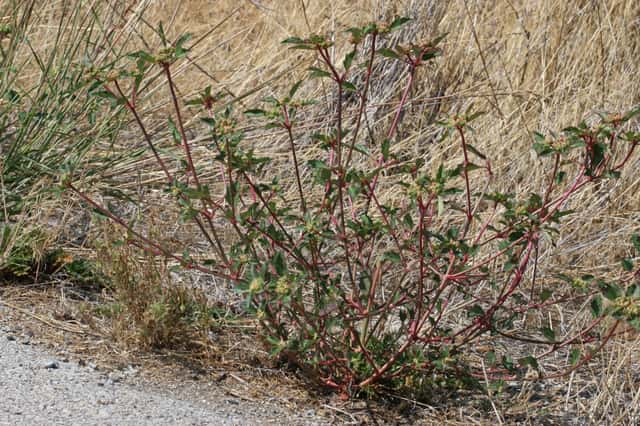
David's Spurge (Euphorbia davidii) is a easy-care plant from the Euphorbiaceae family. David's Spurge (Euphorbia davidii) is an annual herb in the Euphorbiaceae family, native to south-central United States and Mexico, now naturalized across Europe, South America, and Australia. It grows up to 61 cm tall in full sun and well-drained soil. Like all euphorbias, it produces a milky white...
David's Spurge grows up to 61cm, spread of 40cm, watering every 7 days, 10°C – 38°C, 30–60% humidity. It is not suitable for indoor environments and not safe for pets.
Unlike many tropical plants, David's Spurge tolerates watering mistakes. Best for beginners. Without precautions, ingestion can cause irritation in pets. Keep out of reach of cats and dogs.
How to Care for David's Spurge?
TLDR: David's Spurge needs Direct sun, watering every 7 days, and temperatures between 10-38°C with 30-60% humidity.
How Often Should You Water David's Spurge?
Water only when soil is completely dry, approximately every 7 days in summer. Reduce frequency in cooler months. Avoid overwatering as it causes root rot.
How Much Light Does David's Spurge Need?
Requires full direct sunlight (minimum 6 hours daily). Plant in an open outdoor area with no shade. Not suitable for indoor cultivation.
What Is the Best Soil for David's Spurge?
Use well-draining soil mix with coarse sand or perlite. pH between 6.0 and 7.5. Avoid heavy clay soils that retain moisture.
What Pot Should You Use for David's Spurge?
Not recommended for indoor pots. If grown in an outdoor container, use a pot with drainage holes and sandy substrate.
What Is David's Spurge and Where Does It Come From?
David's Spurge (Euphorbia davidii) is an annual herb in the Euphorbiaceae family, native to south-central United States and Mexico, now naturalized across Europe, South America, and Australia. It grows up to 61 cm tall in full sun and well-drained soil. Like all euphorbias, it produces a milky white latex that is severely toxic and a strong irritant to skin, eyes, and mucous membranes of humans, cats, and dogs.
How to Propagate David's Spurge?
Direct seeding
Always wear gloves when handling the plant as the latex is toxic and irritating. Seeds germinate well at temperatures above 20°C (68°F).
- 1 Collect mature seeds before capsules split open
- 2 Sow directly outdoors after last frost
- 3 Cover lightly with soil and keep slightly moist until germination
- 4 After germination, reduce watering and expose to full sun
Materials needed:
How Big Does David's Spurge Grow?
TLDR: David's Spurge can reach up to 61cm tall with Fast growth rate.
Max height
61cm
Spread
40cm
Growth rate
Fast
Foliage
Deciduous
Warning: Toxic Plant
This plant can be toxic if ingested. Keep out of reach of:
Plant Uses
Ornamental
Great for decoration
Is your plant showing symptoms?
Click on the symptom to discover possible causes:
What Diseases Commonly Affect David's Spurge?
TLDR: David's Spurge is susceptible to 4 known diseases. Monitor regularly for early detection.
Root Rot
Root rot is a serious fungal disease that affects the root system of plants, causing them to decay and die. It is primarily caused by overwatering, poor drainage, or soil-borne fungi such as Pythium, Phytophthora, Rhizoctonia, and Fusarium. The disease thrives in waterlogged conditions where roots are deprived of oxygen, making them susceptible to fungal infection.
Powdery Mildew
Powdery mildew is a common fungal disease caused by various fungi species including Erysiphe, Podosphaera, Oïdium, and Leveillula. It affects over 10,000 plant species worldwide. The disease thrives in warm, dry climates with high humidity and appears as a distinctive white powdery coating on plant surfaces.
Spider Mites
Spider mites are tiny arachnids (less than 1/20 inch long) related to spiders and ticks that feed on plant sap. They thrive in hot, dry conditions and can cause significant damage to ornamental and vegetable plants. During severe infestations, crop losses can reach 14% or higher as these pests disrupt vital plant processes including photosynthesis, carbon dioxide absorption, and transpiration.
Mealybugs
Mealybugs are small, soft-bodied insects covered with a white, waxy, cottony material. They are common pests of houseplants and outdoor plants in mild climates. These sap-sucking insects feed on plant tissue, causing damage, stunted growth, and can lead to plant death if left untreated. They produce sticky honeydew which attracts sooty mold.
Fun Facts
Considered an invasive weed in many countries, including European nations where it was accidentally introduced
The EPPO (European Plant Protection Organization) added it to its Alert List in 2021 due to the risk of spreading into agricultural lands
Like all euphorbias, it produces milky white latex as a natural defense against herbivores
Despite being native to the USA and Mexico, it is now found along railways and roadsides throughout Europe and Australia
Frequently asked questions
Is David's Spurge toxic?
How often should I water?
Can I grow it indoors?
When does it flower?
How does it propagate?
Compare with similar plants
| Attribute | Difficulty | Light | Watering | Pet Safe |
|---|---|---|---|---|
| Field Maple | Easy | Bright indirect | 14d | ✓ |
| Silver Birch | Easy | Direct sun | 14d | ✓ |
| Cushion Bush | Easy | Direct sun | 14d | ✓ |
| Peruvian peppertree | Easy | Direct sun | 14d | ⚠️ |