Fabaceae
Scarlet Runner Bean: Complete Growing & Care Guide
Phaseolus coccineus
Plant in full sun with a sturdy trellis or support structure. Water consistently, especially after flowering begins. Fertilize every 30 days with a potassium-rich fertilizer. Deadhead spent flowers to prolong blooming season and harvest pods regularly to encourage continuous production.
Every 3 days
Direct sun
7° - 29°C
50% - 80%
Categories
What is Scarlet Runner Bean?
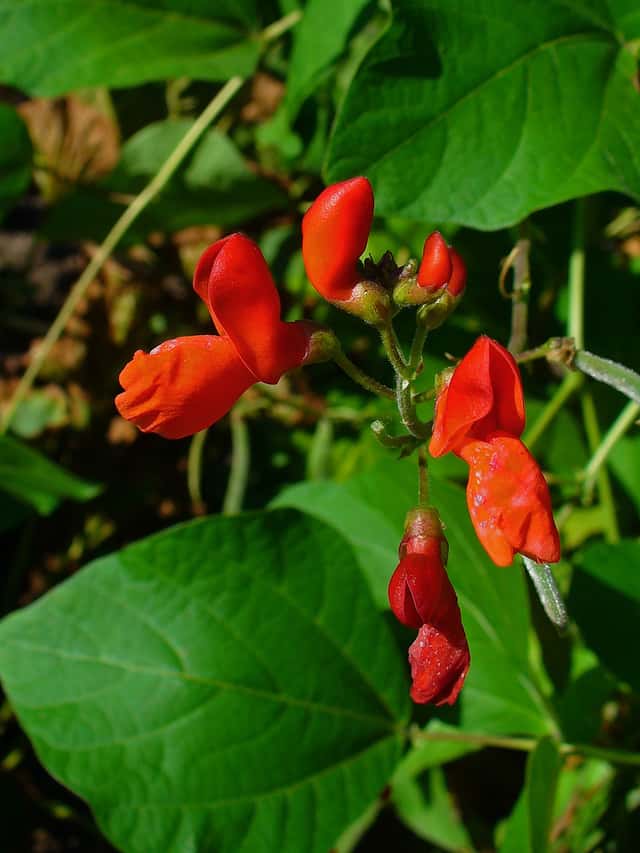
Scarlet Runner Bean (Phaseolus coccineus) is a easy-care plant from the Fabaceae family. The Scarlet Runner Bean (Phaseolus coccineus) is a vigorous annual climbing vine native to Central America, prized for its brilliant scarlet flowers and edible pods. It grows rapidly, reaching up to 12 feet tall, and produces vibrant blooms that attract hummingbirds and bees throughout summer and in...
Scarlet Runner Bean grows up to 3.6m, spread of 150cm, watering every 3 days, 7°C – 29°C, 50–80% humidity. It is not suitable for indoor environments and not safe for pets.
Unlike many tropical plants, Scarlet Runner Bean tolerates watering mistakes. Best for beginners. Without precautions, ingestion can cause irritation in pets. Keep out of reach of cats and dogs.
How to Care for Scarlet Runner Bean?
TLDR: Scarlet Runner Bean needs Direct sun, watering every 3 days, and temperatures between 7-29°C with 50-80% humidity.
How Often Should You Water Scarlet Runner Bean?
Water every 2-4 days, keeping the soil consistently moist — especially critical during flowering and pod set. Avoid waterlogging as saturated roots rot quickly. Mulch around the base to retain moisture.
How Much Light Does Scarlet Runner Bean Need?
Requires full sun — at least 6 hours of direct sunlight daily. In very hot climates, light afternoon shade helps prevent heat stress and pollen sterility above 90°F (32°C).
What Is the Best Soil for Scarlet Runner Bean?
Prefers fertile, well-drained loamy soil with a slightly acidic to neutral pH of 6.0–7.5. Amend with compost before planting to improve fertility and drainage. Avoid heavy clay soils that retain too much moisture.
What Pot Should You Use for Scarlet Runner Bean?
Large container (minimum 16 inches wide and deep) with a sturdy internal or external trellis. Terracotta or ceramic pots provide good drainage and stability for this vigorous climber.
Care Schedule
Fertilize
Every 30 days
What Is Scarlet Runner Bean and Where Does It Come From?
The Scarlet Runner Bean (Phaseolus coccineus) is a vigorous annual climbing vine native to Central America, prized for its brilliant scarlet flowers and edible pods. It grows rapidly, reaching up to 12 feet tall, and produces vibrant blooms that attract hummingbirds and bees throughout summer and into fall.
How to Propagate Scarlet Runner Bean?
Direct Sowing
Pre-soaking seeds in water for 8-12 hours speeds germination significantly. Inoculate seeds with rhizobium bacteria to boost nitrogen fixation and plant vigor.
- 1 Sow seeds directly in the ground after the last frost, 2 inches deep
- 2 Space seeds 6-8 inches apart near a trellis or support structure
- 3 Keep soil consistently moist until germination
- 4 Install supports before planting to avoid disturbing seedlings later
- 5 Thin to the strongest seedlings if multiple germinate in the same spot
Materials needed:
How Big Does Scarlet Runner Bean Grow?
TLDR: Scarlet Runner Bean can reach up to 3.6m tall with Fast growth rate.
Max height
3.6m
Spread
1.5m
Growth rate
Fast
Foliage
Deciduous
Warning: Toxic Plant
This plant can be toxic if ingested. Keep out of reach of:
Plant Uses
Edible
Can be consumed
Ornamental
Great for decoration
Culinary Uses
- Young pods cooked or stir-fried as a green vegetable
- Mature dry seeds cooked in soups, stews, and chili
- Edible flowers used fresh in salads and garnishes
Is your plant showing symptoms?
Click on the symptom to discover possible causes:
What Diseases Commonly Affect Scarlet Runner Bean?
TLDR: Scarlet Runner Bean is susceptible to 14 known diseases. Monitor regularly for early detection.
Anthracnose
Anthracnose is a fungal disease caused by fungi in the genus Colletotrichum that affects many plants, including vegetables, fruits, and trees. The disease thrives in cool, wet conditions, causing dark, sunken lesions on leaves, stems, flowers, and fruits.
Mosaic Virus
Mosaic virus is a group of plant viruses that cause mottled, patchy patterns on leaves and can affect a wide variety of plants. The virus creates characteristic yellow, white, and green mosaic patterns, often accompanied by stunted growth and deformed plant parts. This highly contagious disease spreads rapidly through insect vectors and contaminated tools.
Bacterial Blight
Bacterial blight is a serious plant disease caused by pathogenic bacteria that enters plants through wounds or natural openings. It spreads rapidly in warm, wet conditions and can cause significant damage to leaves, stems, and flowers. The bacteria are transmitted by water splash, contaminated tools, and insects.
Rust
Rust is a common fungal disease caused by fungi in the order Pucciniales that affects a wide variety of plants. The disease gets its name from the characteristic orange, yellow, or reddish-brown pustules that appear on leaves, resembling metal rust. This obligate fungal parasite requires living plants to survive and can cause significant economic losses in agricultural crops.
Meaning & Symbolism
Symbol of abundance and nourishment; the scarlet runner bean has been cultivated for over 2,000 years in Mesoamerica as both a food crop and a garden ornamental, representing the life-giving generosity of the earth.
Fun Facts
The flowers are edible and have a mild, fresh bean flavor — a culinary tradition in Central American cuisine
Like other legumes, runner beans fix atmospheric nitrogen into the soil through root nodules, naturally fertilizing the garden
Scarlet runner beans were first domesticated over 2,000 years ago in the highlands of Mexico and Central America
The flowers attract hummingbirds with remarkable effectiveness, making this plant a living hummingbird feeder
Frequently asked questions
How often should I water scarlet runner beans?
Are scarlet runner beans toxic?
Do they need a trellis?
When do they bloom?
Can I grow them in a container?
Compare with similar plants
| Attribute | Difficulty | Light | Watering | Pet Safe |
|---|---|---|---|---|
| Field Maple | Easy | Bright indirect | 14d | ✓ |
| Silver Birch | Easy | Direct sun | 14d | ✓ |
| Cushion Bush | Easy | Direct sun | 14d | ✓ |
| Peruvian peppertree | Easy | Direct sun | 14d | ⚠️ |





