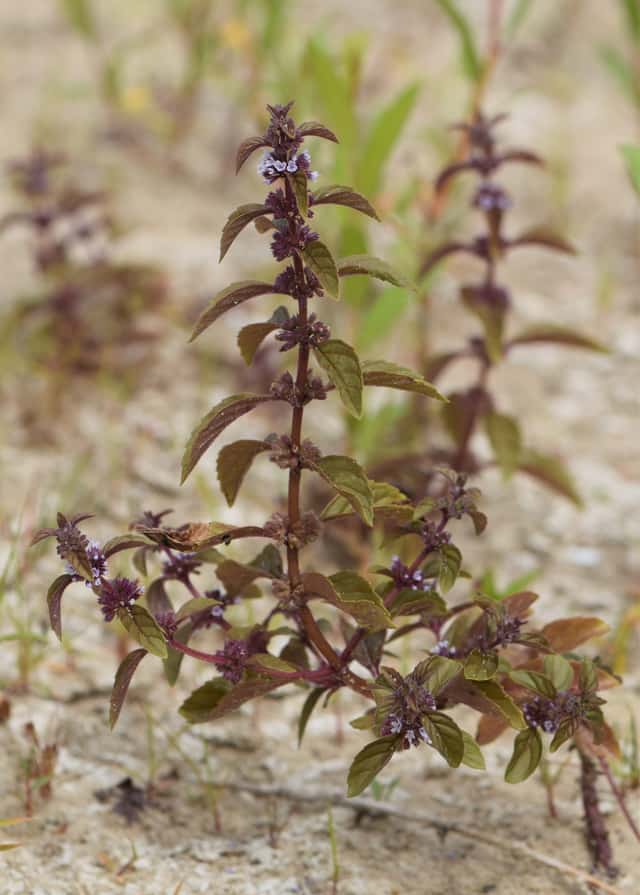
Lamiaceae
Field Mint (Mentha arvensis)
Mentha arvensis
Easy to grow and very resilient. Prefers full sun to partial shade and well-draining, organically rich soil. Requires regular watering to keep soil consistently moist. Best grown in containers to control its spreading habit. Regular pruning encourages bushier growth.
Every 2 days
Bright indirect
-15° - 25°C
30% - 50%
Categories
What is Field Mint?
Field Mint (Mentha arvensis) is a easy-care plant from the Lamiaceae family. Field Mint (Mentha arvensis) is an aromatic perennial herb in the Lamiaceae family, native to temperate regions of Eurasia and North America. Renowned for its intense menthol fragrance, it is widely used in cooking, traditional medicine, and as a natural insect repellent. It spreads vigorously throu...
Field Mint grows up to 60cm, spread of 100cm, watering every 2 days, -15°C – 25°C, 30–50% humidity. It is suitable for indoor environments and not safe for pets.
Unlike many tropical plants, Field Mint tolerates watering mistakes. Best for beginners. Without precautions, ingestion can cause irritation in pets. Keep out of reach of cats and dogs. Without adequate drainage, root rot can develop within 7 days.
How to Care for Field Mint?
TLDR: Field Mint needs Bright indirect, watering every 2 days, and temperatures between -15-25°C with 30-50% humidity.
How Often Should You Water Field Mint?
Water every 2 days, keeping soil consistently moist but not waterlogged. In summer, check daily as it dries out faster. Avoid overwatering to prevent root rot.
How Much Light Does Field Mint Need?
Prefers full sun (minimum 6 hours daily) but tolerates partial shade during the hottest hours. Indoors, place near a south-facing window for adequate light.
What Is the Best Soil for Field Mint?
Use rich, well-draining, slightly acidic soil (pH 6.0–7.5). A mix of garden soil, compost, and coarse sand works well. Avoid compacted or poorly drained soils.
What Pot Should You Use for Field Mint?
Terracotta or clay pots are ideal as they allow better drainage and moisture evaporation. Always use pots with drainage holes. A 20-30 cm pot is sufficient for a mature plant.
Care Schedule
Fertilize
Every 60 days
Rotate
Every 30 days
Repot
Every 365 days
What Is Field Mint and Where Does It Come From?
Field Mint (Mentha arvensis) is an aromatic perennial herb in the Lamiaceae family, native to temperate regions of Eurasia and North America. Renowned for its intense menthol fragrance, it is widely used in cooking, traditional medicine, and as a natural insect repellent. It spreads vigorously through underground rhizomes and can become invasive if not contained.
How to Propagate Field Mint?
Root Division
Division is the fastest and most reliable method. Best done in spring for optimal establishment.
- 1 Carefully lift the plant from soil or pot
- 2 Divide the root ball into sections with visible roots
- 3 Replant each section in fresh moist compost
- 4 Water well and place in a bright location
Materials needed:
Stem Cutting
Change water every 2-3 days to prevent rotting. Keep in indirect light until rooted.
- 1 Cut a healthy stem 10-15 cm long
- 2 Remove lower leaves leaving 2-3 at the top
- 3 Place in a glass of clean water until rooted
- 4 Transplant to soil when roots reach 3-5 cm
Materials needed:
How Big Does Field Mint Grow?
TLDR: Field Mint can reach up to 60cm tall with Fast growth rate.
Max height
60cm
Spread
1.0m
Growth rate
Fast
Foliage
Deciduous
Warning: Toxic Plant
This plant can be toxic if ingested. Keep out of reach of:
Plant Uses
Edible
Can be consumed
Medicinal
Medicinal properties
Aromatic
Pleasant fragrance
Ornamental
Great for decoration
Medicinal Uses
- Digestive and antispasmodic aid
- Natural anti-inflammatory
- Expectorant for respiratory issues
- Analgesic for headaches
- Mild antiseptic
Culinary Uses
- Herbal teas and infusions
- Seasoning for meats and fish
- Ingredient in sauces and salads
- Flavoring for drinks and cocktails
- Garnish for dishes
Is your plant showing symptoms?
Click on the symptom to discover possible causes:
What Diseases Commonly Affect Field Mint?
TLDR: Field Mint is susceptible to 8 known diseases. Monitor regularly for early detection.
Powdery Mildew
Powdery mildew is a common fungal disease caused by various fungi species including Erysiphe, Podosphaera, Oïdium, and Leveillula. It affects over 10,000 plant species worldwide. The disease thrives in warm, dry climates with high humidity and appears as a distinctive white powdery coating on plant surfaces.
Rust
Rust is a common fungal disease caused by fungi in the order Pucciniales that affects a wide variety of plants. The disease gets its name from the characteristic orange, yellow, or reddish-brown pustules that appear on leaves, resembling metal rust. This obligate fungal parasite requires living plants to survive and can cause significant economic losses in agricultural crops.
Root Rot
Root rot is a serious fungal disease that affects the root system of plants, causing them to decay and die. It is primarily caused by overwatering, poor drainage, or soil-borne fungi such as Pythium, Phytophthora, Rhizoctonia, and Fusarium. The disease thrives in waterlogged conditions where roots are deprived of oxygen, making them susceptible to fungal infection.
Aphids
Aphids are small, soft-bodied, pear-shaped insects (1/16 to 1/8 inch long) that feed by sucking nutrient-rich sap from plants. They reproduce rapidly and can quickly weaken plants, causing distorted growth and transmitting plant viruses. Aphids come in various colors including green, black, red, yellow, brown, and gray. They secrete honeydew, a sticky substance that attracts ants and encourages sooty mold growth.
Meaning & Symbolism
Freshness, vitality and hospitality
Fun Facts
Mentha arvensis is the world's primary source of natural menthol, used in the pharmaceutical and cosmetic industries
Its strong aroma naturally repels aphids, flies, and other insects, making it an excellent companion plant
It can grow up to 60 cm tall and spread over 1 meter through underground rhizomes
It is one of the world's oldest medicinal plants, with recorded use for over 2,000 years in traditional Asian medicine
Frequently asked questions
How often should I water Field Mint?
Is Field Mint toxic to cats and dogs?
Can I grow Field Mint in a pot?
When should I prune my Field Mint?
Can Field Mint grow indoors?
Compare with similar plants
| Attribute | Difficulty | Light | Watering | Pet Safe |
|---|---|---|---|---|
| Small Scabious | Easy | Direct sun | 7d | ✓ |
| Field Maple | Easy | Bright indirect | 14d | ✓ |
| Silver Birch | Easy | Direct sun | 14d | ✓ |
| Red valerian | Easy | Direct sun | 10d | ✓ |


