Onagraceae
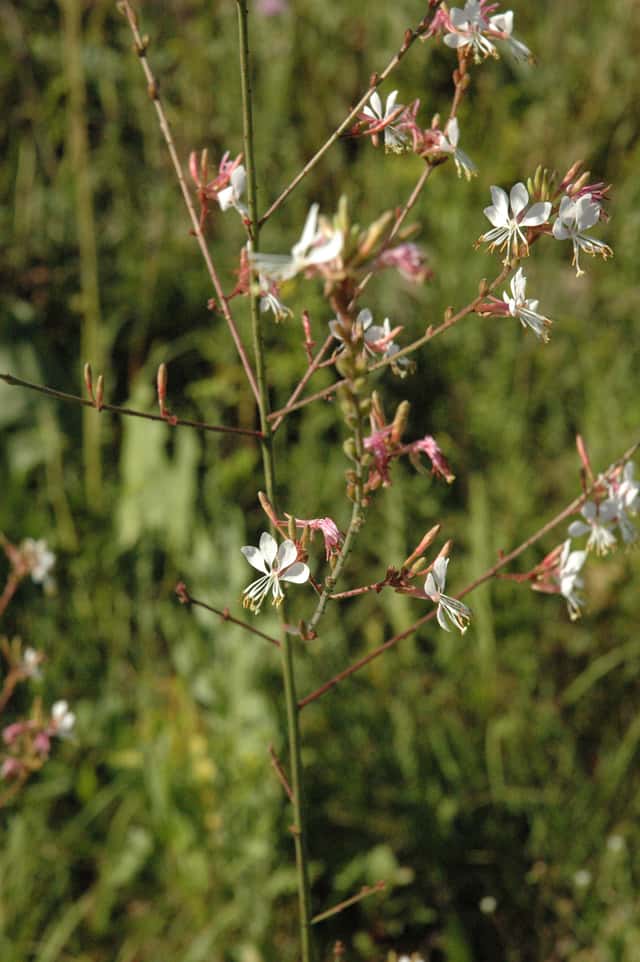
Gaura biennis (Biennial Gaura)
Gaura biennis
Low-maintenance plant that thrives in full sun and well-drained sandy soil. Highly drought-tolerant once established. Avoid overwatering and waterlogged soils. Prune spent flower spikes to encourage additional blooms.
Every 10 days
Bright indirect
-20° - 38°C
30% - 60%
Categories
What is Biennial Gaura?
Biennial Gaura (Gaura biennis) is a easy-care plant from the Onagraceae family. Gaura biennis, commonly known as Biennial Gaura or Biennial Beeblossom, is a tall native wildflower from the eastern United States in the family Onagraceae. It grows up to 6 feet (1.8 m) tall, producing delicate white to pink flowers that open in the evening and flutter gracefully in the breeze. Tho...
Biennial Gaura grows up to 1.8m, spread of 60cm, watering every 10 days, -20°C – 38°C, 30–60% humidity. It is not suitable for indoor environments and safe for pets.
Unlike many tropical plants, Biennial Gaura tolerates watering mistakes. Best for beginners. Unlike many popular species, Biennial Gaura is safe to keep around pets.
How to Care for Biennial Gaura?
TLDR: Biennial Gaura needs Bright indirect, watering every 10 days, and temperatures between -20-38°C with 30-60% humidity.
How Often Should You Water Biennial Gaura?
Water moderately, allowing the soil to dry between waterings. Once established, this plant is highly drought-tolerant and rarely needs supplemental watering except during extended dry spells.
How Much Light Does Biennial Gaura Need?
Requires full sun — at least 6 hours of direct sunlight per day. Tolerates partial shade but blooming is reduced. Excessive shade causes stem flopping.
What Is the Best Soil for Biennial Gaura?
Prefers sandy, poor, well-drained soils. Tolerates gravelly and low-fertility soils. Avoid heavy clay or compacted soils that retain moisture.
What Pot Should You Use for Biennial Gaura?
Terracotta or ceramic pots with drainage holes. Best grown directly in the garden.
What Is Biennial Gaura and Where Does It Come From?
Gaura biennis, commonly known as Biennial Gaura or Biennial Beeblossom, is a tall native wildflower from the eastern United States in the family Onagraceae. It grows up to 6 feet (1.8 m) tall, producing delicate white to pink flowers that open in the evening and flutter gracefully in the breeze. Though each plant lives only two years, it self-seeds prolifically, ensuring a lasting presence in the garden.
How to Propagate Biennial Gaura?
Direct Seeding
Biennial Gaura self-seeds abundantly. Direct seeding in the final location is strongly recommended.
- 1 Sow seeds directly in the garden in early spring
- 2 Press seeds lightly into soil surface with minimal covering
- 3 Keep soil moist until germination
- 4 Thin seedlings to 12-24 inches apart
Materials needed:
Crown Division
Handle roots carefully as they are deep and sensitive to disturbance.
- 1 Divide crowns in early spring before vigorous growth begins
- 2 Carefully separate roots
- 3 Replant immediately in well-drained soil
- 4 Water after planting
Materials needed:
How Big Does Biennial Gaura Grow?
TLDR: Biennial Gaura can reach up to 1.8m tall with Fast growth rate.
Max height
1.8m
Spread
60cm
Growth rate
Fast
Foliage
Deciduous
Plant Uses
Ornamental
Great for decoration
Is your plant showing symptoms?
Click on the symptom to discover possible causes:
What Diseases Commonly Affect Biennial Gaura?
TLDR: Biennial Gaura is susceptible to 9 known diseases. Monitor regularly for early detection.
Root Rot
Root rot is a serious fungal disease that affects the root system of plants, causing them to decay and die. It is primarily caused by overwatering, poor drainage, or soil-borne fungi such as Pythium, Phytophthora, Rhizoctonia, and Fusarium. The disease thrives in waterlogged conditions where roots are deprived of oxygen, making them susceptible to fungal infection.
Powdery Mildew
Powdery mildew is a common fungal disease caused by various fungi species including Erysiphe, Podosphaera, Oïdium, and Leveillula. It affects over 10,000 plant species worldwide. The disease thrives in warm, dry climates with high humidity and appears as a distinctive white powdery coating on plant surfaces.
Downy Mildew
Downy mildew is a fungal-like disease caused by oomycetes (water molds) that thrives in cool, wet conditions. It affects a wide range of plants, causing yellowing leaves with fuzzy white-gray growth underneath, leading to defoliation and reduced yields if left untreated.
Gray Mold (Botrytis Blight)
Gray mold, caused by the fungus Botrytis cinerea, is one of the most common fungal diseases in plants. It affects over 200 plant species, including ornamentals, vegetables, fruits, and houseplants. The disease thrives in cool, humid conditions with poor air circulation, causing grayish spots and soft rot on infected tissues.
Fun Facts
Gaura biennis is a biennial — it lives just two years, but self-seeds so freely it behaves like a perennial.
Its flowers open in the evening and are pollinated primarily by long-tongued bees and bumblebees.
The species name biennis is Latin for two years, referencing its biennial life cycle.
At up to 6 feet tall, it is one of the tallest native Gaura species in the eastern United States.
Frequently asked questions
How often should I water Gaura biennis?
Is Gaura biennis toxic to pets?
Why is my Gaura biennis flopping over?
Does Gaura biennis come back every year?
When does Gaura biennis bloom?
Compare with similar plants
| Attribute | Difficulty | Light | Watering | Pet Safe |
|---|---|---|---|---|
| Small Scabious | Easy | Direct sun | 7d | ✓ |
| Field Maple | Easy | Bright indirect | 14d | ✓ |
| Silver Birch | Easy | Direct sun | 14d | ✓ |
| Red valerian | Easy | Direct sun | 10d | ✓ |


