Asphodelaceae
Cooper's Haworthia (Haworthia cooperi)
Haworthia cooperi
Cooper's Haworthia thrives with minimal care. Place it in bright indirect light near an east or west-facing window, water every 2 weeks (less in winter), and use a well-draining succulent mix. This slow-growing succulent is remarkably forgiving and perfect for beginners.
Every 14 days
Partial shade
4° - 32°C
30% - 60%
Categories
What is Cooper's Haworthia?
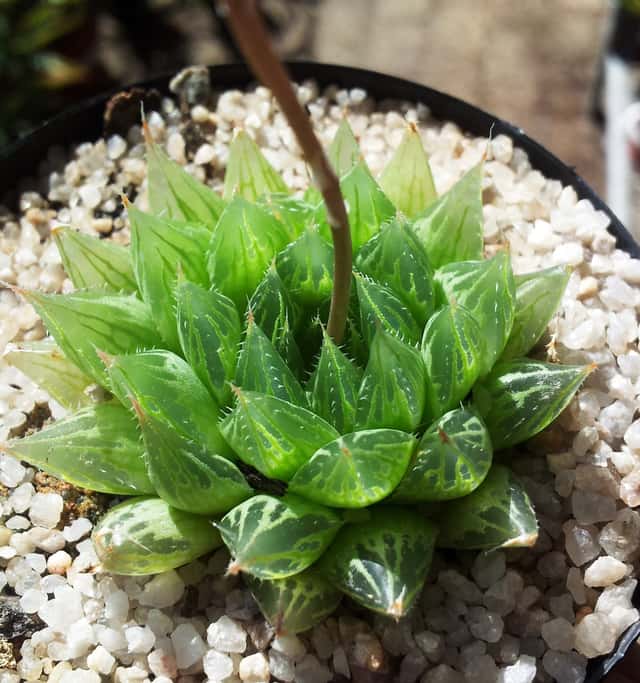
Cooper's Haworthia (Haworthia cooperi) is a easy-care plant from the Asphodelaceae family. Haworthia cooperi is a charming dwarf succulent native to the Eastern Cape of South Africa. It forms compact rosettes of fleshy, translucent-tipped leaves that appear almost jewel-like when light passes through them. Naturally adapted to growing semi-buried in soil with only its translucent leaf tip...
Cooper's Haworthia grows up to 8cm, with spread of 10cm, watering every 14 days, 4°C – 32°C, 30–60% humidity. It is suitable for indoor environments and safe for pets.
Unlike many tropical plants, Cooper's Haworthia tolerates watering mistakes. Best for beginners. Unlike many popular species, Cooper's Haworthia is safe to keep around pets. Without adequate drainage, root rot can develop within 28 days.
How to Care for Cooper's Haworthia?
TLDR: Cooper's Haworthia needs Partial shade, watering every 14 days, and temperatures between 4-32°C with 30-60% humidity.
How Often Should You Water Cooper's Haworthia?
Water every 14 days during the growing season, allowing the soil to dry completely between waterings. Reduce watering to once a month or less in winter. Always avoid letting water pool in the rosette center.
How Much Light Does Cooper's Haworthia Need?
Provide bright indirect light — an east or west-facing window is ideal. Avoid harsh midday direct sun, which can scorch the translucent leaf tips and cause brown discoloration.
What Is the Best Soil for Cooper's Haworthia?
Use a well-draining cactus or succulent mix. Amend with 50% coarse sand or pumice for optimal drainage. Choose a shallow terra cotta pot to prevent excess moisture retention.
What Pot Should You Use for Cooper's Haworthia?
A shallow, unglazed terra cotta pot with drainage holes is ideal. The porous material helps the soil dry out faster, preventing root rot. Avoid deep or large pots — this plant has a shallow root system.
Care Schedule
Fertilize
Every 90 days
Repot
Every 730 days
What Is Cooper's Haworthia and Where Does It Come From?
Haworthia cooperi is a charming dwarf succulent native to the Eastern Cape of South Africa. It forms compact rosettes of fleshy, translucent-tipped leaves that appear almost jewel-like when light passes through them. Naturally adapted to growing semi-buried in soil with only its translucent leaf tips exposed to capture sunlight, this plant is a true marvel of nature.
How to Propagate Cooper's Haworthia?
Offset Division
This is the easiest and most reliable method. Only separate offsets that already have some roots of their own.
- 1 Wait until offsets have developed their own roots at the base of the mother plant
- 2 Gently separate the offset by hand or with a clean knife
- 3 Allow the cut end to callous for 1-2 days
- 4 Plant in a well-draining succulent mix and water lightly after one week
Materials needed:
Leaf Propagation
Success rate is lower than offset division. Ensure the leaf has a clean break from the stem — partial leaves rarely root.
- 1 Select a healthy, mature leaf and gently twist it off at the base
- 2 Allow the cut end to dry and callous for 2-3 days
- 3 Lay the leaf flat on moist succulent soil
- 4 Mist lightly every few days and wait for tiny rosettes to form at the base
Materials needed:
How Big Does Cooper's Haworthia Grow?
TLDR: Cooper's Haworthia can reach up to 8cm tall with Slow growth rate.
Max height
8cm
Spread
10cm
Growth rate
Slow
Foliage
Evergreen
Plant Uses
Ornamental
Great for decoration
Is your plant showing symptoms?
Click on the symptom to discover possible causes:
What Diseases Commonly Affect Cooper's Haworthia?
TLDR: Cooper's Haworthia is susceptible to 9 known diseases. Monitor regularly for early detection.
Root Rot
Root rot is a serious fungal disease that affects the root system of plants, causing them to decay and die. It is primarily caused by overwatering, poor drainage, or soil-borne fungi such as Pythium, Phytophthora, Rhizoctonia, and Fusarium. The disease thrives in waterlogged conditions where roots are deprived of oxygen, making them susceptible to fungal infection.
Overwatering
Overwatering occurs when plants receive too much water, depriving roots of oxygen and causing root rot. This environmental stress is one of the most common causes of houseplant death, as waterlogged soil prevents roots from breathing and functioning properly.
Fungus Gnats
Fungus gnats are small, gray-to-black mosquito-like insects (1/8 to 1/10 inches long) commonly found in indoor plants. Adult gnats are mostly a nuisance, but their larvae feed on plant roots and organic matter in soil, potentially causing serious damage to young or vulnerable plants. The larvae are translucent white with distinctive black heads and can leave slime trails on the soil surface in heavy infestations.
Mealybugs
Mealybugs are small, soft-bodied insects covered with a white, waxy, cottony material. They are common pests of houseplants and outdoor plants in mild climates. These sap-sucking insects feed on plant tissue, causing damage, stunted growth, and can lead to plant death if left untreated. They produce sticky honeydew which attracts sooty mold.
Meaning & Symbolism
Cooper's Haworthia symbolizes resilience and quiet strength — thriving beautifully in harsh conditions with minimal resources.
Fun Facts
In its native South Africa, Haworthia cooperi grows semi-buried in soil, exposing only its translucent leaf tips to capture sunlight — a unique adaptation to intense sun and arid conditions.
The plant's transparent leaf tips act as natural 'windows', allowing light to penetrate deep into the leaf tissue for photosynthesis while the rest of the leaf stays protected underground.
Haworthia cooperi produces delicate white to pinkish-white flowers on long slender stalks up to 40 cm tall — a surprising feature for such a small plant.
Cooper's Haworthia rarely needs repotting — only do so every 2-3 years or when roots completely fill the pot.
Frequently asked questions
How often should I water Cooper's Haworthia?
Does Haworthia cooperi need direct sunlight?
Is Haworthia cooperi toxic to cats or dogs?
Why is my Haworthia cooperi turning mushy?
How do I propagate Haworthia cooperi?
Compare with similar plants
| Attribute | Difficulty | Light | Watering | Pet Safe |
|---|---|---|---|---|
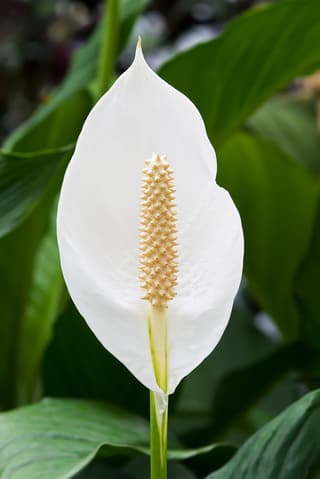
| Peace Lily | Easy | Low light | 4d | ⚠️ |
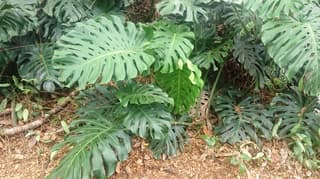
| Swiss Cheese Plant | Easy | Partial shade | 10d | ⚠️ |
| Golden Pothos | Easy | Low light | 8d | ⚠️ |
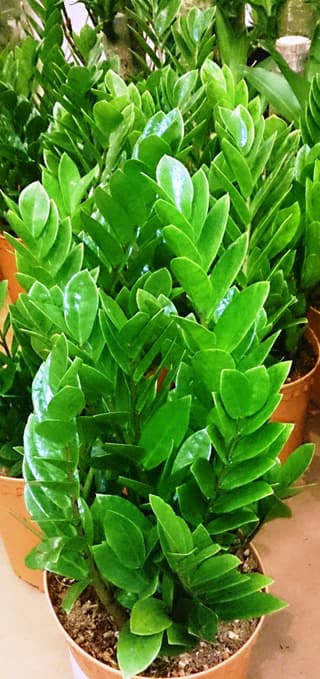
| ZZ Plant | Easy | Low light | 18d | ⚠️ |