Asphodelaceae
Mirable Haworthia: The Complete Care Guide
Haworthia mirabilis
An extremely low-maintenance succulent. Prefers bright indirect light, infrequent watering (allow soil to dry completely between waterings), and well-draining soil. Perfect for beginners and collectors alike.
Every 18 days
Partial shade
10° - 27°C
30% - 50%
Categories
What is Mirable Haworthia?
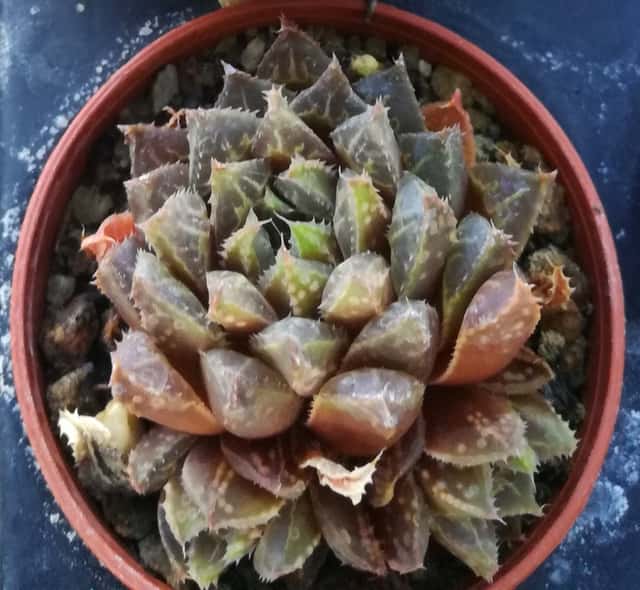
Mirable Haworthia (Haworthia mirabilis) is a easy-care plant from the Asphodelaceae family. Haworthia mirabilis, commonly known as the Mirable Haworthia, is a small compact succulent native to the Western Cape of South Africa. Its green leaves feature pale longitudinal lines and translucent leaf tips that act as "windows," allowing light to penetrate to the photosynthetic tissues beneath....
Mirable Haworthia grows up to 10cm, spread of 12cm, watering every 18 days, 10°C – 27°C, 30–50% humidity. It is suitable for indoor environments and safe for pets.
Unlike many tropical plants, Mirable Haworthia tolerates watering mistakes. Best for beginners. Unlike many popular species, Mirable Haworthia is safe to keep around pets. Without adequate drainage, root rot can develop within 36 days.
How to Care for Mirable Haworthia?
TLDR: Mirable Haworthia needs Partial shade, watering every 18 days, and temperatures between 10-27°C with 30-50% humidity.
How Often Should You Water Mirable Haworthia?
Water every 14–21 days in spring and summer, allowing the soil to dry out completely between waterings. Reduce to once a month in autumn and winter. Never let the plant sit in water — root rot is the primary risk.
How Much Light Does Mirable Haworthia Need?
Place in bright indirect light, such as near an east- or west-facing window. Avoid intense direct sunlight, which can cause leaf burn and stress coloring (red or purple hues).
What Is the Best Soil for Mirable Haworthia?
Use a cactus/succulent mix or blend standard potting soil with coarse sand and perlite in equal parts. Always use a pot with drainage holes.
What Pot Should You Use for Mirable Haworthia?
Terracotta or unglazed ceramic pots are ideal as they allow excess moisture to evaporate. Use small pots — Haworthia prefers slightly root-bound conditions.
Care Schedule
Fertilize
Every 90 days
Rotate
Every 30 days
Repot
Every 730 days
What Is Mirable Haworthia and Where Does It Come From?
Haworthia mirabilis, commonly known as the Mirable Haworthia, is a small compact succulent native to the Western Cape of South Africa. Its green leaves feature pale longitudinal lines and translucent leaf tips that act as "windows," allowing light to penetrate to the photosynthetic tissues beneath. A slow-growing, drought-tolerant plant ideal for indoor cultivation.
How to Propagate Mirable Haworthia?
Offset Division
Perform division in spring for best results. Use clean, sharp tools to prevent infections.
- 1 Remove the mother plant from its pot carefully
- 2 Identify offsets (pups) growing at the base
- 3 Separate pups by hand or with a sterile blade
- 4 Allow cut ends to callous for 1-2 days
- 5 Plant in dry succulent mix and wait 1 week before watering
Materials needed:
Leaf Cutting
Not all cuttings will root successfully. A clean base separation improves success rates significantly.
- 1 Select a healthy, mature leaf
- 2 Twist gently to detach cleanly from the base
- 3 Allow to dry for 2-3 days until the cut callouses
- 4 Place on top of lightly moistened succulent mix
- 5 Wait for roots and small rosettes to emerge from the base
Materials needed:
How Big Does Mirable Haworthia Grow?
TLDR: Mirable Haworthia can reach up to 10cm tall with Slow growth rate.
Max height
10cm
Spread
12cm
Growth rate
Slow
Foliage
Evergreen
Plant Uses
Ornamental
Great for decoration
Is your plant showing symptoms?
Click on the symptom to discover possible causes:
What Diseases Commonly Affect Mirable Haworthia?
TLDR: Mirable Haworthia is susceptible to 6 known diseases. Monitor regularly for early detection.
Root Rot
Root rot is a serious fungal disease that affects the root system of plants, causing them to decay and die. It is primarily caused by overwatering, poor drainage, or soil-borne fungi such as Pythium, Phytophthora, Rhizoctonia, and Fusarium. The disease thrives in waterlogged conditions where roots are deprived of oxygen, making them susceptible to fungal infection.
Powdery Mildew
Powdery mildew is a common fungal disease caused by various fungi species including Erysiphe, Podosphaera, Oïdium, and Leveillula. It affects over 10,000 plant species worldwide. The disease thrives in warm, dry climates with high humidity and appears as a distinctive white powdery coating on plant surfaces.
Leaf Spot
Leaf spot is a common fungal disease caused by various pathogens including Alternaria, Ascochyta, Colletotrichum, Septoria, and Venturia. It primarily affects leaves, causing discolored spots that can lead to premature leaf drop if left untreated.
Mealybugs
Mealybugs are small, soft-bodied insects covered with a white, waxy, cottony material. They are common pests of houseplants and outdoor plants in mild climates. These sap-sucking insects feed on plant tissue, causing damage, stunted growth, and can lead to plant death if left untreated. They produce sticky honeydew which attracts sooty mold.
Fun Facts
Haworthia mirabilis has translucent leaf tips called "windows" that allow light to reach photosynthetic tissue even when the plant is partially buried in its natural habitat.
It is native to rocky slopes of the Western Cape, South Africa, growing at approximately 500 meters altitude.
Despite its slow growth rate, it can live for decades with proper care.
It produces delicate white flowers on long slender spikes in autumn.
Frequently asked questions
How often should I water Mirable Haworthia?
Is Haworthia mirabilis toxic to pets?
How much light does Mirable Haworthia need?
Why are my Haworthia leaves turning red?
How often should I repot Haworthia mirabilis?
Compare with similar plants
| Attribute | Difficulty | Light | Watering | Pet Safe |
|---|---|---|---|---|
| Field Maple | Easy | Bright indirect | 14d | ✓ |
| Silver Birch | Easy | Direct sun | 14d | ✓ |
| Cushion Bush | Easy | Direct sun | 14d | ✓ |
| Peruvian peppertree | Easy | Direct sun | 14d | ⚠️ |





