Anacardiaceae
Poison ivy: Ground Cover Plant
Toxicodendron radicans
Poison ivy is extremely hardy and requires no intentional care; it thrives in almost any environment but should be managed with extreme caution using protective gear.
Every 10 days
Partial shade
-30° - 40°C
40% - 80%
Categories
What is Poison ivy?
Poison ivy (Toxicodendron radicans) is a easy-care plant from the Anacardiaceae family. Toxicodendron radicans, commonly known as eastern poison ivy, is a deciduous woody vine or shrub famous for its ability to produce urushiol. This oily organic compound causes an allergic reaction, leading to an itchy, irritating, and painful rash in most humans. The plant is easily identified by its...
Poison ivy grows up to 20.0m, spread of 300cm, watering every 10 days, -30°C – 40°C, 40–80% humidity. It is not suitable for indoor environments and not safe for pets.
Unlike many tropical plants, Poison ivy tolerates watering mistakes. Best for beginners. Without precautions, ingestion can cause irritation in pets. Keep out of reach of cats and dogs.
How to Care for Poison ivy?
TLDR: Poison ivy needs Partial shade, watering every 10 days, and temperatures between -30-40°C with 40-80% humidity.
How Often Should You Water Poison ivy?
While it prefers moist soil, it is remarkably drought-tolerant once established.
How Much Light Does Poison ivy Need?
It is highly opportunistic, thriving in everything from deep forest shade to direct sunlight along roadsides.
What Is the Best Soil for Poison ivy?
Extremely tolerant of various soil types, including rocky, sandy, or clay-heavy soils.
What Pot Should You Use for Poison ivy?
Not recommended for container growth due to health risks.
Care Schedule
Fertilize
Every 90 days
What Is Poison ivy and Where Does It Come From?
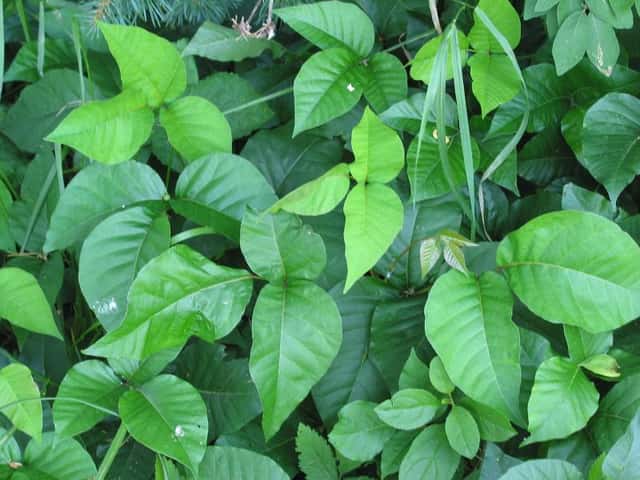
Toxicodendron radicans, commonly known as eastern poison ivy, is a deciduous woody vine or shrub famous for its ability to produce urushiol. This oily organic compound causes an allergic reaction, leading to an itchy, irritating, and painful rash in most humans. The plant is easily identified by its compound leaves consisting of three leaflets, often described by the mnemonic 'leaves of three, let it be.' It is highly adaptable, growing as a trailing vine, a shrub, or a climbing vine that uses aerial rootlets to scale trees and structures.
How to Propagate Poison ivy?
Natural Seed Dispersal
- Never handle seeds or berries with bare hands.
- The plant spreads rapidly via birds.
- 1 Seed Collection
Birds consume the white drupes and disperse seeds through droppings.
- 2 Stratification
Seeds require a period of cold dormancy over winter to germinate.
- 3 Germination
Seeds sprout in early spring as soil temperatures rise.
Materials needed:
Rhizomatous Spread
- The plant spreads aggressively through underground rhizomes.
- Even dead vines can contain active urushiol for years.
- 1 Root Contact
Stems running along the ground naturally develop roots at nodes.
- 2 Separation
A rooted section of the vine can be severed from the parent plant.
Materials needed:
How Big Does Poison ivy Grow?
TLDR: Poison ivy can reach up to 20.0m tall with Fast growth rate.
Max height
20.0m
Spread
3.0m
Growth rate
Fast
Foliage
Deciduous
Warning: Toxic Plant
This plant can be toxic if ingested. Keep out of reach of:
Plant Uses
Ground Cover
Soil coverage
Medicinal Uses
- Homeopathic treatment for skin conditions (highly diluted)
- Historical use in treating paralysis and rheumatism (dangerous/unverified)
Is your plant showing symptoms?
Click on the symptom to discover possible causes:
What Diseases Commonly Affect Poison ivy?
TLDR: Poison ivy is susceptible to 10 known diseases. Monitor regularly for early detection.
Rust
Rust is a common fungal disease caused by fungi in the order Pucciniales that affects a wide variety of plants. The disease gets its name from the characteristic orange, yellow, or reddish-brown pustules that appear on leaves, resembling metal rust. This obligate fungal parasite requires living plants to survive and can cause significant economic losses in agricultural crops.
Leaf Spot
Leaf spot is a common fungal disease caused by various pathogens including Alternaria, Ascochyta, Colletotrichum, Septoria, and Venturia. It primarily affects leaves, causing discolored spots that can lead to premature leaf drop if left untreated.
Root Rot
Root rot is a serious fungal disease that affects the root system of plants, causing them to decay and die. It is primarily caused by overwatering, poor drainage, or soil-borne fungi such as Pythium, Phytophthora, Rhizoctonia, and Fusarium. The disease thrives in waterlogged conditions where roots are deprived of oxygen, making them susceptible to fungal infection.
Powdery Mildew
Powdery mildew is a common fungal disease caused by various fungi species including Erysiphe, Podosphaera, Oïdium, and Leveillula. It affects over 10,000 plant species worldwide. The disease thrives in warm, dry climates with high humidity and appears as a distinctive white powdery coating on plant surfaces.
Meaning & Symbolism
Warning, protection through irritation, and resilience.
Compare with similar plants
| Attribute | Difficulty | Light | Watering | Pet Safe |
|---|---|---|---|---|
| Field Maple | Easy | Bright indirect | 14d | ✓ |
| Silver Birch | Easy | Direct sun | 14d | ✓ |
| Cushion Bush | Easy | Direct sun | 14d | ✓ |
| Peruvian peppertree | Easy | Direct sun | 14d | ⚠️ |