Crassulaceae
Cathedral Bells (Kalanchoe pinnata)
Kalanchoe pinnata
An exceptionally resilient and easy-care plant. Requires bright light, well-draining soil, and infrequent watering. Highly drought-tolerant; never tolerates waterlogged conditions. Thrives both as an indoor houseplant near sunny windows and outdoors in warm climates.
Every 14 days
Bright indirect
10° - 29°C
40% - 70%
Categories
What is Cathedral Bells?
Cathedral Bells (Kalanchoe pinnata) is a easy-care plant from the Crassulaceae family. Kalanchoe pinnata, also known as Cathedral Bells, Air Plant, or Miracle Leaf, is a succulent perennial native to Madagascar and naturalized throughout the tropics worldwide. Its botanical synonym is Bryophyllum pinnatum. The plant is celebrated for its remarkable ability to produce tiny plantlets al...
Cathedral Bells grows up to 2.0m, spread of 60cm, watering every 14 days, 10°C – 29°C, 40–70% humidity. It is suitable for indoor environments and not safe for pets.
Unlike many tropical plants, Cathedral Bells tolerates watering mistakes. Best for beginners. Without precautions, ingestion can cause irritation in pets. Keep out of reach of cats and dogs. Without adequate drainage, root rot can develop within 28 days.
How to Care for Cathedral Bells?
TLDR: Cathedral Bells needs Bright indirect, watering every 14 days, and temperatures between 10-29°C with 40-70% humidity.
How Often Should You Water Cathedral Bells?
Water only when the soil is completely dry — typically every 10 to 14 days in summer, less frequently in winter. Never allow water to sit in the saucer. Overwatering is the primary cause of root rot and leaf rot in this species.
How Much Light Does Cathedral Bells Need?
Needs bright, indirect sunlight. Place near an east- or south-facing window indoors. Avoid intense direct summer sun, which can scorch the fleshy leaves. Outdoors, partial shade is ideal in hot climates.
What Is the Best Soil for Cathedral Bells?
Use a well-draining succulent or cactus potting mix. Amend with coarse sand or perlite to improve drainage. Avoid moisture-retaining mixes — soggy soil quickly leads to root rot.
What Pot Should You Use for Cathedral Bells?
Unglazed terracotta or clay pot that allows excess moisture to evaporate. Always use a pot with drainage holes. Medium size is sufficient — this plant does not require a large root zone.
Care Schedule
Fertilize
Every 30 days
Repot
Every 730 days
What Is Cathedral Bells and Where Does It Come From?
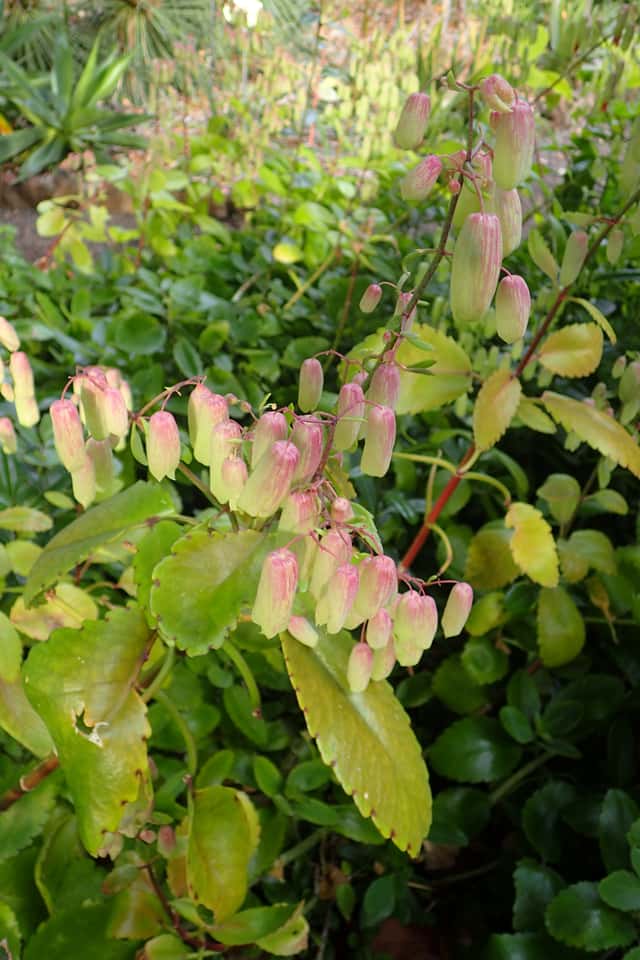
Kalanchoe pinnata, also known as Cathedral Bells, Air Plant, or Miracle Leaf, is a succulent perennial native to Madagascar and naturalized throughout the tropics worldwide. Its botanical synonym is Bryophyllum pinnatum. The plant is celebrated for its remarkable ability to produce tiny plantlets along the serrated edges of its leaves — a phenomenon known as vivipary. Pendant red-orange flowers appear in late winter and spring. Kalanchoe pinnata has a long history of use in traditional medicine across tropical cultures, most notably for the treatment of kidney stones.
How to Propagate Cathedral Bells?
Leaf-edge plantlets
Cathedral Bells produces plantlets naturally — simply lay a leaf on moist soil and wait. Keep barely moist until rooted. Avoid overwatering during this stage.
- 1 Remove a healthy leaf from the mother plant
- 2 Place the leaf on the surface of moist succulent soil
- 3 Wait for the natural plantlets on the leaf edges to develop roots
- 4 Separate plantlets once they are 1-2 cm tall with visible roots
- 5 Transfer to individual small pots with succulent mix
Materials needed:
Stem cutting
Always let cuttings callus before planting to prevent rot. Roots easily without rooting hormone.
- 1 Cut a healthy stem 10-15 cm long with a sterilized tool
- 2 Remove leaves from the lower half
- 3 Allow the cut end to callus for 1-2 days in a dry location
- 4 Plant in dry succulent mix and water lightly after 3-4 days
- 5 Place in a bright, warm spot
Materials needed:
How Big Does Cathedral Bells Grow?
TLDR: Cathedral Bells can reach up to 2.0m tall with Medium growth rate.
Max height
2.0m
Spread
60cm
Growth rate
Medium
Foliage
Evergreen
Warning: Toxic Plant
This plant can be toxic if ingested. Keep out of reach of:
Plant Uses
Ornamental
Great for decoration
Medicinal
Medicinal properties
Medicinal Uses
- Traditionally used in folk medicine across the tropics for kidney stone treatment: leaf juice is consumed as tea or raw in many tropical cultures
- Applied topically as a poultice to treat boils, ulcers, and inflamed wounds
- Used to relieve coughs, colds, and headaches in Caribbean and South American traditions
- Scientific studies have confirmed anti-inflammatory, antimicrobial, and analgesic properties in extracts of Bryophyllum pinnatum
- WARNING: contains bufadienolide cardiac glycosides — never use medicinally without professional guidance
Is your plant showing symptoms?
Click on the symptom to discover possible causes:
What Diseases Commonly Affect Cathedral Bells?
TLDR: Cathedral Bells is susceptible to 10 known diseases. Monitor regularly for early detection.
Root Rot
Root rot is a serious fungal disease that affects the root system of plants, causing them to decay and die. It is primarily caused by overwatering, poor drainage, or soil-borne fungi such as Pythium, Phytophthora, Rhizoctonia, and Fusarium. The disease thrives in waterlogged conditions where roots are deprived of oxygen, making them susceptible to fungal infection.
Overwatering
Overwatering occurs when plants receive too much water, depriving roots of oxygen and causing root rot. This environmental stress is one of the most common causes of houseplant death, as waterlogged soil prevents roots from breathing and functioning properly.
Mealybugs
Mealybugs are small, soft-bodied insects covered with a white, waxy, cottony material. They are common pests of houseplants and outdoor plants in mild climates. These sap-sucking insects feed on plant tissue, causing damage, stunted growth, and can lead to plant death if left untreated. They produce sticky honeydew which attracts sooty mold.
Aphids
Aphids are small, soft-bodied, pear-shaped insects (1/16 to 1/8 inch long) that feed by sucking nutrient-rich sap from plants. They reproduce rapidly and can quickly weaken plants, causing distorted growth and transmitting plant viruses. Aphids come in various colors including green, black, red, yellow, brown, and gray. They secrete honeydew, a sticky substance that attracts ants and encourages sooty mold growth.
Meaning & Symbolism
Symbol of resilience, renewal, and good fortune. The spontaneous plantlets growing on leaf edges represent new beginnings and abundance in tropical cultures. Goethe, the German poet, was famously fascinated by this plant and cultivated it at home.
Fun Facts
Cathedral Bells produces live plantlets on the edges of its leaves — a rare phenomenon called vivipary that makes it one of the easiest plants in the world to propagate
Johann Wolfgang von Goethe, the famous German poet, was so fascinated by this plant that it is still called the "Goethe Plant" in some countries
Originally from Madagascar, Kalanchoe pinnata has become naturalized in tropical regions across five continents and is considered invasive in Hawaii and parts of Australia
Its synonym Bryophyllum pinnatum has been studied for potential antiparasitic properties, including activity against the parasite that causes leishmaniasis
Frequently asked questions
How often should I water Cathedral Bells?
Is Kalanchoe pinnata toxic to cats and dogs?
How do I propagate Cathedral Bells?
Is Kalanchoe pinnata the same as Bryophyllum pinnatum?
Can Cathedral Bells be used for kidney stones?
Compare with similar plants
| Attribute | Difficulty | Light | Watering | Pet Safe |
|---|---|---|---|---|
| Field Maple | Easy | Bright indirect | 14d | ✓ |
| Silver Birch | Easy | Direct sun | 14d | ✓ |
| Cushion Bush | Easy | Direct sun | 14d | ✓ |
| Peruvian peppertree | Easy | Direct sun | 14d | ⚠️ |