Brassicaceae
horseradish: Edible Plant
Armoracia rusticana
Plant in deep, fertile soil in a sunny location and keep the area well-weeded. Harvest the roots in late autumn or early spring when the plant is dormant for the best flavor.
Every 7 days
Direct sun
-20° - 24°C
40% - 70%
Categories
What is horseradish?
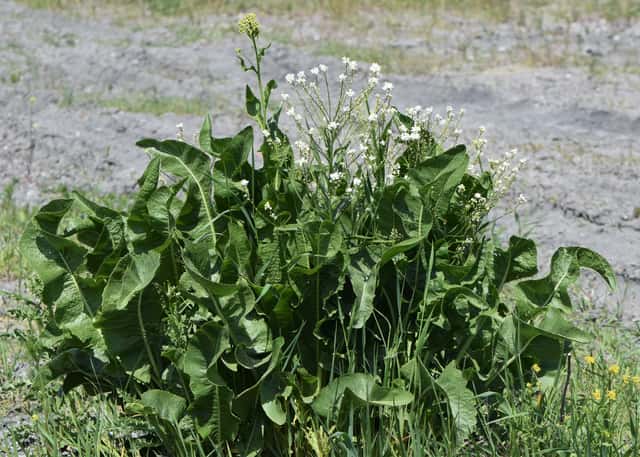
horseradish (Armoracia rusticana) is a easy-care plant from the Brassicaceae family. Armoracia rusticana, commonly known as horseradish, is a hardy perennial plant of the family Brassicaceae. It is primarily cultivated for its thick, pungent white taproot. The plant features large, emerald-green, dock-like leaves and produces clusters of small white flowers on tall stalks during the...
horseradish grows up to 1.5m, spread of 120cm, watering every 7 days, -20°C – 24°C, 40–70% humidity. It is not suitable for indoor environments and safe for pets.
Unlike many tropical plants, horseradish tolerates watering mistakes. Best for beginners. Unlike many popular species, horseradish is safe to keep around pets.
How to Care for horseradish?
TLDR: horseradish needs Direct sun, watering every 7 days, and temperatures between -20-24°C with 40-70% humidity.
How Often Should You Water horseradish?
Provide consistent moisture throughout the growing season, especially during dry spells, to prevent the roots from becoming woody.
How Much Light Does horseradish Need?
Horseradish thrives in full sun but can tolerate partial shade, though root development may be slower.
What Is the Best Soil for horseradish?
Requires deep, loose, loamy soil rich in organic matter to allow the taproot to grow straight and long.
What Pot Should You Use for horseradish?
Best grown directly in the ground; if using a container, it must be at least 60cm deep to accommodate the taproot.
Care Schedule
Fertilize
Every 60 days
What Is horseradish and Where Does It Come From?
Armoracia rusticana, commonly known as horseradish, is a hardy perennial plant of the family Brassicaceae. It is primarily cultivated for its thick, pungent white taproot. The plant features large, emerald-green, dock-like leaves and produces clusters of small white flowers on tall stalks during the summer. It is a vigorous grower that can become invasive if not managed properly.
How to Propagate horseradish?
Root Cuttings
- Ensure the soil is loose and free of stones to prevent root deformation.
- Space cuttings at least 45 cm apart.
- 1 Select Root
Select a side root about the thickness of a pencil and 15-20 cm long.
- 2 Cut and Prepare
Make a straight cut across the top and a slanted cut at the bottom to ensure correct orientation.
- 3 Planting
Plant the cutting at a 45-degree angle, 5-10 cm deep, with the straight cut facing up.
Materials needed:
How Big Does horseradish Grow?
TLDR: horseradish can reach up to 1.5m tall with Fast growth rate.
Max height
1.5m
Spread
1.2m
Growth rate
Fast
Foliage
Deciduous
Warning: Toxic Plant
This plant can be toxic if ingested. Keep out of reach of:
Plant Uses
Edible
Can be consumed
Medicinal
Medicinal properties
Medicinal Uses
- Sinus congestion relief
- Antibacterial properties
- Diuretic
- Treatment for urinary tract infections
Culinary Uses
- Grated root condiment
- Horseradish sauce
- Cocktail sauce ingredient
- Flavoring for meats and fish
Is your plant showing symptoms?
Click on the symptom to discover possible causes:
What Diseases Commonly Affect horseradish?
TLDR: horseradish is susceptible to 10 known diseases. Monitor regularly for early detection.
Root Rot
Root rot is a serious fungal disease that affects the root system of plants, causing them to decay and die. It is primarily caused by overwatering, poor drainage, or soil-borne fungi such as Pythium, Phytophthora, Rhizoctonia, and Fusarium. The disease thrives in waterlogged conditions where roots are deprived of oxygen, making them susceptible to fungal infection.
Overwatering
Overwatering occurs when plants receive too much water, depriving roots of oxygen and causing root rot. This environmental stress is one of the most common causes of houseplant death, as waterlogged soil prevents roots from breathing and functioning properly.
White Rust
Aphids
Aphids are small, soft-bodied, pear-shaped insects (1/16 to 1/8 inch long) that feed by sucking nutrient-rich sap from plants. They reproduce rapidly and can quickly weaken plants, causing distorted growth and transmitting plant viruses. Aphids come in various colors including green, black, red, yellow, brown, and gray. They secrete honeydew, a sticky substance that attracts ants and encourages sooty mold growth.
Meaning & Symbolism
In Jewish tradition, it is used as 'Maror' during the Passover Seder to symbolize the bitterness of slavery.
Compare with similar plants
| Attribute | Difficulty | Light | Watering | Pet Safe |
|---|---|---|---|---|
| Field Maple | Easy | Bright indirect | 14d | ✓ |
| Silver Birch | Easy | Direct sun | 14d | ✓ |
| Common Blanketflower | Easy | Direct sun | 10d | ✓ |
| Cushion Bush | Easy | Direct sun | 14d | ✓ |





