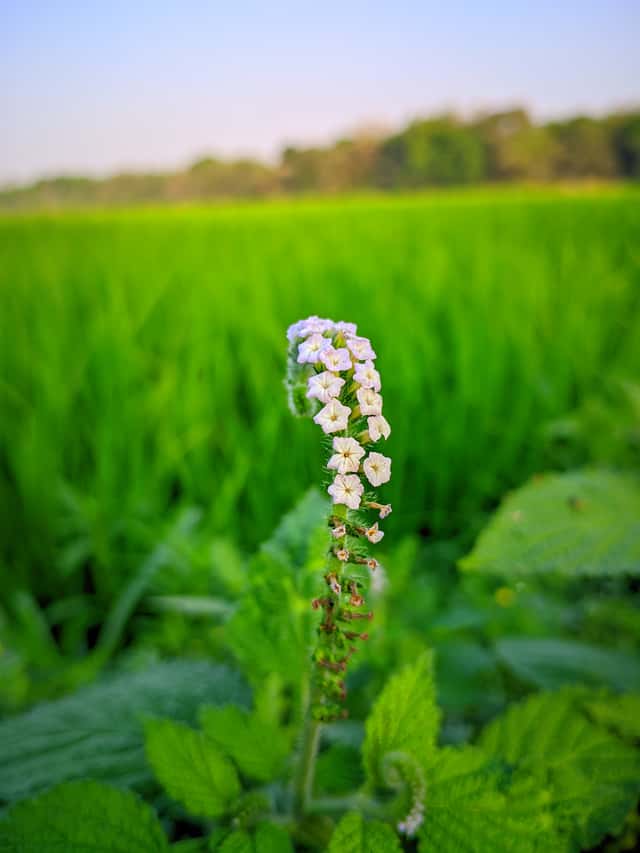
Heliotropiaceae
Indian Heliotrope (Heliotropium indicum)
Heliotropium indicum
Easy to grow outdoors in full sun. Water regularly without waterlogging. Tolerates average soils. CAUTION: severely toxic to humans, dogs, and cats — do not cultivate where children or pets have access.
Every 5 days
Direct sun
18° - 38°C
50% - 80%
Categories
What is Indian Heliotrope?
Indian Heliotrope (Heliotropium indicum) is a easy-care plant from the Heliotropiaceae family. Indian heliotrope (Heliotropium indicum) is an annual or short-lived perennial herb native to tropical Asia, now pantropically distributed as a common weed in disturbed areas, roadsides, and cultivated fields. It grows 15–50 cm tall with hairy stems, ovate leaves, and characteristic scorpioid spikes...
Indian Heliotrope grows up to 50cm, spread of 40cm, watering every 5 days, 18°C – 38°C, 50–80% humidity. It is not suitable for indoor environments and not safe for pets.
Unlike many tropical plants, Indian Heliotrope tolerates watering mistakes. Best for beginners. Without precautions, ingestion can cause irritation in pets. Keep out of reach of cats and dogs.
How to Care for Indian Heliotrope?
TLDR: Indian Heliotrope needs Direct sun, watering every 5 days, and temperatures between 18-38°C with 50-80% humidity.
How Often Should You Water Indian Heliotrope?
Water every 4–6 days, allowing the topsoil to partially dry between waterings. Avoid overwatering to prevent root rot.
How Much Light Does Indian Heliotrope Need?
Full sun plant. Requires at least 6 hours of direct sunlight daily. May tolerate partial afternoon shade in very hot climates.
What Is the Best Soil for Indian Heliotrope?
Prefers well-draining loamy soil with pH 6.0–7.5. Amend with coarse sand or perlite to improve drainage.
What Pot Should You Use for Indian Heliotrope?
Not applicable — outdoor garden plant or large container
Care Schedule
Fertilize
Every 30 days
What Is Indian Heliotrope and Where Does It Come From?
Indian heliotrope (Heliotropium indicum) is an annual or short-lived perennial herb native to tropical Asia, now pantropically distributed as a common weed in disturbed areas, roadsides, and cultivated fields. It grows 15–50 cm tall with hairy stems, ovate leaves, and characteristic scorpioid spikes bearing small white or purple flowers. WARNING: all plant parts contain tumorigenic pyrrolizidine alkaloids.
How to Propagate Indian Heliotrope?
Direct seeding
Sow after the last frost. Seeds germinate well in warm soil (20–30°C). Avoid transplanting — prefers direct seeding.
- 1 Choose a full-sun location with well-draining soil
- 2 Sow seeds directly in the final position after last frost
- 3 Lightly cover seeds with fine soil
- 4 Keep soil lightly moist until germination
- 5 Thin seedlings to 20–30 cm spacing
Materials needed:
How Big Does Indian Heliotrope Grow?
TLDR: Indian Heliotrope can reach up to 50cm tall with Fast growth rate.
Max height
50cm
Spread
40cm
Growth rate
Fast
Foliage
Deciduous
Warning: Toxic Plant
This plant can be toxic if ingested. Keep out of reach of:
Plant Uses
Medicinal
Medicinal properties
Ornamental
Great for decoration
Medicinal Uses
- Leaf juice applied topically to treat wounds, skin ulcers, and boils
- Used as eye drops for conjunctivitis in traditional medicine
- Pounded leaves used as anti-inflammatory poultice
Is your plant showing symptoms?
Click on the symptom to discover possible causes:
What Diseases Commonly Affect Indian Heliotrope?
TLDR: Indian Heliotrope is susceptible to 4 known diseases. Monitor regularly for early detection.
Powdery Mildew
Powdery mildew is a common fungal disease caused by various fungi species including Erysiphe, Podosphaera, Oïdium, and Leveillula. It affects over 10,000 plant species worldwide. The disease thrives in warm, dry climates with high humidity and appears as a distinctive white powdery coating on plant surfaces.
Cercospora Leaf Spot
Cercospora leaf spot is a common fungal disease caused by Cercospora species that affects many plant types, particularly beets, roses, and leafy vegetables. The disease thrives in warm, humid conditions and can cause significant defoliation, reducing plant vigor and yield. It spreads rapidly through water splash, wind, and contaminated tools.
Leaf Spot
Leaf spot is a common fungal disease caused by various pathogens including Alternaria, Ascochyta, Colletotrichum, Septoria, and Venturia. It primarily affects leaves, causing discolored spots that can lead to premature leaf drop if left untreated.
Root Rot
Root rot is a serious fungal disease that affects the root system of plants, causing them to decay and die. It is primarily caused by overwatering, poor drainage, or soil-borne fungi such as Pythium, Phytophthora, Rhizoctonia, and Fusarium. The disease thrives in waterlogged conditions where roots are deprived of oxygen, making them susceptible to fungal infection.
Meaning & Symbolism
Associated with traditional healing practices across tropical Asian and African cultures.
Fun Facts
Flower spikes curl like a scorpion's tail — a classic feature of the Boraginaceae / Heliotropiaceae family
Considered an invasive weed in over 40 countries
Pyrrolizidine alkaloids from this plant have caused mass livestock poisoning events worldwide
Flowers continuously year-round in tropical climates
Frequently asked questions
Is Indian heliotrope toxic?
How often should I water Indian heliotrope?
Where should I plant Indian heliotrope?
Can Indian heliotrope be grown indoors?
Compare with similar plants
| Attribute | Difficulty | Light | Watering | Pet Safe |
|---|---|---|---|---|
| Field Maple | Easy | Bright indirect | 14d | ✓ |
| Silver Birch | Easy | Direct sun | 14d | ✓ |
| Cushion Bush | Easy | Direct sun | 14d | ✓ |
| Peruvian peppertree | Easy | Direct sun | 14d | ⚠️ |





