Geraniaceae
Ivy Geranium: Complete Growing and Care Guide
Pelargonium peltatum
Plant in well-draining soil and place in a sunny location with at least 6 hours of direct sunlight daily. Water every 7 days, allowing the top 1-2 inches of soil to dry between waterings. Fertilize every 14 days during the growing season. Deadhead spent flowers regularly to encourage continuous blooming throughout the season.
Every 7 days
Bright indirect
10° - 28°C
50% - 65%
Categories
What is Ivy Geranium?
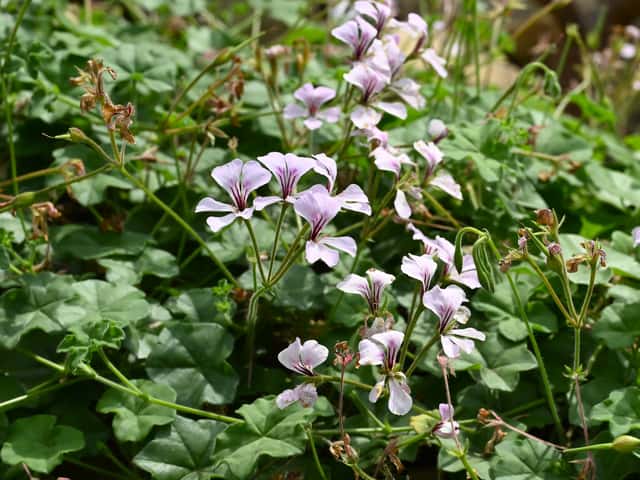
Ivy Geranium (Pelargonium peltatum) is a easy-care plant from the Geraniaceae family. Pelargonium peltatum, commonly known as Ivy Geranium, is a trailing and cascading flowering plant native to the coastal cliffs and rocky slopes of South Africa. Its ivy-shaped, glossy leaves and abundant blooms in shades of pink, white, red, lavender, salmon, and burgundy make it one of the most bel...
Ivy Geranium grows up to 90cm, spread of 180cm, watering every 7 days, 10°C – 28°C, 50–65% humidity. It is suitable for indoor environments and not safe for pets.
Unlike many tropical plants, Ivy Geranium tolerates watering mistakes. Best for beginners. Without precautions, ingestion can cause irritation in pets. Keep out of reach of cats and dogs. Without adequate drainage, root rot can develop within 14 days.
How to Care for Ivy Geranium?
TLDR: Ivy Geranium needs Bright indirect, watering every 7 days, and temperatures between 10-28°C with 50-65% humidity.
How Often Should You Water Ivy Geranium?
Water thoroughly every 7 days, but allow the top 2-3 cm of soil to dry out between waterings. Avoid waterlogging to prevent root rot. Reduce watering frequency in winter months when the plant is less active.
How Much Light Does Ivy Geranium Need?
Prefers full sun to partial shade, requiring at least 6-8 hours of direct sunlight daily. In very hot climates, protect from intense afternoon sun above 85°F (29°C) to prevent leaf scorch and reduced flowering.
What Is the Best Soil for Ivy Geranium?
Use a light, free-draining potting mix rich in organic matter. Blend standard potting soil with perlite or coarse sand to improve drainage. Ideal pH range is 6.0-6.5.
What Pot Should You Use for Ivy Geranium?
Hanging baskets, window boxes, or tall pots with support. Terracotta pots are ideal for better drainage. Ensure containers have adequate drainage holes to prevent waterlogging.
Care Schedule
Fertilize
Every 14 days
Rotate
Every 30 days
Repot
Every 365 days
What Is Ivy Geranium and Where Does It Come From?
Pelargonium peltatum, commonly known as Ivy Geranium, is a trailing and cascading flowering plant native to the coastal cliffs and rocky slopes of South Africa. Its ivy-shaped, glossy leaves and abundant blooms in shades of pink, white, red, lavender, salmon, and burgundy make it one of the most beloved plants for hanging baskets, window boxes, and balcony gardens. It blooms profusely from spring through fall, rewarding gardeners with months of continuous color.
How to Propagate Ivy Geranium?
Stem Cutting
Use clean, sterilized scissors. Avoid covering with plastic as it increases rot risk. If rooting in water, change water weekly.
- 1 Cut a healthy stem 4-5 inches long just below a node
- 2 Remove lower leaves, keeping 2-3 at the top
- 3 Allow the cut end to dry for a few hours to form a callus
- 4 Place in moist, well-draining potting mix or water
- 5 Keep in bright indirect light until roots develop
Materials needed:
How Big Does Ivy Geranium Grow?
TLDR: Ivy Geranium can reach up to 90cm tall with Fast growth rate.
Max height
90cm
Spread
1.8m
Growth rate
Fast
Foliage
Evergreen
Warning: Toxic Plant
This plant can be toxic if ingested. Keep out of reach of:
Plant Uses
Ornamental
Great for decoration
Aromatic
Pleasant fragrance
Is your plant showing symptoms?
Click on the symptom to discover possible causes:
What Diseases Commonly Affect Ivy Geranium?
TLDR: Ivy Geranium is susceptible to 13 known diseases. Monitor regularly for early detection.
Gray Mold (Botrytis Blight)
Gray mold, caused by the fungus Botrytis cinerea, is one of the most common fungal diseases in plants. It affects over 200 plant species, including ornamentals, vegetables, fruits, and houseplants. The disease thrives in cool, humid conditions with poor air circulation, causing grayish spots and soft rot on infected tissues.
Root Rot
Root rot is a serious fungal disease that affects the root system of plants, causing them to decay and die. It is primarily caused by overwatering, poor drainage, or soil-borne fungi such as Pythium, Phytophthora, Rhizoctonia, and Fusarium. The disease thrives in waterlogged conditions where roots are deprived of oxygen, making them susceptible to fungal infection.
Edema
Edema (also spelled oedema) is a non-infectious physiological disorder caused by an imbalance between water uptake and transpiration. When roots absorb water faster than leaves can release it through transpiration, cells in the leaf tissue swell and burst, forming characteristic wart-like blisters. This is purely a cosmetic issue and does not threaten plant health.
Bacterial Blight
Bacterial blight is a serious plant disease caused by pathogenic bacteria that enters plants through wounds or natural openings. It spreads rapidly in warm, wet conditions and can cause significant damage to leaves, stems, and flowers. The bacteria are transmitted by water splash, contaminated tools, and insects.
Meaning & Symbolism
Symbolizes friendship, cheerfulness, and grace in the language of flowers. Associated with the elegance of trailing beauty and resilience.
Fun Facts
Native to the rocky coastal cliffs of South Africa, where it naturally trails down steep slopes.
It can spread up to 6 feet wide under ideal conditions, creating a spectacular cascade of flowers.
Unlike common geraniums, its leaves are shaped like ivy leaves — hence its popular name.
It blooms best when slightly pot-bound, a phenomenon that gardeners can use to their advantage.
Frequently asked questions
How often should I water Ivy Geranium?
Is Ivy Geranium toxic to pets?
Why is my Ivy Geranium not flowering?
Can I grow Ivy Geranium in a hanging basket?
How do I propagate Ivy Geranium?
Compare with similar plants
| Attribute | Difficulty | Light | Watering | Pet Safe |
|---|---|---|---|---|
| Field Maple | Easy | Bright indirect | 14d | ✓ |
| Silver Birch | Easy | Direct sun | 14d | ✓ |
| Cushion Bush | Easy | Direct sun | 14d | ✓ |
| Peruvian peppertree | Easy | Direct sun | 14d | ⚠️ |